
The Confraternity of Our Lady of Hope and Peace presents the ADEMA+ Foundation with its first Esperança Award for its social work
>> They consider relevant its assistance program aimed at vulnerable groups, helping more than 30 NGOs and Social Welfare areas of 15 municipalities in Mallorca, as well as its health promotion actions among more than 70 schools and the CPAP of the IMAS. The Confraternity of Our Lady of Hope and Peace celebrated the main event of its annual festivities in honor of its patron saint at the Royal Basilica of Sant Francesc in Palma. The day’s main novelty was the presentation, for the first time, of the Esperança Award, a recognition created by the organization to honor individuals or institutions committed to social responsibility, community service, and support for vulnerable groups. The event brought together nearly five hundred people, including members of the brotherhood, family members, institutional representatives and attendees, in a celebration that combines the religious, historical and social character of one of the oldest brotherhoods in Palma, founded in 1924. The Royal Basilica of Sant Francesc, the canonical headquarters of the Brotherhood, hosted the solemn mass in honor of Our Lady of Hope, officiated before the image of the patron saint and accompanied musically by the Musical Group of the Brotherhood itself. During the religious ceremony, the Board of Directors presented commemorative plaques to members celebrating twenty-five years of membership, as well as medals to new members joining this year. These acts are part of the usual protocol for the festivities and aim to recognize continuity and generational renewal within the Brotherhood. The highlight of the event was the presentation of the inaugural Esperança Award, established this year to coincide with the feast day of the patron saint. The award was granted to the ADEMA+ Foundation, following a unanimous decision by the Board of Directors of the Confraternity. With this recognition, the organization wished to highlight its long-standing work in the fields of education, social services, welfare, and research. As explained by the president of the Brotherhood, Pedro Barceló, “the choice of the ADEMA+ Foundation reflects the deep respect and admiration for its work. The organization is an example that embodies the principles of hope, peace, education, and service to the community, and its work is a benchmark in the promotion of humanist values and in strengthening the social fabric of Mallorca.” The distinction awarded by the Confraternity of Our Lady of Hope and Peace, according to its president, Pedro Barceló, “reflects the values that define our institution, always committed to solidarity, service to the community, and care for those experiencing vulnerability.” “Our history of supporting non-profit organizations and our constant promotion of social support initiatives characterize us as a benchmark of human commitment and community cohesion, qualities that give meaning to the awarding of this first recognition.” Among the initiatives recognized by this award, the Oral Health Care and Promotion Program for vulnerable groups, promoted by the ADEMA+ Foundation, stands out. This initiative combines academic excellence and social commitment through a well-established service-learning model. The program is a collaborative effort involving more than 30 non-governmental organizations and social entities in Mallorca, as well as the social services departments of 15 municipalities, including Palma and the municipalities of the Pla de Mallorca Commonwealth. Thanks to this network of cooperation, more than 2,500 vulnerable individuals received care at ADEMA’s Integrated University Clinic during the 2024/2025 academic year. Also noteworthy are their promotional programs among school children, which already reach 8,400 students and more than 70 schools, and among older people in Personal Autonomy Promotion centers, managed by IMAS, as well as their international project in Wasini-Kenya. During the event, the president of the Brotherhood, Pedro Barceló, thanked the participants for their attendance and emphasized the significance of this first edition of the award, placing it within the history of an institution that, since its founding, has maintained an active presence in the social and religious life of the city. He also expressed his appreciation to the members of the Musical Group for their participation in the liturgical service and to the members of the Brotherhood for their continued involvement. Following the religious ceremony, attendees gathered in the cloister of the Sant Francesc convent, where refreshments were served. This space served as the closing of the event and as a meeting point for members of the brotherhood, family, and friends, maintaining a tradition historically associated with the festival.
IES Albuhaira, champions of the II NutriOlympics ADEMA
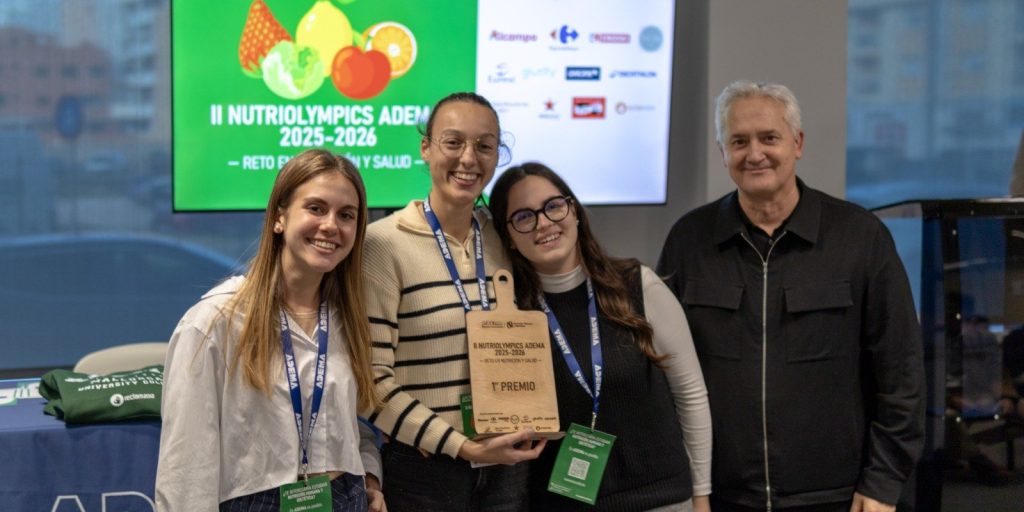
>> The second and third prizes went to IES Sineu and IES Alcúdia. >> ADEMA highlights the success of this event and wishes to consolidate NutriOlympics as a benchmark in the promotion of nutrition and health, committing to educational innovation and collaborative learning. >> The event has the following collaborators: Carrefour, Eroski, Alcampo, Boisa Nutrición, Megasport, Decathlon, Univers del Comic, Distribuidora Rotger, Aficine, Reclam 2012 and Gluty. The ADEMA University School today hosted the grand final of the second edition of the NutriOlympics, an “Educational Challenge in Nutrition and Health” conceived by the Bachelor in Human Nutrition and Dietetics. The event has established itself as a pioneering initiative that aims to bring the Science of Food closer to young people, encourage vocations in the healthcare field, and promote the importance of healthy habits as an essential tool for Public Health. IES Albuhaira has won the II NutriOlympics ADEMA. Second and third place went to IES Sineu and IES Alcúdia. After passing a qualifying round held a few weeks ago, in which more than 120 students from different schools in the Balearic Islands participated, around thirty students from the following schools qualified: CC Sant Francesc, IES Alcúdia, IES Son Cladera, Lycée Français International de Palma, CC Sant Josep Obrer, IES Inca, CIFPF Borja Moll, IES Albuhaira Muro, IES Mossèn Alcover, IES Sineu, and IES Santa Maria d’Eivissa. During the final held today at ADEMA’s Coll d’en Rebassa Campus, the different teams demonstrated their skills through three themed stations designed to put into practice the real-world competencies of future dietitians and nutritionists. In the first station, “On-Screen Consultation,” students conducted a complete patient history in a simulated consultation. This exercise assessed their ability to analyze habits, medical history, context, and nutritional needs, applying criteria specific to professional practice and developing fundamental communication skills. The second station, “Food Control and Safety,” placed the finalists in the role of technicians at a fictional food industry company. There, they evaluated quality parameters in eggs, fruits, and vegetables, applying criteria of freshness, size, and labeling. The test highlighted the responsibility of professionals in ensuring that food reaches the consumer in optimal condition, following current regulations and understanding the impact of food safety on public health. The third station, “Oído Cocina” (Heard in the Kitchen), was the most creative. Students designed healthy and sustainable dishes using available ingredients, following the Harvard Healthy Eating Plate model and justifying their proposals. In addition to nutritional value, criteria such as seasonality, sustainability, and the balance between ingredients and energy needs were taken into account. The jury, comprised of specialists in Nutrition and Dietetics and professors from the Human Nutrition and Dietetics Degree program at ADEMA, highlighted not only the high level of preparation of the participants, but also their motivation and the surprising maturity with which they approached tests designed to replicate real-life professional situations. They emphasized that many teams demonstrated analytical skills and patient sensitivity typically developed in advanced university studies, underscoring the educational potential of initiatives like this one. The jury agreed that the finalists successfully integrated technical knowledge with communication skills, critical thinking, and responsible decision-making—three essential dimensions in the practice of a registered dietitian nutritionist. They also valued the creativity with which the students addressed the challenges, particularly in the design of healthy dishes, where they combined scientific rigor with originality and a conscious approach to sustainability. The meeting concluded with a healthy snack prepared by Carlota Sobrino, an alumni of the Bachelor in Human Nutrition and Dietetics at ADEMA, who brought to a close a day dedicated to scientific dissemination, creativity and commitment to a healthier future.
ADEMA’s oral health and nutritional program reaches more than 3,200 elderly users of the 7 CPAP centers in Mallorca run by IMAS.
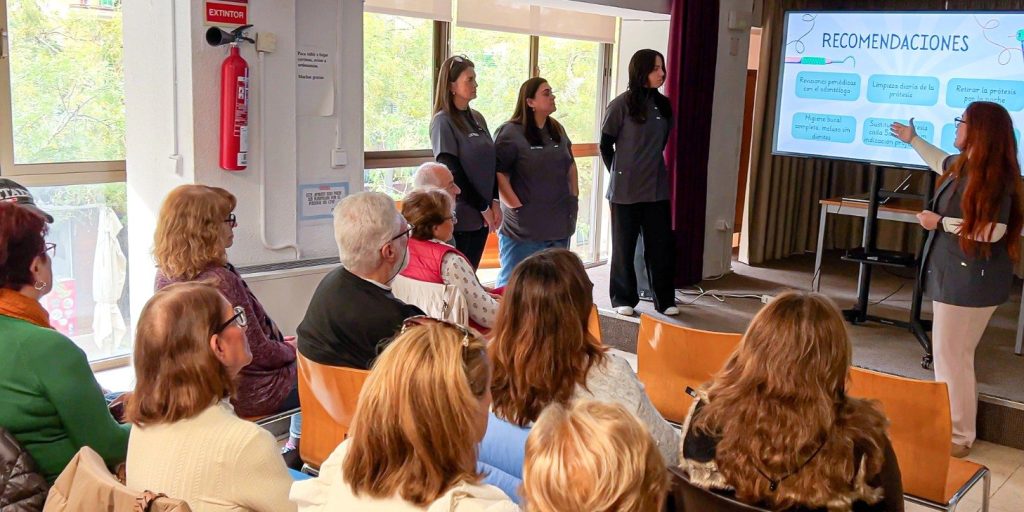
>> Students of the Bachelors in Dentistry and Human Nutrition and Dietetics have developed workshops, sessions and preventive activities with the aim of promoting healthy habits among the elderly population >>El presidente del IMAS, Guillermo Sánchez, ha destacado que “estos talleres refuerzan nuestro compromiso con la prevención y la promoción de la salud entre las personas mayores, poniendo a su alcance recursos prácticos y adaptados para mejorar su bienestar cotidiano”. >> The general director of the ADEMA University School, Carlos López, has thanked IMAS and the CPAP teams for the trust they have placed in the students and teachers of ADEMA to carry out this learning that has strengthened the community dimension of the project. This morning, the ADEMA University School conducted several training workshops at the CPAP Llar Avenguda Argentina center, aimed at promoting oral and nutritional health among older adults. These activities were part of a program launched by ADEMA in collaboration with the Institut Mallorquí d’Afers Socials (IMAS), which seeks to introduce essential healthy habits to the elderly population while simultaneously enhancing the practical training of university students. These workshops are part of a program being carried out by Dentistry and Nutrition students to promote healthy oral and nutritional habits among senior citizens who use the IMAS network of Personal Autonomy Promotion Centers (CPAPs), a group of community spaces designed to foster active aging and social participation for older adults. According to IMAS President Guillermo Sánchez, more than 3,200 people from centers across the island are participating in these various health promotion activities. These centers include CPAP Llar Manacor, CPAP Llar Llucmajor, CPAP Llar Avinguda Argentina, CPAP Llar Reina Sofía, CPAP Llar Felanitx, CPAP Puigpunyent, and CPAP Petra. Students of the Bachelor in Dentistry have offered different theoretical content and practical demonstrations focused on the prevention of common oral problems at this stage of life. Participants received detailed information on cavities, periodontal disease, oral lesions, hyposalivation, and complications arising from the use of dentures. In addition, the students completed various practical exercises demonstrating adapted brushing techniques, the use of interdental devices, and specific hygiene routines for removable dentures. The coordinator of the Dentistry Bachelor program, Dr. Daniela Vallejos, explained that older adults have a particularly high risk of developing oral diseases. “This increased vulnerability is largely due to the progressive decline in manual dexterity, the regular use of dentures, the presence of systemic diseases, and the continued use of certain medications. Poor oral health not only affects the mouth but can also lead to nutritional problems, painful lesions, periodontal disease, or cavities, which significantly reduce the quality of life of those who suffer from them,” she argued. On the other hand, the nutrition workshops, led by students of the Bachelor in Human Nutrition and Dietetics, complemented the preventative approach with content focused on healthy eating during aging. According to the Head of Studies, Dr. Alicia Julibert, “maintaining healthy eating patterns, such as those of the Mediterranean diet, is fundamental to preventing chronic diseases and promoting active and long-term aging.” She also noted that “in situations of illness or frailty, it is crucial to prevent malnutrition and address the physiological changes associated with age in order to preserve muscle mass, functionality, and quality of life.” The elderly users of the CPAP (Continuous Positive Airway Pressure) program participated in activities that covered the basics of the Mediterranean diet, the importance of adequate protein, fiber, and micronutrient intake, and strategies for preventing malnutrition and muscle loss. Students also led workshops on interpreting nutrition labels, comparing products, and differentiating between fresh and ultra-processed foods. Healthy shopping simulations were also conducted, analyzing affordable and accessible options for planning balanced weekly menus. These activities culminated in the collaborative creation of an adapted recipe book, which included simple, varied, and suitable culinary suggestions for the users’ needs. Additionally, some sessions incorporated a short cooking workshop, allowing participants to put their newly acquired knowledge into practice in a participatory environment. Both the teaching staff and the professional teams at the Vía Argentina Senior Citizens’ Home have expressed their gratitude for the students’ work, as they not only contributed useful knowledge, but also fostered socialization, motivation, and autonomy among the participants. The president of IMAS, Guillermo Sánchez, thanked the students for their work, stating that “they have not only contributed useful knowledge, but also fostered socialization, active participation and awareness of one’s own health, essential aspects to reinforce self-esteem and prevent situations of isolation or functional decline.” For his part, the general director of the ADEMA University School, Carlos López, thanked IMAS and the CPAP teams for the trust that the students and teachers of ADEMA have placed in them to carry out this learning, which has strengthened the community dimension of the project.