
Dr. Pere Riutord takes office as the first rector of the University of Mallorca and places research and academic excellence among his priorities.
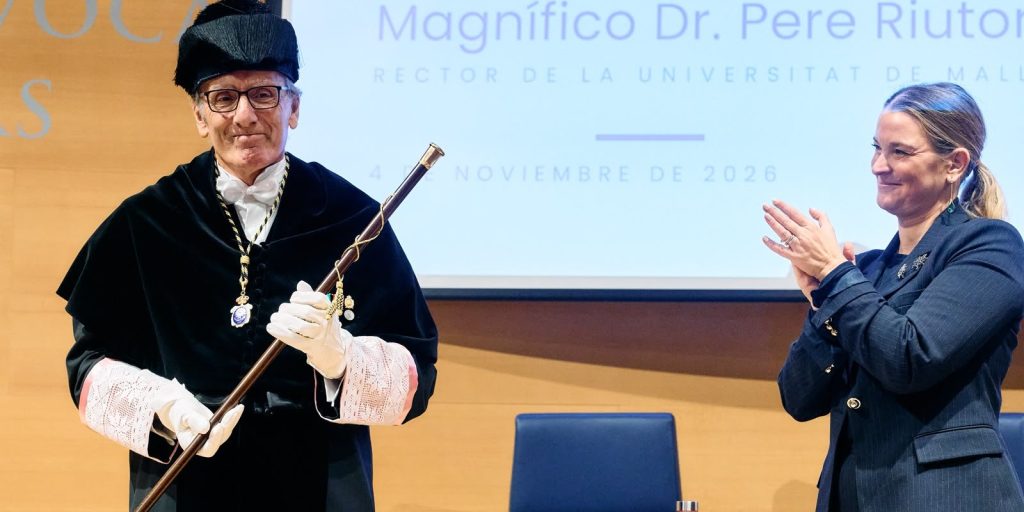
>> The president of the Government, Marga Prohens, participates in the investiture ceremony of the rector and his rector’s team, held at the Bar Association of the Balearic Islands >> The new rector advocates for a university committed to equal opportunity, access to higher education, and a scholarship system that will receive over 9 million euros in funding. See all images >> The president of the Governing Council, Diego González, stated: “Today we take a decisive step toward building a university created to offer new opportunities to our young people, foster research, and contribute to the progress of our society.” >> The President of the Government of the Balearic Islands, Marga Prohens: “Higher education is fundamental to the future of the Balearic Islands. We need universities capable of responding to the challenges of our region and training highly qualified professionals.” Dr. Pere Riutord Sbert took office this Wednesday as the first rector of the Universitat de Mallorca (UMAC-ADEMA) during an academic ceremony held at the headquarters of the Balearic Islands Bar Association in Palma, with the participation of the President of the Government of the Balearic Islands, Marga Prohens, and the President of the institution’s Governing Council, Diego González Carrasco. The inauguration marks a new step in the institutional development of the Universitat de Mallorca—an initiative promoted by ADEMA and recognized under Law 2/2026 of April 27, which establishes the legal framework for its academic and institutional development. In his inaugural address, delivered before academic and institutional authorities, representatives of civil society, members of the university community, and family members, Riutord identified university education, scientific research, innovation, and knowledge transfer as key pillars of his academic project, with the aim of contributing to the scientific, cultural, social, and economic development of the Balearic Islands. “I accept the honor of becoming the first rector of the University of Mallorca, with a commitment to help build an enduring university—one that serves our society and meets the expectations of future generations,” he stated. The rector highlighted the institution’s connection to the reality of the island, its dedication to expanding higher education opportunities, and its European and international outlook. “Our university aims to ensure that no young person’s educational opportunities are diminished by the place where they were born or reside,” he stated. In this vein, he defined the institution’s mission as being “local in its commitment, Balearic in its responsibility, Mediterranean in its identity, European in its outlook, and international in its relations.” For his part, the president of the Governing Council of the University of Mallorca, Diego González, welcomed the inauguration of Pere Riutord as the institution’s first rector, noting that it marks “a very important day for our university and for all of us who have worked for years to make this project a reality.” González has extended his congratulations to the new rector and his team, wishing them every success in this new phase. “Today, we take a decisive step toward building a university founded with the mission of offering new opportunities to our young people, fostering research, and contributing to the progress of our society,” he noted. Meanwhile, the President of the Government of the Balearic Islands, Marga Prohens, has joined in congratulating the new rector and his team, highlighting the importance of collaboration between institutions and society to strengthen the islands’ university system. “Higher education is fundamental to the future of the Balearic Islands. We need universities capable of responding to the challenges of our region, training highly qualified professionals, and forging stronger ties between the academic world, the business sector, and society. The University of Mallorca has the opportunity to contribute to these goals through rigor, quality, and a commitment to our community,” she emphasized. Research, innovation, and knowledge transfer Furthermore, Dr. Riutord has championed collaboration across disciplines and fields of knowledge, with projects that connect the health sciences, art, architecture, engineering, technology, and the social sciences. Furthermore, Dr. Riutord has championed collaboration across disciplines and fields of knowledge, with projects that connect the health sciences, art, architecture, engineering, technology, and the social sciences. Research featured prominently in his remarks. The rector emphasized the importance of combining teaching activities with the generation of knowledge and its transfer to society. “We do not want to limit ourselves to transmitting the knowledge of the past; we aspire to question it, expand upon it, and help generate the knowledge of the future,” he stated. Furthermore, he explained that the university aims to promote research with outcomes that reach hospitals, businesses, and other sectors of society—contributing to the strengthening of the productive fabric, the attraction of talent, and the creation of professional opportunities. Furthermore, it has addressed the role of artificial intelligence, robotics, simulation, virtual and augmented reality, haptic technology, digital fabrication, and big data analytics in the transformation of teaching, research, and professional practice. In this context, it has proposed further strengthening the integration of new technologies into classrooms, laboratories, and research projects, alongside training that enables an understanding of their foundations, possibilities, and limitations, as well as their ethical and social implications. The rector has also highlighted the importance of collaborating with the productive sector and various areas within the public and private sectors to foster practical training for students, in accordance with the relevant agreements and authorizations. Students, at the heart of the university project Riutord has placed students at the heart of the academic project at the Universitat de Mallorca and has proposed an educational approach geared toward the development of scientific, professional, and human capabilities. Regarding access to university studies, it was noted that Law 2/2026 mandates that at least 5% of an institution’s total annual revenue be allocated to scholarships and study grants. In this regard, it was stated that the budget earmarked for this purpose will exceed 9 million euros. “A university must be demanding—because knowledge requires effort—but it must also be accessible, as talent can be found anywhere and in any social circumstance,” it was emphasized. Furthermore, he has highlighted the challenges
ADEMA’s Observatory for Oral Health and Nutritional Habits strengthens its preventive and research work in Mallorca, with over 9,500 schoolchildren participating.
>> The initiative, recognized by European, national, and regional institutions, brings together researchers, faculty, and students from ADEMA for activities focused on health education, prevention, and the promotion of oral and nutritional health among schoolchildren. >>Around 1,200 schoolchildren from Palma and the *Part Forana* (the rest of the island of Mallorca) will take part in the 2026/2027 edition, which begins today, featuring oral health screenings and workshops on prevention, healthy eating, and physical activity. Since 2018, more than 9,500 students—ranging from preschool to secondary education—across 85 public, state-subsidized, and private schools in Mallorca have participated in the “Healthy Smiles” (“Sonrisas Saludables”) program, an initiative of the ADEMA Observatory for Oral Health and Nutritional Habits. For the 2026/2027 academic year—a new edition of which began today—nearly 1,200 students from Palma and the rest of the island (the *Part Forana*) are expected to take part in activities focused on the prevention and promotion of oral health and healthy nutritional habits. This initiative—which has received awards from various institutions, including the Association for Dental Education in Europe (ADEE)—an organization that brings together all dental schools across Europe—the Spanish Society of Epidemiology and Oral Public Health (SESPO), and the Department of Health of the Government of the Balearic Islands, among others—combines scientific research, teaching, and direct engagement with the school-age population, with the goal of fostering healthy lifestyle habits from an early age and actively contributing to disease prevention. Furthermore, the ADEMA Observatory for Oral Health and Nutritional Habits also maintains a significant research program. Data collected over the years have served as the basis for two doctoral theses by ADEMA faculty members—Dr. Daniela Vallejos Rojas and Dr. Irene Coll—as well as for the publication of various scientific studies in specialized, internationally recognized journals. >>The Observatory’s research activity has led to the development of two doctoral theses, as well as the publication of various studies in specialized, internationally recognized journals, focusing on the oral health of schoolchildren in Mallorca. La investigación de la doctora Daniela Vallejos, realizada con más de 700 escolares de 28 centros educativos de Mallorca, ha identificado desigualdades en la salud bucodental infantil relacionadas con el entorno familiar, los hábitos alimentarios y el nivel educativo de los progenitores. Por su parte, la tesis de Irene Coll, basada en una muestra de 233 adolescentes, ha revelado que el 75,9% de los participantes presenta problemas en las encías y ha analizado su relación con el consumo de alimentos ultraprocesados. These studies provide new insights into the oral health of schoolchildren in Mallorca and help identify risk factors and vulnerable groups, with the aim of improving prevention strategies. Through this line of work, the ADEMA University School continues to strengthen its commitment to scientific research, innovation, and knowledge transfer, with the goal of applying the results of its studies toward disease prevention and health promotion. Multidisciplinary team and workshops Throughout this seven-year follow-up period, a multidisciplinary team from ADEMA—comprising faculty, researchers, and students from university degree programs in Dentistry and in Human Nutrition and Dietetics, as well as from vocational training programs in Dietetics and Oral Hygiene—has conducted practical workshops, awareness-raising sessions, and oral health screenings, all centered on a preventive and holistic approach to health. Para esta edición, que acaba de arrancar, está prevista la participación de cerca de 1.200 escolares de diferentes centros educativos de Mallorca, con 600 participaciones programadas durante el primer semestre y 575 para el segundo. Las actividades se diseñan y adaptan a las distintas etapas educativas, combinando talleres participativos, juegos didácticos, dinámicas interactivas y exploraciones bucodentales. A través de estas propuestas, los escolares adquieren conocimientos y herramientas para mejorar su higiene oral, adoptar hábitos alimentarios saludables y prevenir enfermedades desde edades tempranas. As the project coordinators, Dr. Carla Busquets and Dr. Cristina Martorell, have explained: “The excellent reception this program continues to receive among educational centers in Mallorca reflects the importance of establishing links between the university and the educational community. One of the key values of this initiative is that it allows our students to apply the knowledge acquired in the classroom to real-life situations, develop communication skills, and gain a greater sensitivity toward the health needs of the population. It is an enriching experience for both the schoolchildren and the future healthcare professionals, in which service-learning and cooperative work play a fundamental role.” For the 2026-2027 academic year, the Observatory plans to involve 11 educational institutions from various municipalities in Mallorca, including Palma, Llucmajor, Sineu, and Santanyí. Participating schools include CEIP Camilo José Cela, CEIP S’Algar, CEIP Tramuntana, and CEIP Son Verí Nou, as well as the state-subsidized private schools (centros concertados) Balmes, San José de la Montaña, and Sant Josep Obrer. Also joining the initiative are IES Sineu, IES Aurora Picornell, and IES Santanyí, thereby extending the scope of the project to a diverse range of educational communities. According to Dr. Cristina Martorell, “prevention and early detection are essential for avoiding oral health problems from childhood. Taking care of one’s oral health also means looking after one’s overall health; small, everyday habits—such as thorough brushing, using fluoride toothpaste, reducing sugar intake, and having regular check-ups—can make a significant difference to the present and future well-being of schoolchildren.” In this same vein, Dr. Carla Busquets, head of the Nutrition degree program, has emphasized that “a balanced diet from childhood is essential for preventing diseases and promoting good oral and general health. Promoting healthy habits and facilitating access to nutritional education—especially among the most vulnerable groups—is key to improving the health and well-being of the population.”
Two studies from the University of Mallorca (UMAC-ADEMA) identify differences in obesity and cardiometabolic risk based on educational level among the working population.

>>The studies, published in the scientific journals *Medical Sciences* and *Metabolites*, address the role of social determinants of health from complementary perspectives. >> Studies conducted on samples of 3,108 workers observe an association between lower educational attainment and a higher prevalence of obesity, as well as less favorable metabolic profiles. Two studies conducted by researchers affiliated with the Health Research Group at the University of Mallorca (UMAC-ADEMA) have identified differences in obesity prevalence and cardiometabolic risk profiles among the working population based on educational level. Both studies, conducted using samples of 3,108 working-age individuals, point to an association between lower levels of education and poorer health indicators. This relationship persists in the analyses after accounting for various factors related to age, sex, diet, physical activity, smoking, and diabetes. Both studies are authored by Drs. María Teófila Vicente-Herrero and Carla Busquets-Cortés, and Drs. Pedro J. Tárraga López, Lluis Rodas Cañellas, Ángel Arturo López González, and José Ignacio Ramírez-Manent—members of the research team that investigated the relationship between educational level and various health indicators among the working population. One of the studies, titled “Educational Inequalities and Obesity: Association and Attenuation After Lifestyle Adjustment in a Cross-Sectional Working-Age Population” and published in the scientific journal *Medical Sciences*, specifically analyzes the relationship between education level and obesity. The results place the prevalence of obesity at 19.8% among individuals with only a primary education or no formal schooling, compared to 11.5% among those with higher education. In the initial analysis, individuals with lower levels of education were 1.89 times more likely to be obese than those with higher education. After adjusting for age and sex, the estimate fell to 1.72; upon incorporating variables related to diet, physical activity, smoking, and diabetes, the association remained at 1.61, indicating that the effect persists beyond individual habits. Differences in certain habits were also observed. Among individuals with lower levels of education, 35.6% were smokers, compared to 27.9% in the group with higher education; 41.3% were physically inactive, compared to 33.9%; and 49% showed low adherence to the Mediterranean diet, compared to 32.5% of those with higher education. Dr. Ángel Arturo López, Director of Scientific Publications at the University of Mallorca (UMAC-ADEMA), explained that obesity was determined through objective weight and height measurements taken by healthcare personnel and defined as a body mass index of 30 kilograms per square meter or higher. Physical activity was assessed using the international IPAQ-SF questionnaire, and adherence to the Mediterranean diet was analyzed using the MEDAS-14 questionnaire—two validated instruments commonly used in epidemiological studies. The study concludes that anti-obesity policies should combine the promotion of healthy eating and physical activity with measures aimed at reducing the social and educational inequalities that hinder the maintenance of those habits. Differences in cardiometabolic risk The second study, titled “Sex Differences in the Socioeconomic Gradient of Latent Cardiometabolic Phenotypes in a Working-Age Population from the Balearic Islands (Spain): A Population-Based Analysis” and published in the scientific journal *Metabolites*, extends the analysis to the full spectrum of cardiometabolic risk. The study examined 3,108 workers aged 18 to 69 from the Balearic Islands and took into account indicators such as obesity, insulin resistance, metabolic fatty liver, the plasma atherogenic index, and metabolic syndrome. As explained by Dr. Ángel Arturo López, Director of Scientific Publications at ADEMA, “the study’s main value lies in the fact that it does not limit itself to observing each risk factor in isolation. In contrast to the traditional approach—which measures cholesterol, glucose, obesity, or blood pressure as isolated variables—the researchers employed a statistical technique known as latent class analysis, which makes it possible to identify groups of people with similar metabolic patterns. This approach allows risk to be viewed as a comprehensive profile, one that more closely reflects each individual’s clinical reality.” The study identified four cardiometabolic profiles: a low-risk profile, comprising 40.8% of the sample; an “obesity-dominant” profile, at 24.1%; a dysmetabolic profile, accounting for 19.3%; and a high-risk multimorbid profile, representing 15.8% of the participants. This latter group simultaneously presents several adverse indicators. Dr. Arturo López has explained that “it is not merely a matter of individuals with obesity or a single abnormal parameter, but rather a profile characterized by the coexistence of various signs of metabolic deterioration: obesity, insulin resistance, an increased likelihood of metabolic fatty liver disease, atherogenic abnormalities, and metabolic syndrome. Consequently, this profile is of particular interest for the prevention of cardiovascular disease, type 2 diabetes, and other associated complications.” The results also show an association between lower educational attainment and a higher likelihood of falling into unfavorable cardiometabolic profiles. Among men with lower levels of education, the relative risk of belonging to the high-risk multimorbidity profile was 1.82 times higher than that of men with higher education, whereas among women, it was 2.47 times higher. The study notes, however, that men generally exhibit a higher absolute cardiometabolic risk burden, whereas the relative association between lower educational attainment and metabolic deterioration is more pronounced in women. The research reinforces—in the words of Dr. Arturo López—”an idea increasingly prevalent in public health: cardiometabolic risk does not appear spontaneously in adulthood but rather develops over the course of a lifetime through the interaction of biology, habits, and the social environment. In this regard, education serves as a marker for access to resources, health literacy, job stability, and the ability to make informed preventive decisions.” The researchers caution that, as this is a cross-sectional study, it cannot be stated that lower educational attainment directly causes cardiometabolic deterioration. What the study does demonstrate is a strong association between lower levels of education and a higher likelihood of falling into adverse metabolic profiles, particularly among women. The main conclusion is that cardiometabolic health has a social dimension. Prevention should not be limited to interventions targeting the individual once risk factors have emerged; instead, it should address the underlying determinants that foster their development. In this regard, education, equity, working conditions, work-life balance, and access to healthy resources are also part of health policy.