
Students of the Human Nutrition Degree at ADEMA are promoting a social action to debunk food myths and promote reliable, evidence-based healthy eating
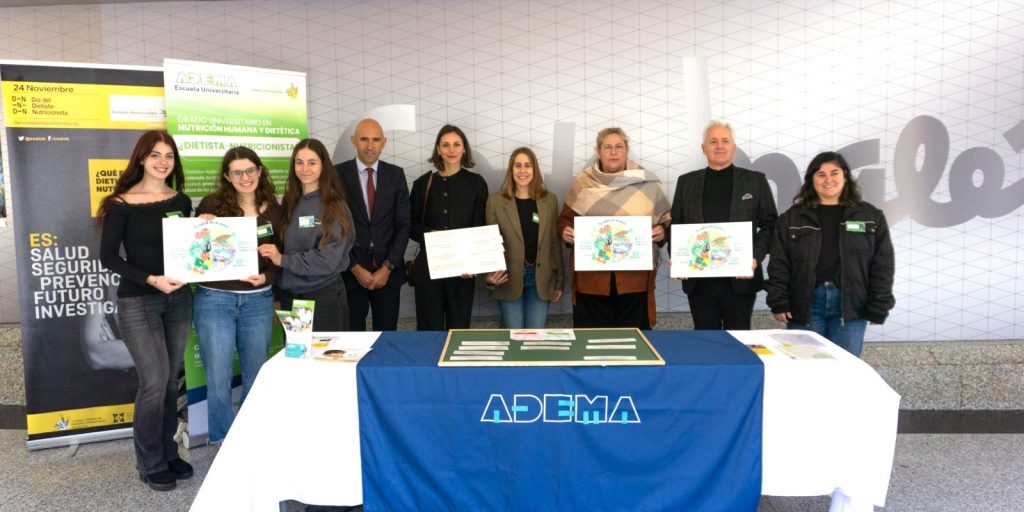
>> ADEMA celebrates Dietitian-Nutritionist Day >>> Students and teachers have been informing people outside the El Corte Inglés department store on Avenidas about the importance of a healthy and balanced diet. >> Studies by the ADEMA-IUNICS Research Group confirm that more than half of the population of the Balearic Islands does not follow a heart-healthy Mediterranean diet or engage in regular physical activity This morning, students from the Human Nutrition and Dietetics degree program at ADEMA shared information with the public at various locations within the El Corte Inglés department store on Avenidas, highlighting key aspects of reliable, evidence-based nutrition. ADEMA launched this new outreach initiative as part of Dietitian-Nutritionist Day, explained Dr. Alicia Julibert, Head of Studies for the Nutrition and Dietetics degree program, “with the aim of improving the population’s nutritional literacy and providing practical tools to recognize reliable and accurate information in an environment saturated with confusing and contradictory messages.” The students prepared various information points where they explained basic nutrition concepts, debunking some of the most common myths circulating on social media and showing examples of messages that, although presented as healthy advice, can cause confusion or health risks. They also offered practical information on how to create a balanced meal and how to recognize quality eating patterns, using educational resources that facilitate understanding of the scientific evidence. Dr. Alicia Julibert emphasized that “these types of activities have a very high educational value for future professionals. Facing real questions from the public forces them to translate academic content into clear and useful explanations, and strengthens their communication skills, which are essential for the practice of the profession. Furthermore, it is worth noting that nutritional literacy is one of the major challenges today, and that university education plays a key role in contributing to public health.” On the other hand, the action also incorporated messages in line with the recommendations of the General Council of Official Colleges of Dietitians Nutritionists, recalling that food misinformation has become one of the main public health challenges, due to the volume of unreliable content that is spread on social networks. The ADEMA-IUNICS Research Group conducted a study analyzing the eating habits and lifestyles of people aged 18 to 69 in the Balearic Islands during 2022 and 2023. The results show that more than half of the population does not follow a heart-healthy Mediterranean diet and does not engage in physical activity with the recommended frequency. This combination of factors is associated with an increased cardiometabolic risk, which includes problems such as obesity, insulin resistance, fatty liver disease, elevated atherogenic indices, and a higher risk of cardiovascular disease. The president of the ADEMA University School, Diego González, emphasized that these types of initiatives reflect the center’s commitment to an educational model that connects academic training with the social environment. He also argued that student participation in outreach projects helps strengthen their professional development and brings nutritional science closer to the general public. The presentation of the campaign was attended by the representative of the Official College of Dietitians and Nutritionists of the Balearic Islands, Concepción Pizá, the general director of Health and Consumer Affairs of the Palma City Council, María del Carmen Esparza, and the director of Institutional Relations of El Corte Inglés Balears, Antoni Sánchez, as well as members of the teaching team and students of the Degree in Human Nutrition and Dietetics of ADEMA.
The President of the Parliament of the Balearic Islands, Gabriel Le Senne, visits ADEMA and learns about its healthcare work, research projects and technological advances
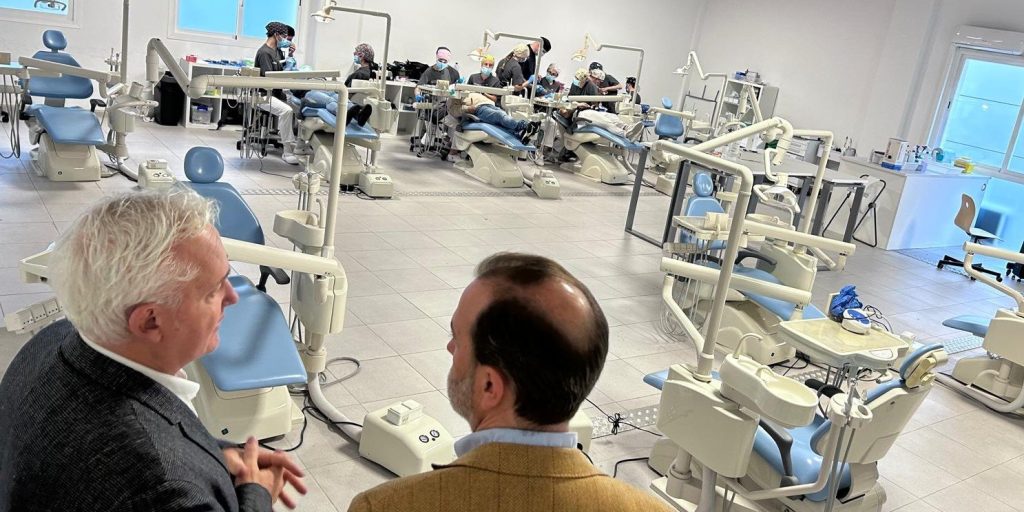
>> ADEMA promotes research programs for dental treatments, as well as for projects such as colon cancer, the development of epidural anesthesia, and research on the use of Artificial Intelligence in the early detection of oral cancer. The President of the Parliament of the Balearic Islands, Gabriel Le Senne, paid an official visit this afternoon to ADEMA, where he was received by the organization’s president, Diego González. During the meeting, a detailed presentation was given on the center’s academic, research, and healthcare structure, as well as ADEMA’s main lines of work in the areas of teaching, service provision, its impact on Balearic society, and technological advancements. The Speaker of Parliament toured the areas where university degrees and various vocational training programs are taught. He also visited the haptic and holographic virtual simulation room, a space where research programs are developed for dental treatments, as well as for projects such as colon cancer, the development of epidural anesthesia, and research into the use of artificial intelligence for the early detection of oral cancer. He also visited the biotechnology and biochemistry areas, where technological development research is carried out, such as patents for intraoral ultrasound probes or surgical support navigators, as well as the dental prosthesis laboratory area. The visit continued at the Integrated University Clinic, which boasts over 1,000 square meters dedicated to training and healthcare in a fully digitalized environment. The clinic features 45 treatment rooms equipped with three-dimensional technology and advanced diagnostic and treatment systems, including CBCT scanners, intraoral scanners, 3D printers, and digital microscopes. These resources allow for the integration of technology into student training and clinical practice, all carried out under professional supervision. Finally, the president elaborated on the Think Tank Space for the Fine Arts Degree, an environment dedicated to teaching, research, and creative processes in disciplines such as painting, printmaking, sculpture, and new technologies, as well as joint research projects with the healthcare sector for the development of simulation software in various surgical fields. The space also houses the library and coworking spaces for students and researchers in the art world. The president of ADEMA, Diego González, thanked the president of the Parliament for his visit and his interest in learning more about the academic and research activity of the institution, which has over 30 years of experience in the teaching sector and is an educational benchmark in the Balearic Islands.
ADEMA and ADIBA join forces to promote nutritional and dental care for people with diabetes in the context of World Diabetes Day
>> For a person with diabetes, maintaining good oral hygiene, making regular visits to the dentist, and monitoring their oral health is an integral part of overall care> > A balanced diet not only affects sugar, but also other factors such as cholesterol, blood pressure, body weight, and insulin resistance. >> The agreement establishes a scientific, educational and healthcare collaboration to improve prevention, clinical monitoring and health education for patients. The ADEMA University School and the Balearic Islands Diabetes Association (ADIBA) have signed a collaboration agreement this morning aimed at improving oral and nutritional care for people with diabetes in the Balearic Islands. The agreement was signed by the presidents of both institutions, Diego González and Margalida Riutort, on World Diabetes Day. The agreement includes the implementation of a comprehensive nutritional and dental care program, as well as joint outreach, research, and training activities. “This alliance with ADEMA represents an important step towards comprehensive care and improving the quality of life for the people who use our services,” emphasized Margalida Riutort, president of ADIBA. “It’s not just about providing care to these individuals, but also about educating, supporting, and raising awareness throughout society about the importance of healthy habits and prevention,” she stressed. For his part, the president of ADEMA, Diego González, emphasized the social purpose of our institution in health education and the training of professionals capable of generating a positive social impact. “This agreement reinforces the university and clinical vocation of our institution and allows us to advance in the learning model based on practice and service to the community,” he explained. The head of Studies for the Degree in Dentistry, Dr. Pere Riutord, has argued that “for a person suffering from diabetes, maintaining good oral hygiene, making regular visits to the dentist and monitoring their oral health is an integral part of overall care.” On the other hand, Dr. Alicia Julibert, head of studies for the Bachelor’s Degree in Human Nutrition and Dietetics, stated that “a healthy diet plays a key role in managing diabetes. Following a balanced diet based primarily on fruits and vegetables, legumes, and whole grains helps maintain stable glucose levels and reduces cardiovascular risk, which is higher in people with diabetes. Likewise, maintaining a proper distribution of meals throughout the day helps prevent fluctuations in blood glucose levels.” The agreement establishes a referral protocol from ADIBA to the ADEMA Comprehensive University Clinic of Dentistry and Nutrition, where patients will be treated by qualified dietitians-nutritionists and dentists, with the supervised collaboration of students of the Degree in Human Nutrition and Dietetics and the Degree in Dentistry. Beyond the clinical setting, an academic, social, and research component is also envisioned. Both entities are committed to developing joint activities in training, applied research, and scientific dissemination, including seminars, workshops, and prevention events. In the context of World Diabetes Day, ADEMA and ADIBA recommend promoting knowledge, early detection and collective action against this disease that affects more than 120,000 people in our Islands, although nearly half have not yet been diagnosed.