
ADEMA and the Balearic Islands Medical Association sign a collaboration agreement to promote academic training and research in the field of Medicine and Health Sciences
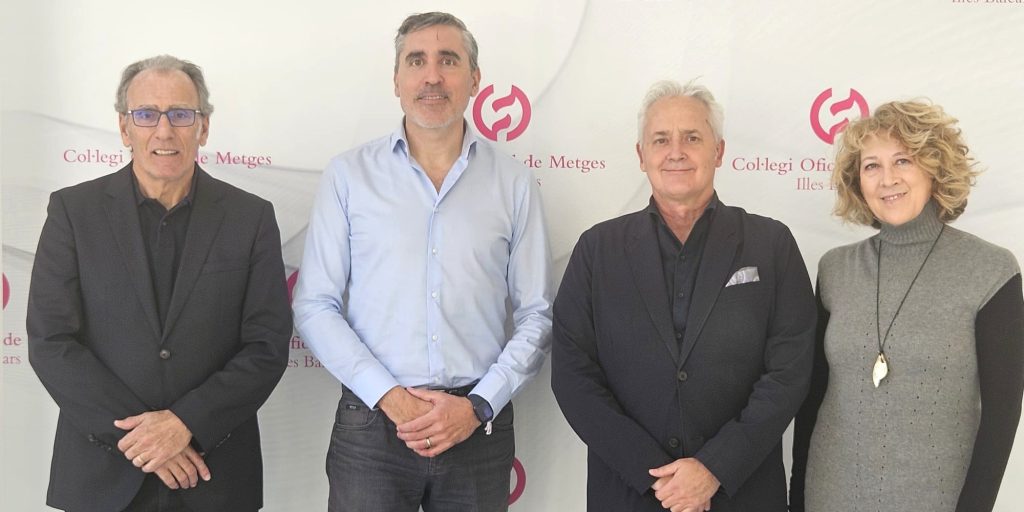
>> The agreement establishes a framework for academic cooperation through which the professional experience of COMIB will be integrated into the design and development of university studies for the future Degree in Medicine. >> The initiative consolidates the launch of the future University of Mallorca, focused on academic excellence, employability, and promoting diversification and the knowledge economy. >> Carlos Recasens: “We share a clear vision: to promote quality training and create real opportunities for young people and professionals who want to develop in strategic sectors.” >> Diego González: “Having the experience and knowledge of COMIB will allow us to offer rigorous, up-to-date training aligned with professional practice.” ADEMA and the Col·legi de Metges de les Illes Balears have signed a collaboration agreement to strengthen academic training, research and institutional cooperation in the field of Medicine and Health Sciences in the Balearic Islands. The agreement, which was signed this morning by the president of ADEMA, Diego González, and by the president of the Col·legi de Metges de les Illes Balears, Carlos Recasens, establishes a framework for cooperation to share academic and training resources, with the aim of promoting excellence in university education, encouraging the continuous updating of knowledge and strengthening the links between the academic field and the medical professional practice. Among the planned measures is access for students enrolled in undergraduate, master’s, and doctoral programs at the future University of Mallorca, as well as its teaching and research staff, to the bibliographic and documentary holdings of the Medical Association Library, exclusively for in-library consultation and for academic and research purposes. This measure will strengthen the development of undergraduate and master’s theses, as well as doctoral projects and research initiatives related to the Health Sciences. The president of the Balearic Islands Medical Association, Carlos Recasens, stated that “it is an honor to formalize this agreement with ADEMA. We share a clear vision: to promote quality training and create real opportunities for young people and professionals who want to develop in strategic sectors.” In this regard, he added that “this agreement will allow us to work in a coordinated manner, combine knowledge, and move towards a more innovative and competitive model. I am convinced that this collaboration will be very beneficial for both institutions and, above all, for the students who represent the future.” For his part, the president of ADEMA, Diego González, stated that “this agreement represents a significant step in consolidating a university project that aims to offer rigorous, up-to-date medical training connected to the healthcare realities of the region. Collaboration with this institution will allow us to integrate professional experience into the design of the programs and ensure that they meet the needs of the healthcare system.” In the academic sphere, the College of Physicians will participate in the drafting committee for the curriculum of the future Bachelor’s Degree in Medicine once the University of Mallorca establishes the corresponding faculty. Furthermore, it may propose professionals who meet the legal requirements to join the faculty of undergraduate or master’s programs related to Medicine. The agreement also includes collaboration on scientific, cultural, and educational activities, as well as the potential sponsorship of conferences and events related to shared interests in the healthcare field. The agreement will have an initial term of four years, renewable, and will include a monitoring committee composed of representatives from both entities to oversee its implementation and resolve any issues that may arise. It also stipulates that registered physicians and their children who provide proof of enrollment in academic studies will be able to use university libraries, thus expanding access to specialized resources and fostering knowledge exchange between the university and the medical profession. Furthermore, a 15 percent discount will be applied to tuition fees for courses offered by the University of Mallorca for registered physicians and their children. Additionally, a procedure is planned to allow continuing education courses organized by the Medical Association to be recognized for academic purposes within the university setting.
De la simulación 3D al taller artístico: estudiantes con altas capacidades exploran vocaciones universitarias en ADEMA con una jornada STEAM
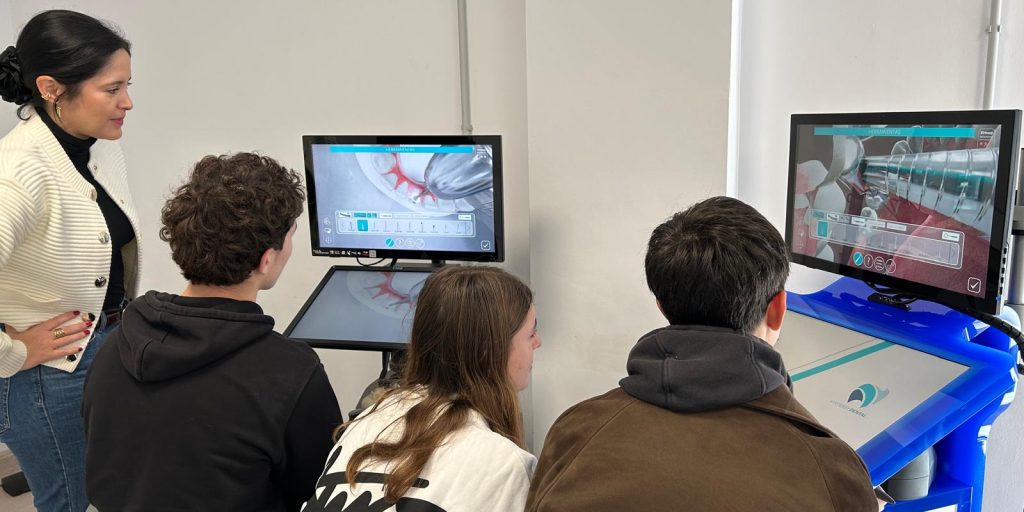
>>The UIB MENTORiment programme is designed to encourage university professional vocations in a creative way >> Participants will explore tactile and holographic 3D virtual simulation, innovation, and creativity in various multidisciplinary fields. This morning, the ADEMA University School developed a multidisciplinary training experience aimed at students with high intellectual abilities from the MENTORiment program of the University of the Balearic Islands, with the objective of encouraging university vocations through STEAM methodologies and the use of digital and immersive technologies applied to the fields of Health and Art. The activity took place at ADEMA’s Palma campus and brought together third and fourth year ESO, Baccalaureate and Vocational Training students, who participated in different workshops aimed at bringing them closer to university learning contexts and facilitating the exploration of academic and professional pathways. During the day, participants worked with tactile 3D virtual simulation tools and immersive technology, engaging in creative processes linked to both scientific research and contemporary artistic practice. The program included workshops in Dentistry, Human Nutrition and Dietetics, and Fine Arts, with an interdisciplinary approach focused on experimentation and reflection on the application of knowledge. The sessions were led by Dr. Daniela Vallejos and professors Pablo Estebala and Xisco Duarte. According to the professors, “the participants were enthusiastic about the tools used, which introduced them to a future where the intersection of science, technology, and art will play a key role.” In the field of Dentistry, the workshop has allowed students to experience clinical simulation environments using haptic 3D technology, geared towards training precision and planning in procedures. Dr. Daniela Vallejos explained that “advanced simulation allows students to engage in diagnostic and decision-making processes with a level of realism that helps them understand the technical demands of clinical practice and its technological evolution.” The Human Nutrition and Dietetics activity recreated situations typical of the professional and practical field. Professor Pablo Estebala explained that “the students simulated a nutritional consultation through a role-playing exercise, carried out food quality analysis and assessment tests with the support of laboratory equipment, and prepared a healthy dish following the Harvard Healthy Eating Plate model, which was evaluated based on dietary and nutritional criteria.” In the Fine Arts area, the course, as explained by instructor Xisco Duarte, was approached “with an approach that integrated graphic tradition and contemporary technology. The workshop consisted of a woodcut and laser-cutting project in which students worked from drawing and visual thinking, investigating the image as a matrix and its translation into the digital environment.” “The idea is for students to understand printmaking as a process of visual research, and to be able to make technical and conceptual decisions from the outset, combining artistic sensibility with modern tools such as laser cutting,” he stated. ADEMA has emphasized that the STEAM approach helps broaden academic horizons and strengthen transversal skills related to problem-solving, innovation, and adaptability. In this regard, the faculty has highlighted that “the methodology not only provides content but also develops skills that will be crucial in the job market and for emerging professional profiles.” This activity is part of the MENTORiment program, promoted by the University of the Balearic Islands through its Program for Attention to High Intellectual Abilities, in collaboration with the Directorate General for Innovation and Educational Community of the Ministry of Education and Universities, and directed by Dr. Rosabel Rodríguez. The program aims to offer extracurricular enrichment experiences tailored to the educational needs of gifted students and to facilitate academic and career guidance at key stages of their development.
ADEMA and Humana Health & Care sign an agreement for the practical training of Health Sciences students of the future University of Mallorca
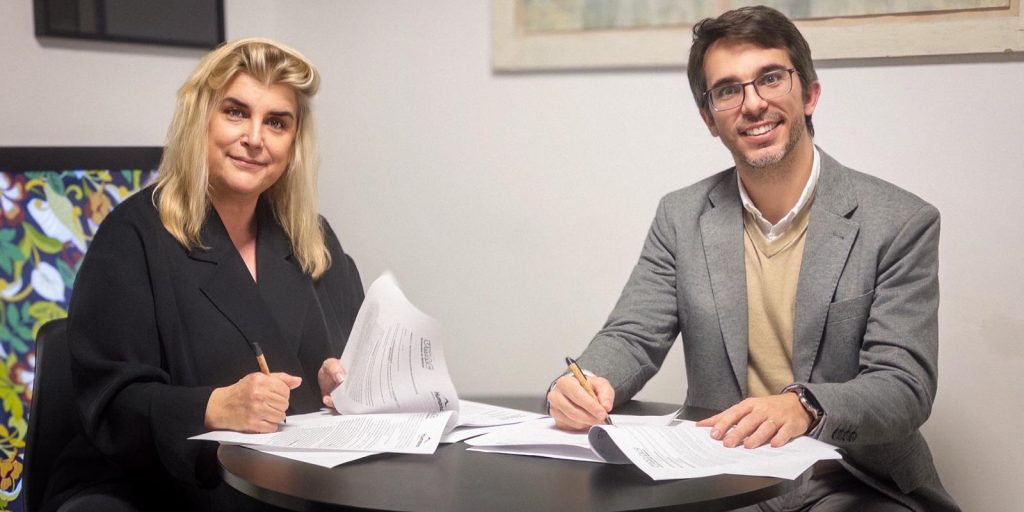
>> The agreement will allow future professionals to apply knowledge in real-world settings and develop clinical and human skills. >> The initiative consolidates the strategy of the future University of Mallorca, focused on academic excellence, employability, and promoting diversification and the knowledge economy. ADEMA and Humana Health & Care have formalized a collaboration agreement that will allow students of future Health Sciences degrees at the University of Mallorca (UMAC) to carry out academic internships in this health organization. ADEMA incorporates as a collaborating company a healthcare institution specializing in comprehensive care for chronic patients with complex needs in the home environment, ensuring that students can learn in a real and highly specialized clinical context. Carlos López, the CEO of ADEMA, has welcomed the agreement, which will allow each student to have a university academic tutor and a professional tutor assigned by this healthcare organization. He explained that “this practical experience will be officially recognized within the curriculum and is an important component in the training of future healthcare professionals.” In this regard, he argued that “the innovative educational methodology based on learning projects in real environments is a strength of ADEMA since it brings students closer to clinical practice and promotes their involvement in healthcare dynamics, the acquisition of skills and the ability to work in a coordinated manner with other healthcare professionals.” Dr. Karina Ojanguren of Humana Health & Care expressed her satisfaction with the agreement reached with ADEMA, as it facilitates the connection between university education and the real needs of the healthcare system. “Opening the doors to students also enriches the daily work of the teams, who incorporate new perspectives and actively participate in the training of young talent,” she stated. Both Carlos López and Karina Ojanguren agreed that “external placements in hospital settings are a fundamental component of the training of university students in Health Sciences, as they allow for the effective integration of theory acquired in the classroom with clinical practice in real-world environments. This direct contact with professional reality fosters an understanding of the tasks, functions, and responsibilities performed in different healthcare, social care, or community settings.” On the other hand, it is worth noting that exposure to the dynamics of a hospital also fosters the acquisition of a comprehensive view of the profession. “Practice is not limited to the execution of procedures, but involves the internalization of ethical values, the understanding of the human dimension of care, and the assimilation of the importance of interdisciplinary work. This training process contributes to consolidating clinical judgment based on experience, gaining firsthand knowledge of the different areas of specialization, exploring career paths, and strengthening students’ ability to act responsibly and empathetically in their relationships with patients and families, in problem-solving, and in decision-making in high-pressure situations.” Humana Health & Care is a company specializing in comprehensive healthcare, with over 14 years of experience caring for people, having treated more than 4,000 patients and conducted over 405,000 visits. Its mission is to improve the quality of life of its patients through personalized care and the use of cutting-edge technology. Founded in 2011 by Dr. Karina Ojangures, Humana began as a home healthcare service in Mallorca and has since evolved into a comprehensive healthcare model, encompassing health, social, and wellness services for people with complex conditions. Currently serving Mallorca and Barcelona, Humana is supported by a highly qualified multidisciplinary team. Humana offers home care, continuous home monitoring using digital tools, and in-person consultations at its medical center. Through its digital care platform, Humana connects patients, caregivers, families, and healthcare professionals, facilitating coordinated care and continuous monitoring beyond traditional healthcare settings.