
Nine out of ten ADEMA students rate the center’s operation and the teaching staff positively in their university degrees.
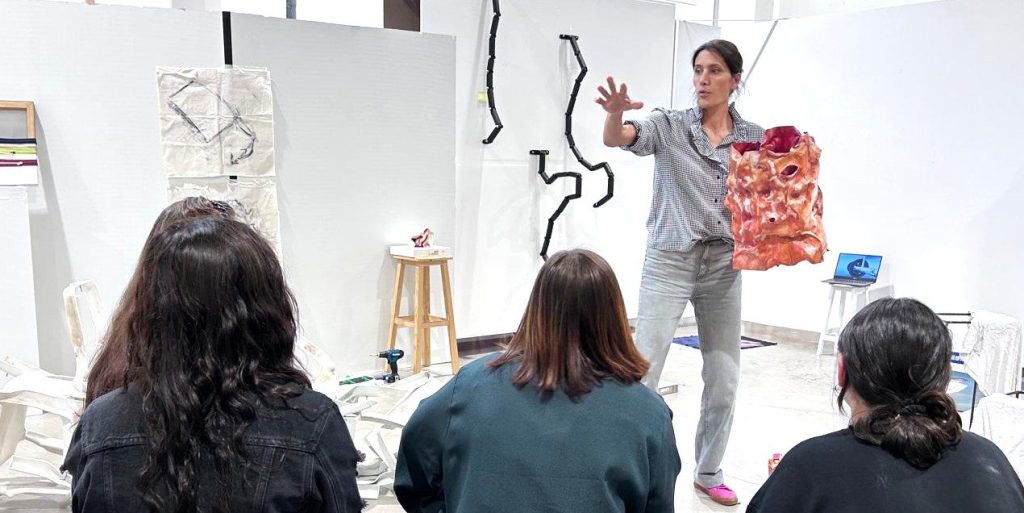
<<< Quality surveys for Dentistry, Human Nutrition and Dietetics and Fine Arts, audited by AENOR in accordance with the ISO 9001 standard, reflect high satisfaction with the academic experience, the innovative educational methodology and the teaching team, with a participation of over 75% of the students. >> Eight out of ten Dentistry students report being satisfied or very satisfied with their university experience. >> Human Nutrition and Dietetics achieves a 97% positive rating in the functioning of the center among its students. >> Fine Arts achieves a 91% positive rating in the first half of 2025/2026 from the center’s organization. The ADEMA University School has consolidated high levels of satisfaction among students in its undergraduate programs in Dentistry, Human Nutrition and Dietetics, and Fine Arts, according to the results of quality surveys for the 2024/2025 academic year and the first semester of the 2025/2026 academic year. The data is integrated into the center’s internal quality assurance system, audited annually by AENOR in accordance with the ISO 9001 standard, and forms part of the monitoring reports that ADEMA submits to the University of the Balearic Islands (UIB) and the Balearic Islands University Quality Agency (AQUIB). The results reflect a largely positive assessment of the center’s overall functioning, its innovative teaching methodology based on Project-Based and Service-Learning, the practical experience in real-world settings, and the teaching staff. Percentages exceed 90% in several of the main indicators analyzed, particularly regarding the center’s functioning and the evaluation of the teaching team. The surveys, conducted periodically as part of internal processes for monitoring and improving academic quality, have an exceptionally high student participation rate, exceeding 75% of students enrolled in each degree program. As explained by the Academic Secretary, Dr. Pilar Tomás, “this level of participation lends a high degree of representativeness to the results and allows us to obtain a comprehensive and rigorous snapshot of the university community’s perceptions.” University quality is not measured solely by curricula, facilities, or available resources, but also by the daily experience of those who are part of the institution. Therefore, satisfaction surveys are a fundamental tool for identifying strengths, pinpointing areas for improvement, and continuously adapting academic activities. Beyond the perceptions of students and faculty, the Dentistry Degree program successfully completed its official accreditation process last academic year, receiving a highly favorable evaluation from the Balearic Islands University Quality Agency (AQUIB). This external assessment analyzes aspects such as teaching quality, academic organization, learning outcomes, facilities, and internal continuous improvement systems, thus reinforcing the positive evaluation of the center’s academic and organizational model. The Bachelor’s Degree in Human Nutrition and Dietetics has completed its accreditation process this academic year. Although the final report has not yet been issued, the preliminary assessment by the panel of external experts has been very positive, highlighting several academic and organizational strengths of the degree. These accreditation processes are one of the main mechanisms for independent evaluation of the university system and represent an objective guarantee of quality for the educational community. Degree in Dentistry: 94% of students rate the center’s operation positively In the Dentistry degree program, directed by Dr. Pere Riutord, the results show remarkable stability in the assessment of the center’s overall performance. In both the 2024/2025 academic year and the first semester of 2025/2026, 94% of students gave a positive evaluation, while 84% reported being satisfied or very satisfied with their university experience. Teaching methodology has also shown positive evolution in this degree program. In the 2024/2025 academic year, 84% of students rated their experience positively, and 59% reported being satisfied or very satisfied. In the first semester of the 2025/2026 academic year, positive ratings reached 86%, and the percentage of students who were satisfied or very satisfied rose to 62%. The evaluation of the teaching staff in Dentistry also remains at high levels. In 2024/2025, 92% of students gave favorable ratings to the teaching team, and 82% stated that they were satisfied or very satisfied with the teaching they received. In the first half of 2025/2026, positive ratings increased to 93% and high or very high satisfaction reached 85%. Degree in Human Nutrition and Dietetics: The positive assessment of the center’s operation amounts to 97% The Bachelor’s Degree in Human Nutrition and Dietetics, led by Dr. Alicia Julibert, is also showing positive progress in its main indicators. Regarding the overall functioning of the center, 93% of students gave a positive assessment in the 2024/2025 academic year, and 85% reported being satisfied or very satisfied. In the first semester of 2025/2026, these percentages rose to 97% and 87%, respectively. In teaching methodology, Nutrition went from 85% positive ratings in 2024/2025 to 89% in the first semester of 2025/2026. The percentage of students satisfied or very satisfied with the teaching model also increased, going from 54% to 61%. The evaluation of the teaching staff in this degree program has achieved some of the most outstanding results. In the 2024/2025 academic year, 93% of students rated the teaching team positively, and 82% reported being satisfied or very satisfied. In the first semester of 2025/2026, positive evaluations rose to 96%, and high or very high satisfaction reached 90%. Bachelor of Fine Arts: 96% of students rated the overall functioning of the center positively In the Bachelor of Fine Arts program, directed by the internationally renowned artist Dr. Amparo Sard, the data also reflects a predominantly favorable perception. During the 2024/2025 academic year, 96% of students gave a positive assessment of the center’s overall functioning, and 85% expressed satisfaction or high satisfaction. In the first semester of 2025/2026, 91% maintained a positive assessment, and 77% expressed a high or very high level of satisfaction. The teaching methodology in Fine Arts shows positive evolution. In the 2024/2025 academic year, 86% of students rated the educational approach favorably, and 59% reported being satisfied or very satisfied. In the first semester of 2025/2026, these figures increased to 88% positive ratings and 64% high or very high satisfaction. The Fine Arts faculty maintains a particularly strong reputation.
ADEMA celebrates the birth of the new University of Mallorca (UMAC-ADEMA)
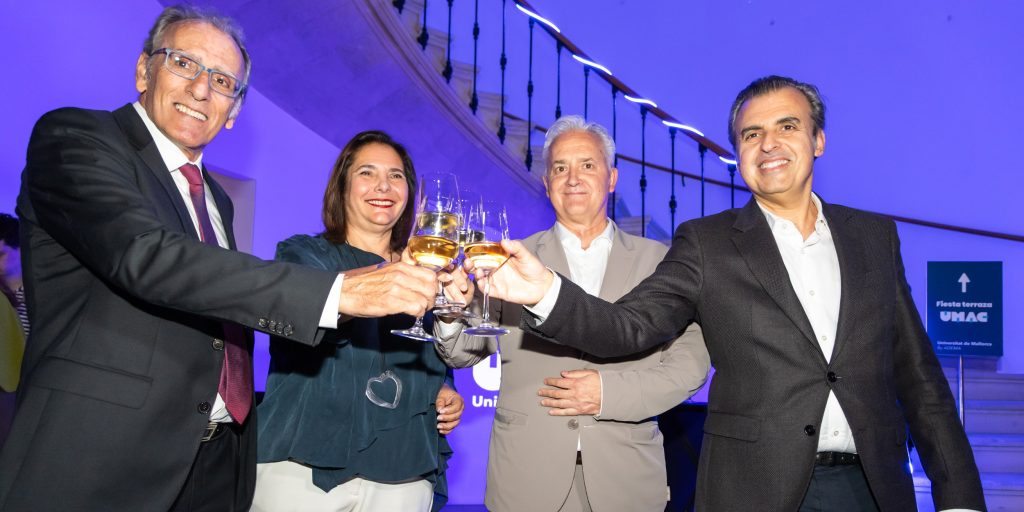
>> Law 2/2026, of April 27, of the University of Mallorca, has been published today in the Official Bulletin of the Balearic Islands, formalizing the recognition of the new university of the Balearic university system. >> Diego González, president of UMAC-ADEMA: “The new University of Mallorca is a collective commitment to talent, knowledge, research and the future of the Balearic Islands” >> The president of the University of Mallorca (UMAC-ADEMA) thanked all the public and private institutions, socio-economic entities, professional associations and collaborating companies, among other organizations, that have supported this project and contributed to making it possible. >> Diego González: “Today we celebrate an important step, but above all, we assume a responsibility. That is our commitment and also our way of repaying, with hard work and responsibility, the trust that so many people have placed in us.” >> ADEMA, with over 30 years of experience in higher education, is launching this new academic institution to offer society a new range of undergraduate, master’s, and doctoral degrees linked to strategic, high-demand sectors, most of which are not yet available in the Balearic Islands. It has a network of campuses in Mallorca, with locations in Inca and Palma. The University of Mallorca (UMAC-ADEMA) held an institutional meeting this evening to mark the creation of the new university institution, an important step for higher education in the Balearic Islands and for promoting academic, research and socio-economic diversification development in the Islands. Law 2/2026, of April 27, of the University of Mallorca, has been published today in the Official Bulletin of the Balearic Islands, formalizing the recognition of the new university of the Balearic university system. The meeting brought together institutional representatives, socio-economic entities, professional associations, collaborating companies, the academic community and the ADEMA team, among others, in a celebration conceived as a space for gratitude and shared recognition of all the people who have accompanied the development of the project. During the meeting, the University of Mallorca (UMAC-ADEMA) emphasized the collaborative nature of the creation of this new academic institution and expressed its gratitude to all those who, from various fields, contributed to making it possible. The celebration also served to acknowledge the trust, collaboration, and commitment that have guided UMAC’s development since its inception. The president of the University of Mallorca (UMAC-ADEMA), Diego González, emphasized that “the Balearic Parliament’s approval of the University of Mallorca represents a significant step for the Balearic Islands and a cause for profound gratitude. Today we want to say thank you. Thank you to all the people, institutions, organizations, companies, and the ADEMA team who believed in this project and contributed to making it possible. The University of Mallorca is a collective commitment to talent, knowledge, research, and the future of the Balearic Islands. This project doesn’t originate from just one institution, but from the shared commitment of those who understood the need to expand university opportunities in our Islands.” In this regard, González also emphasized that “the University of Mallorca was founded with a vocation for service, deeply rooted in Mallorca, and with a clear commitment to internationalization. We want it to be a university for Balearic society, connected to its real needs, capable of developing talent, preventing the brain drain of qualified young people, generating knowledge, and contributing to the socioeconomic and cultural development of the islands. That is our commitment and also our way of repaying, through hard work and responsibility, the trust that so many people have placed in us.” It is worth recalling that the University of Mallorca (UMAC-ADEMA) was created with the aim of expanding higher education opportunities in the Balearic Islands, strengthening the academic offerings in strategic sectors, promoting research, and bringing the university closer to society as a whole through a network of four campuses distributed across Mallorca (Inca and Palma). The project, driven by ADEMA, builds on over 30 years of experience in higher education, educational innovation, applied research, and collaboration with the economic and social fabric of the Islands. The new university institution is conceived as a response to some of the main needs of the territory: to offer new degrees with high academic and professional demand, to prevent the brain drain of Balearic talent, to attract national and international students and qualified profiles, and to contribute to a greater balance of the university system of the Balearic Islands. Furthermore, its activities will be structured around a network of campuses designed to bring higher education closer to society and connect different urban areas of the island. This structure will allow for the development of a more accessible university, connected to the social and economic fabric, and capable of revitalizing different areas of Mallorca through education, research, innovation, and knowledge transfer. The new academic offerings will be geared towards strategic sectors and areas currently in high demand by society and the job market. In the area of Health Sciences, the university plans to incorporate degrees such as Medicine, Biomedicine, Biomedical and Health Engineering, Speech Therapy, Human Nutrition and Dietetics, and Dentistry (the latter also offered in English), in addition to specialized master’s programs and a doctoral program in Health Sciences. Alongside this line, it will develop a second area focused on Architecture, Arts, Design, Social Sciences, Technology and Management, with degrees such as Architecture, Political Science and Public Administration, Sports Business Management (also in English), Design, Video Game Design, Data Engineering, Sociology, Sociology and Data Engineering and Fine Arts (also in English), as well as master’s and doctoral programs linked to art, design, architecture and the humanities. The University of Mallorca (UMAC-ADEMA) is also launching with a clear focus on research and international engagement. Its academic model will emphasize interdisciplinarity, the practical application of knowledge, collaboration with international universities and research centers, and the use of innovative methodologies and advanced technologies in teaching and research. The new university has a strong connection with the economic and social fabric of the Balearic Islands, relying on a broad network of collaboration with companies, institutions and entities from
National and international experts are discussing at ADEMA the challenges of nutrition marked by new pharmacological treatments against obesity and the rise of plant-based diets
>> The 5th International Nutrition Week will also address gut health, personalized nutrition, sports performance and chronic kidney disease from a scientific and clinical perspective. >>Dr. Giuseppe Russolillo: “Injectable treatments for obesity will require new foods that promote satiety and will need the support of a professional dietitian-nutritionist.” >> During the International Week of Teaching and Research, the discussion focuses on how food science is advancing towards more personalized, preventive models adapted to new health challenges. The ADEMA University School inaugurated this afternoon the V International Nutrition Week in which national and international experts will meet until next Friday, April 24, at the Coll d’en Rabassa Campus of ADEMA, to address how food, clinical practice and food systems are evolving at a time of profound transformation. At the opening ceremony, ADEMA President Diego González highlighted the importance of creating meeting spaces like the International Nutrition Week to anticipate the changes that are already transforming clinical practice, research and training in nutrition, underlining the institution’s commitment to teaching connected with scientific and health realities. For his part, the honorary president of the International Nutrition Week and the World Conference of Dietitians Nutritionists, Dr. Giuseppe Russolillo, highlighted the role of these days as a national and international forum to address the major challenges of the sector, from the impact of new pharmacological treatments to the need to move towards more personalized, preventive and evidence-based nutrition models. One of the main focuses of this edition will be the impact of GLP-1-based pharmacological treatments for obesity, an issue that is marking a turning point in clinical practice. Expert Leyre Urtasun, Head of Product Development for R&D&I at CNTA, the National Center for Food Technology and Safety, in San Adrián (Navarra), will center her presentation on how these treatments have profoundly altered patients’ feelings of satiety, eating behavior, and digestive tolerance, opening a new landscape that affects both clinical practice and food innovation. Her presentation will focus on three particularly relevant profiles. First, individuals with obesity who are not undergoing pharmacological treatment and who require strategies to modulate satiety naturally. Second, patients undergoing GLP-1 inhibitor therapy who may experience nausea, sensory changes, reduced gastric tolerance, and a risk of micronutrient deficiencies. The presentation will also address the situation of those who discontinue this medication and need to avoid the rebound effect and rapid return of appetite. Furthermore, the presentation will demonstrate how the food industry is already responding to this shift with new products, prototypes, and research projects adapted to this metabolic reality. According to Dr. Giuseppe Russolillo, “the percentage of the population undergoing treatment with drugs like Ozempic or Mounjaro is constantly increasing. In this context, he emphasizes the need for patients to have the support of a registered dietitian nutritionist throughout the entire process, especially in the phase following treatment withdrawal, when it will be crucial to incorporate foods that promote satiety and help counteract the effects of discontinuing GLP-1 agonists.” Alongside this highly topical issue, ADEMA’s International Teaching and Research Week will also pay special attention to the rise of plant-based diets, another topic with a strong presence in research and public discourse. Researcher Raúl López Grueso, professor and researcher at the European Network Specialised in Dietetics for Sport and Physical Activity (EFAD-ESDN SPA), has analyzed how plant-based dietary patterns influence athletic performance, recovery, and the sustainability of the food system. His presentation delved into the available scientific evidence on their potential benefits for cardiovascular health, body composition, and endurance sports, as well as the challenges they pose in relation to protein intake, the prevention of nutritional deficiencies, and the need for proper dietary planning. Along these same lines, Iva Marques-Lopes, a registered dietitian-nutritionist and professor of Nutrition and Food Science at the University of Zaragoza, led a workshop focused on the application of vegan and plant-based diets in clinical practice. The session addressed fundamental aspects of the nutritional care process, such as nutritional status assessment, intake monitoring, review of supplement use, and analysis of biochemical parameters. It also covered the planning of balanced menus, nutritional education, and the prevention of deficiencies in key nutrients such as vitamin B12, vitamin D, iron, and DHA. The workshop also provided practical tools for designing individualized and nutritionally adequate diets for people following vegetarian and vegan lifestyles. The 5th International Nutrition Week also included a look at the future of food from a technological and systemic perspective. Óscar Rodríguez Barragán, a researcher at EURECAT-Technological Centre of Catalonia, presented various European projects related to personalized nutrition, prevention, healthy aging, food safety, water quality, and the reduction of pollutants in industry. His presentation demonstrated how the nutrition of the future will depend not only on general or individual recommendations, but also on the system that ensures food reaches consumers in safe, sustainable conditions, adapted to new health and social challenges. The program will also dedicate time to gut health and supplementation, an area that has gained significant prominence in both research and public demand. This thematic focus will allow for a rigorous, evidence-based approach to issues related to the gut microbiota, digestive well-being, and the role of supplements in current nutritional interventions. The closing session of the international week will feature Cristina Garagarza, a nutritionist and professor at the University of Lisbon, who will focus her presentation on nutrition in chronic kidney disease. Her talk will review the role of potassium and phosphorus in the dietary management of these patients and will highlight the need to move beyond rigid and generalized restrictions towards more individualized strategies. The session will emphasize a more up-to-date approach to renal nutrition, based on nutrient bioavailability, the overall nutritional value of foods, and each patient’s specific clinical situation, with the aim of improving safety and quality of life. With this program, the 5th International Nutrition Week will bring together experts from leading academic, scientific, and technological institutions at ADEMA, solidifying Palma as a meeting place for analyzing the major challenges of contemporary nutrition. This initiative also reinforces ADEMA’s commitment to internationalization,