
The University of Mallorca presents its strategic plan for the institution’s development and launch to Marga Prohens.
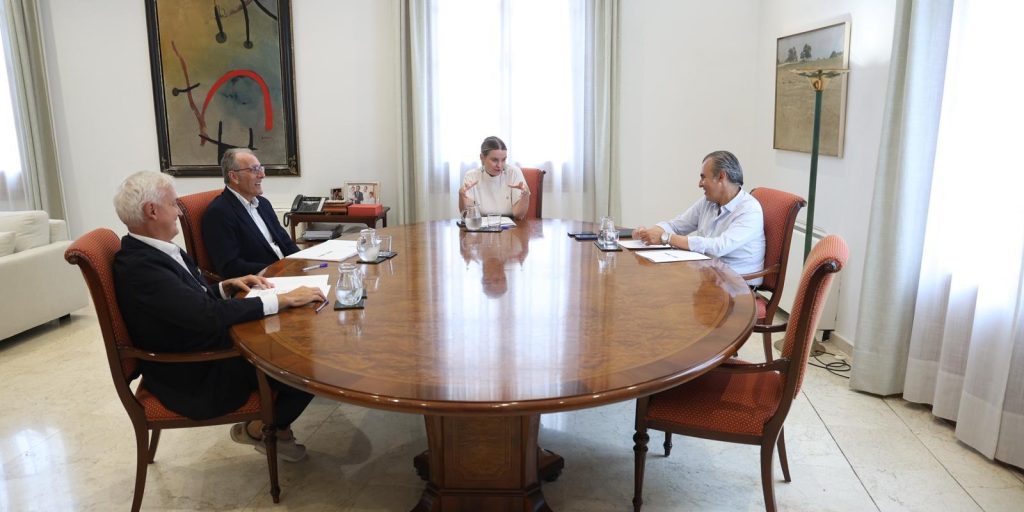
>> The President of the Governing Council, Diego González, and the Rector, Pere Riutord, present the progress of the new university center to the President of the Government, Marga Prohens, and the Regional Minister of Education and Universities, Antoni Vera. >> The institution has already submitted 19 academic proposals for new bachelor’s and master’s degree programs to AQUIB, with plans to begin their phased implementation starting in the 2027/28 academic year. >> The launch and development of the new university institution entail an investment of nearly 73 million euros for the rollout of the degree programs planned for its first phase. Additionally, more than 9 million euros will be allocated to scholarships and study grants. >> The future Medicine degree program will have a clear inter-island dimension, incorporating clinical training in Ibiza during an initial phase to foster the generation and retention of healthcare talent and help alleviate the shortage of professionals. In a subsequent phase, this model will also be extended to Menorca. The University of Mallorca (UMAC-ADEMA) has presented its Strategic Plan for the development and launch of the new university institution to the President of the Government of the Balearic Islands, Marga Prohens, during an official meeting attended also by the Regional Minister of Education and Universities, Antoni Vera. Representing the University of Mallorca, the President of the Governing Council, Diego González, and the Rector, Pere Riutord, attended the meeting; they briefed the President on the key progress made since the university’s official recognition, as well as the upcoming academic, research, institutional, and regional milestones planned for the coming months. Following its formal recognition under Law 2/2026 of April 27, the University of Mallorca is embarking on a new phase focused on rolling out its academic offerings, research, and knowledge transfer; consolidating its existing university structures and teaching staff; expanding strategic partnerships; and preparing for the launch of its own academic activities. The institution is working with the aim of progressively rolling out new degree programs starting in the 2027/28 academic year, once the corresponding evaluation, verification, and authorization processes have been completed. Diego González, President of the Governing Council of the University of Mallorca, has highlighted that the institution is “very excited about the launch of the new university and the progress we are making,” and has underscored that the goal is to build a project that is “solid, transformative, and deeply connected to our reality.” 19 reports submitted to AQUIB The new academic offering will initially include bachelor’s degrees in Biomedicine, Health Engineering, Medicine, Speech Therapy, Human Nutrition and Dietetics, and Dentistry—the latter also available in English. These will be joined by Architecture, Fine Arts (also in English), Political Science, Public Administration, Sports Business Management, Design, Video Game Design, Data Engineering, Sociology, and the double degree in Sociology and Data Engineering. Postgraduate training will be rounded out by master’s programs in Oral Surgery and Implantology, Oral Health Engineering, Clinical Nutrition, Digital Dentistry (also offered in English), Enabling Architecture, and Professional Development in Fine Arts and Product Design, as well as doctoral programs in Health Sciences and in Art, Architecture, and Social Transformations. One of the key developments presented during the hearing was the submission of 19 academic proposals for new bachelor’s and master’s degree programs to the University Quality Agency of the Balearic Islands (AQUIB), thereby initiating the corresponding evaluation and verification procedures. The Rector of the University of Mallorca, Pere Riutord, has noted that the future academic program reflects a commitment to building a university closely aligned with the region’s actual needs. “We want to identify where there is a genuine need for professionals and knowledge, and shape our academic offerings around those challenges,” he explained, highlighting fields such as health, technology, architecture, design, data, social sciences, and management. Ibiza and Menorca, key to UMAC’s inter-island dimension. The territorial and inter-island dimension of the University of Mallorca was another key issue addressed during the institutional audience. As announced by the President of the Governing Council, Diego González, “UMAC plans to move forward with formalizing strategic agreements in Ibiza related to the health sciences, with the aim of expanding practical training opportunities for students, strengthening collaboration with the island’s healthcare sector, and generating new opportunities for applied research, innovation, and knowledge transfer, as well as helping to alleviate the shortage of healthcare professionals. This collaboration and training model will subsequently be extended to Menorca, reinforcing the inter-island dimension of the university project.” One of the stated objectives is for the future Medicine degree program to have a truly Balearic dimension, and for part of the students’ clinical and practical training to take place in Ibiza and Menorca. González explained that the institution’s aim is for “future students to gain insight into the healthcare reality of our islands during their training and establish connections with local centers and professionals, and for this experience to contribute—in the medium and long term—to fostering the generation and retention of healthcare talent.” The launch and development of the Universitat de Mallorca entail an investment of nearly 73 million euros to roll out the degree programs planned for its initial phase. The institution has already executed approximately half of this investment, primarily allocated to the creation, adaptation, and equipping of its university infrastructure. These facilities are currently operational and ready to host teaching, research, and clinical activities. The project also incorporates a long-term commitment to equal opportunities, academic quality, and knowledge generation. Over the next ten years, the University of Mallorca plans to allocate more than 9 million euros to scholarships, with a particular focus on high-achieving students from low-income backgrounds. This is complemented by an ongoing policy of technological and infrastructure renewal—to which between 7% and 16% of the annual budget will be dedicated—as well as a steadfast commitment to research, which will receive a minimum of 7% of the budget each year and include, among other measures, pre-doctoral and post-doctoral scholarship programs. Research and knowledge transfer Research constitutes another of the major pillars of the Strategic Plan presented
The University of Mallorca reinforces its commitment to internationalization at a meeting with the Consular Corps of the Balearic Islands.
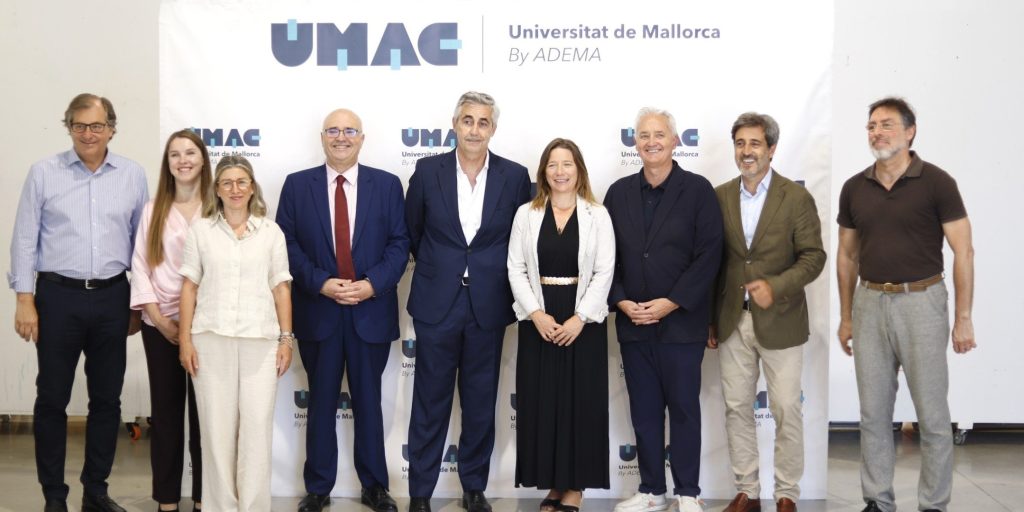
>> Consular representatives have visited the Palma-Son Rossinyol Campus to learn about the academic, research, and institutional project of the new university driven by ADEMA. >> Diego González appreciates the visit by consular representatives and champions internationalization as one of the strategic pillars of the new university project. >> Michel Magnier, Dean of the Consular Corps of the Balearic Islands, has welcomed the visit and expressed interest in establishing future avenues of collaboration with the University of Mallorca, particularly with the aim of introducing the new university project to international residents in the Balearic Islands and fostering their integration through educational, cultural, and institutional channels. This morning, the Universitat de Mallorca UMAC-ADEMA held an institutional meeting with members of the Consular Corps of the Balearic Islands at the Palma-Son Rossinyol Campus, with the aim of presenting the new university institution’s strategic directions and opening up new avenues for academic, cultural, scientific, and international collaboration. The meeting reflects the new university’s commitment to strengthening its international dimension and building bridges of cooperation with institutions, universities, cultural organizations, and economic stakeholders in other countries. In this regard, UMAC-ADEMA aims to foster the exchange of students, faculty, and researchers, promote joint projects, and contribute to the international profile of Mallorca and the Balearic Islands from a university perspective. The meeting was presided over by Diego González, President of the Governing Council of the Universitat de Mallorca, alongside Carles Baeza, Vice-Rector for Student Affairs and Internationalization. During the event, consular representatives learned firsthand about the UMAC-ADEMA project, its academic model, its campus network, and its teaching and clinical facilities, as well as its ambition to become a hub for attracting national and international talent. The visit was attended by consular representatives from France, Malta, Switzerland, Morocco, Estonia, Monaco, and Ukraine, led by the Dean of the Consular Corps of the Balearic Islands, Michel Magnier. Also in attendance were Zakaria Balga, Consul of the Kingdom of Morocco and member of the Consular Protection Commission; Pablo Collado Serra, President of the Economic Diplomacy Commission; Mirtha Erhart-Zimmerli, President of the Education and Training Commission; Guillermo Dezcallar, member of the Culture Commission; Laura Calvo, Consul of the Principality of Monaco; and consular representative Lina Kachor, representing Volodymyr Nosov, Honorary Consul of Ukraine. During the visit, members of the Consular Corps of the Balearic Islands toured the facilities at the Palma-Son Rossinyol Campus—a space equipped with laboratories, areas for 3D haptic virtual simulation, a university clinic, teaching bays, and various spaces dedicated to Health Sciences and Fine Arts. A highlight of the day was the presentation of the University Clinic, which features clinical facilities equipped with digital technology, including 3D systems, CBCT scanners, intraoral scanners, dental lasers, digital periodontal probes, 3D printers, and digital microscopes. Furthermore, the institution offers haptic and holographic virtual dental simulators that allow students to practice clinical procedures in immersive environments before treating real patients. This commitment to teaching innovation and applied technology is part of the UMAC-ADEMA academic model, which is based on practical training, applied research, digitalization, and a connection to the real needs of the healthcare, social, cultural, and economic environment of the Balearic Islands. Diego González, President of the Governing Council of the University of Mallorca, expressed his gratitude for the presence of the consular representatives and highlighted the importance of this inaugural institutional meeting. “It is an honor for the University of Mallorca to welcome members of the Consular Corps of the Balearic Islands today and to share with their representatives the academic, research, and institutional project we are building for Mallorca and the Balearic Islands as a whole. This visit offers an opportunity to open new avenues for dialogue, cooperation, and international collaboration within the university sphere,” González noted. Furthermore, the president has emphasized that internationalization is one of the new institution’s strategic pillars. In this regard, he noted that ADEMA maintains academic agreements and relationships with international institutions, as well as alliances with universities and leading centers in Europe, the Americas, and Asia, aimed at the exchange of students, faculty, and researchers, teaching cooperation, and the development of joint projects. “We want the University of Mallorca to be born connected to the local region yet open to the world. Our aim is to attract international talent, showcase the knowledge generated in the Balearic Islands, and build a university capable of creating academic, scientific, and cultural opportunities beyond our islands,” added the President of the Governing Council. González concluded by reiterating his gratitude to the Consular Corps of the Balearic Islands for their visit, their interest, and their openness to institutional dialogue, expressing his confidence that this meeting could serve as a starting point for future academic, cultural, scientific, and institutional collaborations with various countries. In this regard, the President of the Governing Council noted that ADEMA maintains relationships with numerous international institutions for research projects, academic exchanges, and teaching collaborations, alongside partnerships with universities and leading centers in countries such as the United Kingdom, the United States, Norway, Italy, Germany, Poland, France, China, Ecuador, Malta, Uzbekistan, and Romania. These include institutions such as the University of the Arts London, Columbia College Chicago, Princeton University, the University of Oxford, Yale University, the University of Oslo, Leeds Arts University, the Accademia di Brera, the Università degli Studi di Torino, the University of Gdańsk, and the FHNW Academy of Arts and Design in Basel, among others. “These international agreements and relationships enable us to move towards a university that is open, connected, and capable of creating real opportunities for our students and faculty. We want Mallorca to be an attractive university destination for international students, teachers, and researchers, and for our degree programs, research, and innovation capabilities to have a strong international profile,” added González. The Dean of the Consular Corps of the Balearic Islands, Michel Magnier, expressed his satisfaction and congratulated ADEMA on this excellent initiative following an official visit to the University of Mallorca, highlighting the Consular Corps’ interest in establishing avenues for collaboration with the new university
ADEMA graduates over 100 new dentists and nutritionists, cementing its position as a driver of talent and healthcare research in the Balearic Islands.
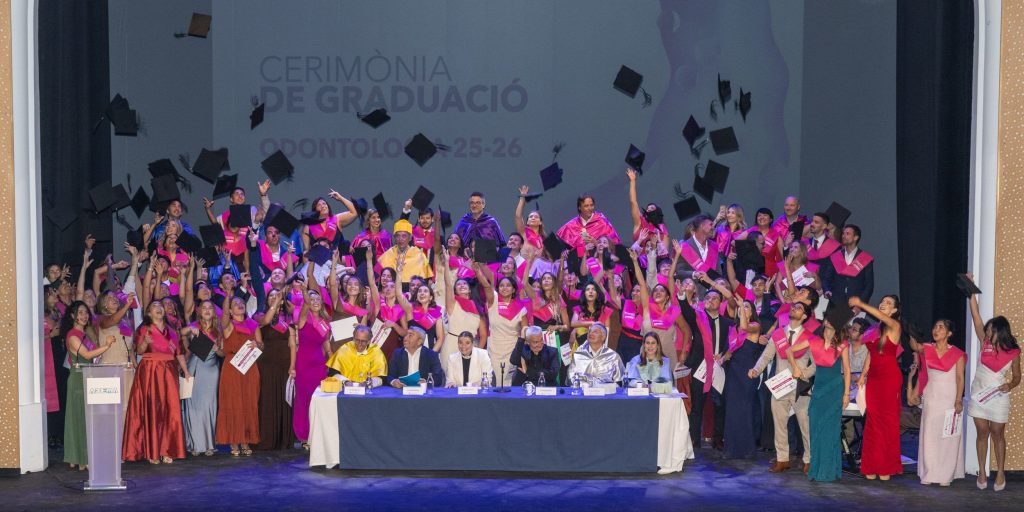
>> The ADEMA University School held the graduation ceremony at the Teatro Principal in Inca for the 5th graduating class in Dentistry, the 3rd class in Human Nutrition and Dietetics, and the 3rd class of the Master’s program in Digital Dentistry. >> The ceremony also included the graduation of 24 students from the Master’s in Digital Dentistry, a pioneering program that responds to the growing technological transformation of dentistry and the demand for specialized professionals. >> During the ceremony, ADEMA recognized the academic excellence of two students, the commitment to solidarity shown by 21 volunteers in the ADEMA+ Foundation’s international cooperation projects in Africa, and the academic achievements of four faculty members and researchers who have recently obtained their doctoral degrees. >> ADEMA President Diego González advocated for an educational model based on clinical practice, applied research, digitalization, internationalization, and social responsibility. >> The President of the Government, Marga Prohens, has congratulated ADEMA on its commitment to quality university education and its contribution to training highly qualified professionals in areas essential to society. >> Inca Mayor Virgilio Moreno: “The university presence reinforces Inca’s profile as a city of knowledge, innovation, and employment opportunities.” You can download the event image gallery here: The Teatro Principal in Inca hosted the graduation ceremony for the fifth graduating class of the Bachelor’s Degree in Dentistry, the third class of the Bachelor’s Degree in Human Nutrition and Dietetics, and the second class of the Master’s Degree in Digital Dentistry from the ADEMA University School. A total of 120 students have officially completed their academic studies in a ceremony marked by emotion, recognition of their hard work, and a commitment to the healthcare profession. The event brought together institutional representatives, family members, faculty, the leadership team, and the university community to join the new graduates for one of the most significant moments of their educational journey. During the ceremony, two special awards were presented for the Bachelor’s Degree in Dentistry and the Bachelor’s Degree in Human Nutrition and Dietetics, alongside recognition for four faculty members and researchers who had recently obtained their doctoral degrees. The ceremony also included the ADEMA+ Foundation International Cooperation Award, recognizing the involvement of 21 students and faculty members in social commitment and international cooperation projects in Africa. ADEMA President Diego González congratulated the new graduates as well as the students and faculty members who received awards, highlighting the effort, perseverance, and high standards that characterized their years of training. In his remarks, he underscored the journey the students have undertaken—both in the classroom and during their practical training—and expressed gratitude to the students and their families for the trust they placed in ADEMA to guide them through a pivotal stage of their professional futures. González has maintained that ADEMA’s purpose is to “train competent professionals, advance knowledge, promote research, and contribute to the progress of society.” In this regard, he noted that within the field of Health Sciences, this mission takes on special significance because it involves professions directly linked to well-being, prevention, quality of life, and patient care. The president also emphasized that ADEMA’s educational model is based on an active, practical methodology connected to professional reality. He noted that student training is not limited to the acquisition of theoretical knowledge but integrates clinical practice, learning in real-world settings, applied research, interdisciplinary work, and direct engagement with the local community’s health and social needs. Meanwhile, Diego González has highlighted ADEMA’s international outreach as one of the institution’s strategic priorities. He noted the students’ participation in international weeks, cooperation projects, and educational experiences, which broaden their professional perspectives and place their learning within a global context. The president of ADEMA also highlighted the cooperation and volunteer projects spearheaded by the ADEMA+ Foundation in Africa, as well as various local initiatives with social impact. As he explained, these experiences reinforce a core principle of ADEMA’s educational project: that university education must serve society and actively contribute to improving people’s lives. Another key area highlighted by the president was ADEMA’s commitment to digitalization, technological innovation, and applied research—particularly within the healthcare sector, a field undergoing constant transformation. Likewise, González highlighted ADEMA’s active role in strengthening the Balearic research and innovation system through its participation in knowledge transfer, applied research, and technological innovation projects. “Our model is based on collaboration between public and private institutions, connections with the professional sector, and high-quality university education linked to the real needs of the local environment,” he noted. In her address, the President of the Government, Marga Prohens, congratulated the new graduates in Dentistry and in Human Nutrition and Dietetics—two professional fields that directly impact people’s health, well-being, and quality of life, and which require knowledge, rigor, responsibility, and deep human sensitivity. Likewise, he has congratulated ADEMA on its commitment to quality university education and its contribution to training highly qualified professionals in areas essential to society, highlighting an educational project based on excellence, opportunity, and talent, in which thousands of families and students place their trust each year. The Mayor of Inca, Virgilio Moreno, also extended his congratulations to the students, their families, and the entire ADEMA educational community. In his remarks, he highlighted the value to the city of hosting university events of such significance and identified higher education as a key driver of transformation for Inca. “The university presence reinforces Inca’s profile as a city of knowledge, innovation, and employment opportunities. Events like this graduation not only celebrate the talent of young people but also demonstrate the role higher education can play in the social, cultural, and economic development of our municipality,” Moreno noted. For his part, ADEMA’s academic director, Dr. Joan de Pedro, highlighted the rigor of the training received by the new graduates and the importance of translating academic excellence into responsible professional practice. “The university does not merely transmit knowledge; it fosters sound judgment, precision, responsibility, and a commitment to service. In the healthcare field, every decision requires scientific preparation, but also humanity, attentive listening, and a commitment to the