
A scientific study by ADEMA, published by the international journal Children, shows that schoolchildren in rural areas and public schools in Mallorca consume more sugar and have more cavities.

>> Lhe research is part of the Oral Health and Nutritional Habits Observatory project promoted by ADEMA, which has been carried out since 2018, following WHO and EFSA (European Food Safety Authority) protocols. >> The research demonstrates how social and educational factors impact the oral health of more than 700 Mallorcan schoolchildren between the ages of 5 and 15. >> Also, reveals that ss eating meals and consuming sweets is a cause ofs is presented as a cause that multiplies that multiplies tooth decay.. A study conducted by a team of researchers from the ADEMA University School, within the framework of the Oral Health and Nutritional Habits Observatory, has highlighted the direct impact of diet on the oral health of children and adolescents in Mallorca. This new research has been published in the prestigious scientific journal Children under the title “Influence of Urban and Rural Areas, Type of School, and Parents’ Education Level on Nutrition Habits and Their Relationship with Dental Caries in Schoolchildren in Mallorca” (Daniela Vallejos, Irene Coll, and Dr. Nora López-Safont). The study, led by Professor Daniela Vallejos and led by Dr. Nora López-Safont, analyzed the nutritional habits of more than 700 schoolchildren in Mallorca, aged 5 to 15, from 28 educational centers. They were selected using stratified cluster random sampling, following the Pathfinder method recommended by the World Health Organization (WHO). This approach allowed for the inclusion of relevant subgroups of the population with potential differences in oral health, taking into account not only age but also school type (public or private/subsidized) and place of residence (rural or urban). A total of 718 students participated, distributed across three key age groups defined by the WHO: children aged 5–6 years (first year of primary school), 12 years (sixth year of primary school), and 15 years (fourth year of secondary school). >> The researchers recommend reinforcing dietary and oral health education from childhood, and taking into account the socio-educational context of each group when designing preventive interventions. Data were collected using standardized WHO forms for oral health assessments. In addition, questionnaires were administered to determine the students’ eating habits and level of nutritional knowledge. These instruments were adapted from guidelines developed by the FAO (Food and Agriculture Organization of the United Nations) and the EFSA (European Food Safety Authority). The questionnaires were administered by a multidisciplinary team of health professionals (dentists, physicians, biologists, and nutritionists), who asked the students questions directly and recorded their responses. Unanswered questions were considered missing values. According to Dr. Daniela Vallejos, the results show that children living in rural areas more frequently consume sugary foods, such as sweets, processed pastries, packaged juices, and soft drinks. At ages 5–6, rural schoolchildren eat more sweets than urban children (24.6 times per month versus 19.2 times per month). At age 12, they also eat more pastries and chips. Among 15-year-olds, it has been observed that students from public schools consume more chips than those from private or state-subsidized schools (26.9 versus 18.3 times per month), as well as more sausages and processed juices. According to the researchers, “these differences are more closely associated with social, economic, and educational factors.” Mothers’ educational level influences eating habits The study also reveals that children of mothers with lower educational levels are less likely to eat all three main meals of the day, especially dinner. By age 15, only 75% of children of mothers with primary education eat dinner daily, compared to 98% of children of mothers with higher education. According to the researchers, “these dietary irregularities may be linked to an increased risk of cavities, as skipping meals has been shown to affect oral health.” Cavities and sweets: a direct relationship On the other hand, the ADEMA researchers explained that excess sugar remains one of the main risk factors for tooth decay. According to the study data, schoolchildren who consume sweets more frequently are significantly more likely to have cavities in their permanent teeth. In contrast, no significant associations were found with the consumption of soft drinks or juices, probably because these are consumed alongside main meals, while sweets are consumed between meals, prolonging exposure to sugar, they explained. Better oral health has also been observed in children who eat all meals, especially breakfast and dinner. “Skipping these meals has been linked to a higher incidence of cavities,” they stated. Conclusions and recommendations The results suggest, the researchers explain, that factors such as geographic location, type of school, and parents’ educational level may be influencing children’s eating habits, and that these habits may have direct consequences for their oral health. Given this situation, they recommend reinforcing nutritional and oral health education from childhood, and taking into account the socio-educational context of each group when designing preventive interventions. The research is part of the Oral Health Observatory project promoted by ADEMA and is based on data collected in 28 schools in Mallorca between 2018 and 2019, following the protocols of the World Health Organization (WHO) and the European Food Safety Authority (EFSA). It should be noted that prior to the start of the study, all professionals were trained and calibrated following the protocols established by the WHO. The training included theoretical sessions and practical exercises focused on caries detection and periodontal assessment. A four-day supervision session was subsequently conducted to ensure correct implementation of the protocol. To guarantee consistency and reliability among the different examiners, the level of agreement was assessed using Cohen’s Kappa index. A simple agreement of 98.7% and a Kappa index of 0.757 were obtained, indicating a high level of agreement between examiners, considered adequate to begin the study.
The president of the Spanish Association Against Cancer in the Balearic Islands visits the new ADEMA University Research Center in Medical Sciences to strengthen his commitment to cancer research.

>>> The Spain Against Cancer Association in the Balearic Islands is interested in ADEMA’s new research projects and emphasizes the importance of continuing to develop these types of initiatives that guarantee specialized clinical care. Palma, April 28, 2025.- The president of the Spanish Association Against Cancer in the Balearic Islands, Dr. José Reyes, today visited the new University Research Center in Medical Sciences at the ADEMA University School in Coll d’en Rabassa. This visit is part of the collaboration that both institutions have maintained since 2019 to improve the oral health of vulnerable cancer patients and promote research into early diagnosis techniques for oral cancer and other malignant pathologies. During the tour, Dr. Reyes, accompanied by his management team, was able to learn about the new infrastructure and equipment at this center, including the haptic 3D virtual simulation laboratories and the research areas in artificial intelligence applied to health, among others. This new center will promote new lines of work focused on the early detection of premalignant oral lesions, with the aim of improving patient survival and quality of life, as well as other malignant pathologies affecting other organs and systems of the human body. The launch of this ADEMA University Research Center in Medical Sciences allows for the grouping of laboratories, their specialized equipment, and workspaces into a single environment to facilitate research work and strategically invest in the development of cutting-edge technologies for medical simulation, with haptic 3D virtual reality equipment, AI, surgical models, and advanced diagnostic systems in the fields of Dentistry and Human Nutrition and Dietetics. During the visit, the president of ADEMA, Diego González, accompanied by the president of the institution’s Research Advisory Council and head of studies for the Bachelor’s Degree in Dentistry, Dr. Pere Riutord, explained that one of the main advances focuses on intraoral ultrasound combined with artificial intelligence, a safe technique that facilitates the early detection of oral cancer. He also highlighted the importance of prevention in oral health, especially in patients with risky habits such as smoking, alcohol consumption, or human papillomavirus infection. Furthermore, the learning of new interventional techniques will be facilitated through haptic and holographic 3D simulation applied to other organs and systems of the human body. >> The ADEMA University School has presented new lines of research based on the use of ultrasound, CBCT, and tactile 3D simulation in different fields of dentistry and human nutrition, using artificial intelligence to advance the prevention of malignant pathologies. For his part, the president of the Spanish Association Against Cancer in the Balearic Islands, Dr. José Reyes, emphasized that “the joint work between ADEMA and the Association is a clear example of how science and solidarity can come together to improve patients’ quality of life.” He also underscored the importance of continuing to support initiatives of this type, which “not only allow for progress in the field of research, but also guarantee specialized clinical care for people experiencing particularly difficult medical and social conditions.” Interuniversity Hub Furthermore, this new Center aims to become a magnet for top-level research talent and transform it into an international and national interuniversity hub. In the words of ADEMA President Diego González, “thanks to the combination of cutting-edge facilities and a solid research ecosystem, we are confident in retaining and attracting more scientists, professors, and graduate students, strengthening our quality and educational excellence and our commitment to research in the Health Sciences.” One of the key pillars focuses on the transfer of knowledge to society and industry. The research developed at ADEMA will have direct applications in improving medical treatments, developing new healthcare technologies, and creating startups and patents that foster innovation in the sector. Furthermore, the connection with companies and institutions will also allow scientific advances to be transformed into real solutions for the healthcare system. Specialized training and high-impact research In addition, it will offer advanced training for graduate students, allowing them to engage in high-impact research projects and providing them with the necessary tools to develop their careers in both academia and industry. The presence of state-of-the-art laboratories will guarantee excellent practical training. Connecting with universities and institutions will facilitate participation in research networks, increasing opportunities for collaborative work on multidisciplinary projects. It will also promote exchange programs for students and researchers, facilitating their mobility and fostering international academic experiences.
Experts address the challenges of infant nutrition in a comprehensive roundtable discussion on the final day of the 4th International Nutrition Week.
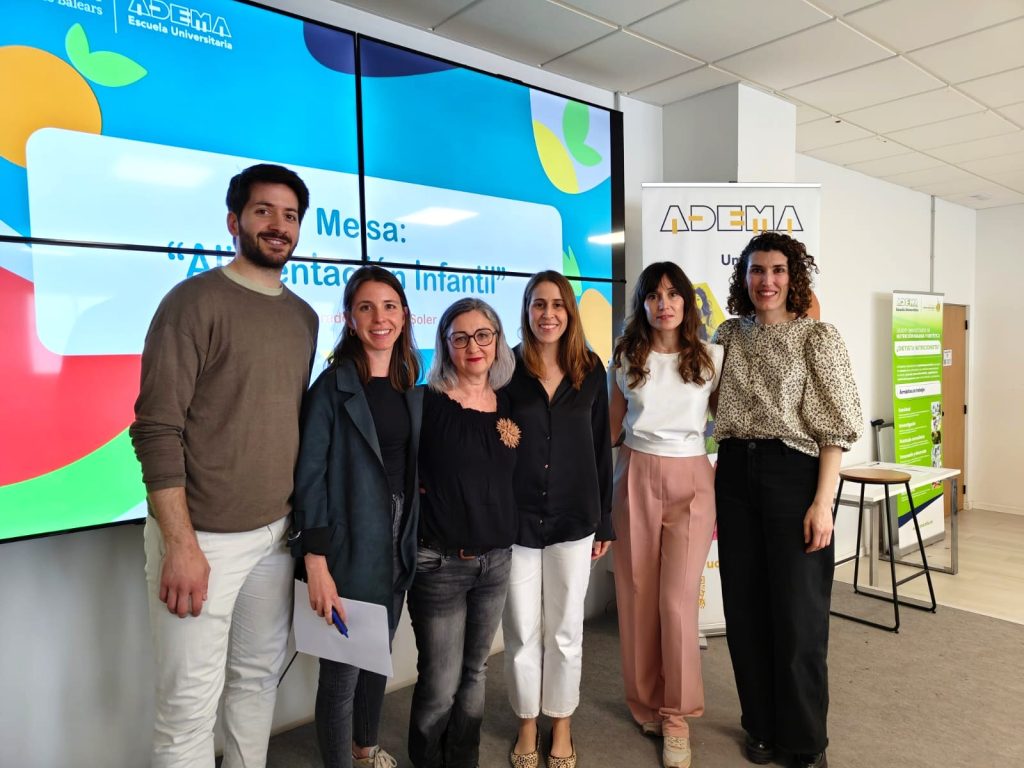
The final roundtable of the 4th International Nutrition Week, moderated by ADEMA professor Pilar Soler, focused on “Child Nutrition,” in which leading professionals from the healthcare, pediatric, and nutrition fields presented on the current challenges surrounding childhood nutrition. The day focused on three key themes: the introduction of complementary feeding, breastfeeding, and the prevention of fatphobia at an early age. The sessions promoted a multidisciplinary approach that focuses on the child’s comprehensive health and the active role of families. Dietitian-nutritionist María Pilar Herrero, coordinator of the Pediatric Nutrition Specialization Group at the AEND (National Association of Pediatricians and Adolescents of the Spanish National Institute of Nutrition), focused her talk on the growing confusion among professionals who provide advice on infant nutrition. Following the rise of the “Baby Led Weaning” approach, Herrero warned about the emergence of professionals such as “BLW advisors,” who, while able to provide useful information, lack the healthcare skills or formal university training to assess infants’ nutritional status or detect possible pathologies. “It is essential that families know how to differentiate between health information and advice,” Herrero emphasized. “Pediatric nutrition is not a fad or a list of tips on social media: it is a science that requires ongoing training and ethical responsibility.” In her speech, she defended the role of the dietitian-nutritionist as a qualified professional to guide safe complementary feeding, tailored to the physiological and clinical needs of each baby. For her part, midwife Juana María Prieto gave a presentation entitled “Breastfeeding and Nutrition: A Perfect Symphony,” in which she addressed the extraordinary biological complexity of breastfeeding with scientific depth and sensitivity. Prieto explained that human milk is not just food, but a species-specific biofluid, dynamic and adapted to the needs of the infant. “It is a living system that provides nutrients, immunity, genetic protection, and sensory stimulation. It is the natural habitat of the newborn,” she noted. She also spoke about the epigenetic dimension of breastfeeding, which modulates gene expression and influences the prevention of future diseases, in addition to the profound neuroplastic changes that the mother’s brain undergoes during this process. Prieto has contrasted this complexity with the limitations of artificial nutrition, highlighting the absence of live bioactive elements, the lower bioavailability of nutrients, and the alteration of the microbiome, factors that can affect the baby’s metabolic and immunological development. Childhood fatphobia: an invisible problem Pediatrician Jorge Muñoz, creator of the “Jorge the Pediatrician” project, closed the day with a talk focused on a topic of growing social relevance: childhood fatphobia. Muñoz defined this phenomenon as systematic discrimination against bodies that do not conform to dominant aesthetic standards, with serious consequences for children’s mental and physical health. “Fatphobia feeds on social judgment, aesthetic pressure, and the culture of physical performance,” she stated. In childhood and adolescence, it manifests itself in the form of teasing, social exclusion, and the development of eating disorders. Muñoz called on families, educators, and health professionals to promote body acceptance, respect for diversity, and a more inclusive approach to health, focused on well-being, not weight. Previously, a scientific poster presentation session was held on various topics of interest this week regarding teaching and research in the nutrition sector.