
76% of adolescents in Mallorca suffer from gum problems, according to the doctoral thesis of ADEMA professor Irene Coll.
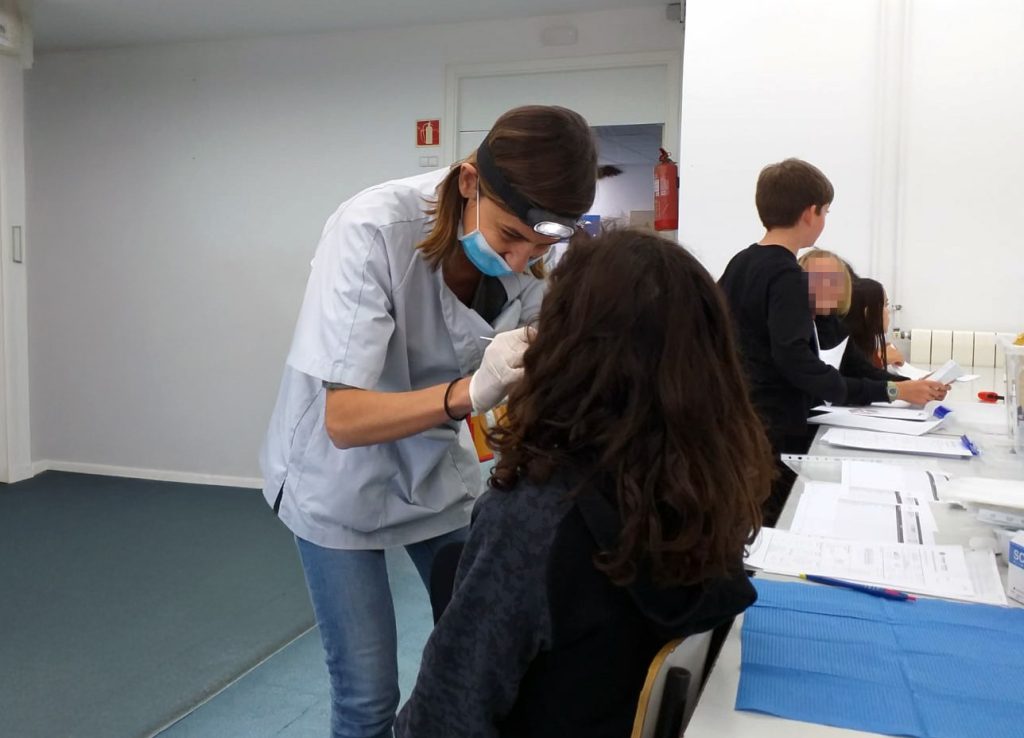
>> The thesis, which has been awarded a grade of Outstanding Cum Laudem, links periodontal deterioration with periodontal deterioration with the high consumption of ultra-processed foods such as milkshakes, pastries and sugary juices. and males are the most affected. A doctoral thesis by ADEMA professor Irene Coll, supervised by Dr. Nora López Safont, reveals that three out of four 15-year-old adolescents show signs of periodontal disease. Specifically, 75.9% of the young people analyzed show some type of gum disease, with boys being the most affected group. The thesis, which received an Outstanding Cum Laude rating, establishes a clear relationship between this condition and the regular consumption of ultra-processed products. To analyze the consumption of these foods, part of the study included a sample of 233 students from public and private schools on the island, registered with the ADEMA Oral Health and Nutritional Habits Observatory. Only 22.7% of the adolescents analyzed had healthy oral areas, while more than half (52.8%) showed the presence of dental calculus, a clear sign of periodontal disease. The selection of schools and students was carried out using stratified cluster random sampling, following the Pathfinder method recommended by the World Health Organization (WHO). This approach allowed for the inclusion of relevant population subgroups with potential differences in oral health, taking into account not only age but also the type of school (public or private/subsidized) and place of residence (rural or urban). In addition, data were collected using standardized WHO oral health survey forms, and questionnaires were administered to determine the students’ dietary habits and nutritional knowledge. These instruments were adapted from guidelines developed by the FAO (Food and Agriculture Organization of the United Nations) and the EFSA (European Food Safety Authority). The questionnaires were administered by a multidisciplinary team of health professionals (dentists, physicians, biologists, and nutritionists), who asked the students questions directly and recorded their responses. Unanswered questions were considered missing values. Differences between female and male adolescents One of the most significant findings of the thesis is the gender difference. Girls had a higher average number of healthy sextants (areas of the mouth), with an average of 3.26 compared to 2.70 observed in boys. This statistically significant difference points to poorer hygiene habits among boys and a higher consumption of foods harmful to oral health. The role of ultra-processed foods Among the products implicated in poorer oral health are processed smoothies, sugary juices, pastries, and canned fruits. Among boys, negative effects were also found associated with the frequent consumption of salty snacks and cured meats. Among girls, the only product with a statistically significant impact was processed juice. These foods, rich in added sugars, saturated fats, and additives, alter the balance of the oral microbiota, fostering an acidic environment that favors the proliferation of bacteria responsible for periodontal disease. Adolescence, a key stage for prevention Dr. Irene Coll believes that adolescence is a crucial period for developing healthy lifestyle habits. A diet rich in ultra-processed foods creates an acidic environment in the mouth that favors the proliferation of pathogenic bacteria, according to her, who warns that “the combination of poor nutrition and poor oral hygiene can have long-lasting consequences for oral health.” Measures and recommendations The thesis argues for the need to strengthen educational campaigns on oral health and nutrition in schools, paying special attention to gender differences to increase their effectiveness. It also emphasizes the importance of incorporating messages that connect general health with oral health, beyond brushing: “Taking care of your diet also means taking care of your mouth,” it concludes.
ADEMA celebrates the graduation of 70 new graduates in Dentistry and Nutrition and reaffirms its commitment to academic excellence, innovation, and research.
>> During the event, special recognition was given to Dr. Arturo López for his outstanding teaching work throughout the 2024-2025 academic year. >> ADEMA President Diego González highlighted the value of educational and technological innovation, research, internationalization, social responsibility, and the combined synergies between academic institutions to achieve excellence and educational quality. >> The Director General of Universities, Sebastián Massanet, congratulated the new graduates and emphasized their dedication and commitment to learning. >> The Vice Rector of the UIB, Víctor Homar: “You carry a responsibility, that of exercising your profession with rigor, empathy and commitment to people and society.You carry with you a responsibility, that of exercising your profession with rigor, empathy and commitment to people and society.” >>Inca Mayor Virgilio Moreno: “The opening of a new university campus marks a turning point for our city.” Inca’s Teatro Principal has become the setting for one of the most eagerly awaited moments for students, families, and faculty of the ADEMA University School: the graduation ceremony for the fourth graduating class of the Bachelor’s Degree in Dentistry and the second graduating class of the Bachelor’s Degree in Human Nutrition and Dietetics, degrees affiliated with the University of the Balearic Islands (UIB). A total of 70 students officially completed their university studies in a ceremony filled with emotion and commitment to their healthcare vocation. The event brought together more than 500 people, including institutional representatives, family members, and faculty and management staff who supported the new graduates throughout their training. The president of the ADEMA University School, Diego González, addressed the recent graduates, highlighting the effort, dedication, and capacity for improvement demonstrated by each of them throughout their training. González noted that “the graduates have not only acquired scientific and technical knowledge, but have also developed their skills and training both at the Integrated Clinic and at various collaborating healthcare organizations, as well as fostering their core values such as empathy, social responsibility, and commitment to health.” During his speech, Diego González also highlighted ADEMA’s educational model, which focuses on pedagogical innovation, service-learning, applied research, and practical training in real-life contexts. “Our students don’t only receive their education in the classroom or in university clinics; they also participate in our international weeks and in cooperation and volunteer projects, such as those developed in Kenya, and in local initiatives with a social impact that demonstrate that university education must be at the service of society,” he emphasized. Furthermore, the president praised ADEMA’s active role in strengthening the Balearic Islands’ R&D&I system, thanks to its participation in knowledge transfer, applied research, and technological innovation projects. “Our model is based on a strategic alliance between public and private institutions, which allows us to attract talent, boost economic development, and guarantee quality university education connected to the needs of the region,” he stated. González also referred to ADEMA’s commitment to diversifying the university offering in the Balearic Islands, with the opening of new campuses in Inca and Coll d’en Rabassa. The latter has opened a University Research Center in Medical Sciences, and new specialized training programs and new lines of research will be launched. On the other hand, the Director General of Universities, Research, and Higher Artistic Education, Sebastián Massanet, congratulated all the students for their dedication and effort during this academic year. “Despite the difficulties, you have demonstrated great perseverance and commitment to learning. You are a clear example of perseverance and talent, and I am sure your path will lead you to great success in the future,” he stated. The mayor of Inca, Virgilio Moreno, also congratulated the students and families and emphasized ADEMA’s commitment to Inca. “The opening of a new university campus marks a turning point for our city. We’re not only bringing higher education closer to our young people, we’re also projecting Inca as a hub of knowledge, innovation, and development. Holding events like this, which highlight training, talent, and a vocation for service, reinforces our commitment to a more dynamic, prepared, and connected city for the future,” Virgilio Moreno argued. The ceremony also featured a speech by the Vice-Rector of the UIB, Dr. Víctor Homar, who congratulated the new graduates and the ADEMA teaching team. “Today you are not just taking home a university degree; you are taking home experiences, values, and connections that will always accompany you. You are taking home a responsibility: to practice your profession with rigor, empathy, and commitment to people and society,” stated Dr. Víctor Homar. One of the most moving moments of the ceremony was the student body’s turn to speak. Representatives of both programs shared their experiences, gratitude, and lessons learned with the audience. In their speeches, they gave special recognition to the faculty for their dedication, as well as to their families for their constant support throughout the training process. During the ceremony, in addition to the presentation of diplomas, special recognition was also given to Dr. Arturo López for his outstanding teaching work throughout the 2024-2025 academic year. A standing ovation capped off a day that marks the beginning of a new path for the new graduates: one of actively contributing to improving the health and well-being of society, from a professional, ethical, and committed perspective.
The ADEMA+ Foundation recognizes research excellence in health sciences and celebrates the graduation of the second class of the Master’s in Digital Dentistry.

>> During the ceremony, the ADEMA+ Foundation Awards were presented to figures who represent excellence in research and the ability to transfer knowledge to society. The ADEMA+ Foundation held its first Research Awards ceremony, recognizing the work of outstanding researchers and organizations for their commitment to scientific, academic, and social advancement in the field of health sciences. During the ceremony, the ADEMA+ Foundation Awards were presented to figures who represent excellence in research and the ability to transfer knowledge to society. Dr. Fèlix Grases Freixedas has been awarded the Lifetime Achievement Award in Research, in recognition of a lifetime of dedication to scientific and academic development. The New Researcher Award went to Miguel García Samuelsson, Mónica Piña, Daniela Vallejos, Irene Coll, and Gemma Sempere, for the solidity and impact of their initial scientific contributions. Dr. José Ignacio Ramírez Manent has received the Researcher of the Year Award for the relevance and tangible impact of his most recent results in his specialty. At the institutional level, the Royal Academy of Medicine of the Balearic Islands (RAMIB) has been recognized as a research institution for its key role in promoting scientific dissemination and knowledge production. The award was received by its secretary general, Dr. Josep Maria Vicens. In the field of dentistry, Dr. Andrés Martínez-Jover has been recognized with the Research Award for his professional career and his significant contributions to clinical dental practice. Dr. Lluís Masmiquel Comas also received the Human Nutrition and Dietetics Research Award, recognizing his scientific work in the field of metabolic and nutritional health. The awardees expressed their gratitude and shared their thoughts on current research challenges, the importance of interdisciplinary work, and the social impact of scientific knowledge. During his speech, ADEMA President Diego González argued that “these awards represent our firm belief that research excellence must be recognized, promoted, and projected into society. At ADEMA, we are committed, from our classrooms, to ensuring that future generations of healthcare professionals integrate research as a tool for real transformation in their environment.” Research activity In just three years, ADEMA has published over 130 publications in high-impact scientific journals, with pioneering developments in artificial intelligence applied to health, biomarkers, 3D medical simulation, and nutrition. The center, accredited under the UNE 166002 standard, has a multidisciplinary team that leads international projects, develops health patents, and participates in Phase III clinical trials, promoting the transfer of knowledge to society and industry. Adding to this growth is the opening of the new University Research Center in Medical Sciences on its new campus in Coll d’en Rabassa, where Dentistry and Nutrition will be taught next year, specialized training will be offered, and new lines of research will be opened. Currently, this educational center’s research team includes 11 predoctoral researchers, four postdoctoral researchers, and five senior researchers, covering various technological, epidemiological, and clinical areas, such as cardiometabolic risks, oral health, and nutrition. It also uses artificial intelligence and 3D haptic technologies to develop competitive projects funded by the Balearic Islands Government and the EU. It also collaborates with researchers from international universities. It should be noted that all ADEMA University School research conducted on patients or human participants has been approved by the Balearic Islands Research Ethics Committee (CEI-IB), with more than twenty projects having been carried out and giving rise to relevant scientific research, final degree projects (TFG), final master’s projects (TFM) and doctoral theses. Cutting-edge training in digital health The event continued with the graduation ceremony for the second graduating class of the Master’s Degree in Digital Dentistry, a pioneering program in the Balearic Islands that trains specialists in advanced technologies applied to dental practice. A total of 21 students have received their diplomas, culminating in a program characterized by academic excellence and a commitment to innovation in oral health. The day concluded with a moving recognition of the new professionals and a commitment to continuing to develop projects that integrate research, teaching, and knowledge transfer.