
Experts recommend at ADEMA International Nutrition Week that school cafeterias serve as a means of educating children about healthy eating habits.

>> The ADEMA University School today inaugurated the 4th International Nutrition Week with a focus on children’s nutrition and sustainable school cafeterias. >>They suggest the active role of dietitians-nutritionists in supervising school menus to ensure they are healthy, sustainable, and inclusive, and to combat childhood obesity. From today until next Friday, April 11, the ADEMA University School is hosting the 4th International Nutrition Week in Palma, a well-established event for professionals, researchers, and students in the fields of nutrition, dietetics, and food. For five days, experts from the public and private sectors will discuss the sector’s main challenges, with a program that includes lectures, roundtable discussions, healthy and sustainable cooking workshops, and the presentation of scientific research and posters. This year’s edition will focus on children’s nutrition and school cafeterias, a particularly important topic where the challenge of ensuring universal access to healthy, sustainable, and socially just meals persists. As explained by Dr. Alicia Julibert, Head of Studies for the Degree in Human Nutrition and Dietetics, during the inauguration, “The World Health Organization indicates that the school environment is a key space for acquiring knowledge, attitudes, and practices related to health and nutrition. In the Balearic Islands, according to the report “Diagnòstic dels menjadors escolars,” 20% of students enrolled in the second cycle of Early Childhood and Primary Education in public schools use the school cafeteria service. But why is the school cafeteria important? Because it plays a key role in teaching healthy eating habits from an early age.” The ALADINO 2023 study, led by the Spanish Agency for Food Safety and Nutrition (AESAN), highlights the magnitude of the problem: more than a third of children between 6 and 9 years old (36.1%) are overweight or obese. Furthermore, only 45.3% eat fruit daily, and only 23.8% include vegetables in their daily diet. Given these data, Dr. Alicia Julibert, Head of Studies for the Bachelor’s Degree in Human Nutrition, emphasized “the urgent need to intervene in all possible areas, and the school environment is one of the most strategic. In this context, the role of the dietitian-nutritionist is essential. Their work not only involves designing menus that are balanced, attractive, and appropriate for the dietary and nutritional recommendations for children, but also actively participating in promoting healthy lifestyles.” For the president of the World Conference of Dietitians-Nutritionists and the president of the scientific committee of this fourth edition, Dr. Giuseppe Russolillo, “in our Autonomous Community, this work must be carried out in accordance with the BOIB guidelines for the promotion of the Mediterranean diet in educational and healthcare centers in the Balearic Islands (2019). Furthermore, current regulations establish that school menus must be supervised by a dietitian-nutritionist, with the intention of guaranteeing their nutritional quality and suitability to children’s needs based on the most up-to-date scientific evidence.” During this session, expert Miguel Ángel Guerrero presents the work of the Alimentant el Futur Network, a pioneering initiative created in 2022 to promote healthy and sustainable school cafeterias in the Balearic Islands. This network promotes a comprehensive approach, involving schools, families, healthcare professionals, catering companies, and local producers. “The goal is for all school cafeterias to incorporate health, education, sustainability, and social justice criteria, becoming drivers of change. In this process, the role and active participation of the dietitian-nutritionist, families, children, and the school, especially in the cafeteria committees, are key to driving improvements from within the schools themselves,” argued Miguel Ángel Guerrero. Furthermore, the cafeteria has a fundamental social and educational function. It is a space for socializing and learning, where children not only eat but also internalize values, social norms, and ways of relating to their environment and food. Challenges in the acceptance of sustainable menus During the conferences, the challenge of introducing plant-based proteins into school menus is also addressed, as explained by dietitian-nutritionist Ana Espiño. Although legumes are an accepted and affordable option, there is still reluctance when menus reduce or eliminate animal protein, despite its nutritional value. The main reason, to a large extent, is the lack of awareness about the versatility of legumes and the lack of training in healthy eating, which leads to distrust in the quality of menus and contributes to unsustainable eating habits. An event that connects science, health and social commitment For the organizing committee, the 4th International Nutrition Week is an opportunity to reflect on the future of nutrition, focusing on childhood and how school environments can be key to addressing nutrition-related public health problems. With this event, ADEMA reinforces its commitment to training professionals capable of working to generate this change, promoting healthier and more sustainable nutrition.
ADEMA presents its new Coll campus, which houses the University Research Center for Medical Sciences of Mallorca to promote R&D&I.

>> The center is committed to a research model based on interdisciplinarity and inter-university hubs, facilitating interdisciplinarity and inter-university hub, facilitating collaboration between researchers from different areas to address complex problems, talent retention, knowledge transfer, and the transfer of knowledge. >> ADEMA President Diego González: “Today we are opening this first phase so that students of our undergraduate, master’s, and specialized training programs can enjoy this new campus next year. We will be providing more facilities as new research and teaching plans in Health Sciences are implemented.” >> In the last five years, ADEMA has published more than 130 scientific articles in national and international journals, promoted three competitive projects, has 11 predoctoral researchers, four postdoctoral researchers and five senior researchers in its research team, has developed three international patents, and has obtained the Innovative SME distinction from the Ministry of Science and Innovation. This morning, the ADEMA University School presented its University Research Center for Medical Sciences of Mallorca, located on its new Coll d’en Rabassa campus. This center will strengthen ADEMA’s commitment to innovation, development, and research (R&D&I) in the field of Health Sciences, with a 4,000-square-meter infrastructure designed to enhance knowledge generation, advanced training, and technology transfer, directly impacting the healthcare system and the socioeconomic development of the Balearic Islands. ADEMA President Diego González emphasized the importance of university research as a fundamental pillar for the advancement of knowledge and the development of innovative solutions in the healthcare sector. “ADEMA has always been clear among its strategic guidelines that research not only allows us to expand the frontiers of knowledge, but also positions us as an academic institution capable of offering answers to society’s current and future challenges. It is our responsibility to train highly qualified professionals in an environment of academic excellence, equipping them with advanced scientific tools and fostering their ability to generate new ideas and clinical applications.” In this regard, he emphasized that these new facilities defend a research model based on interdisciplinarity and an interuniversity hub, facilitating collaboration between researchers from different areas to address complex problems from different perspectives. Synergies between disciplines such as Dentistry, Human Nutrition and Dietetics, Biomedicine, Health Engineering, and Medicine will allow for the development of innovative solutions that transform the healthcare landscape. According to the president of ADEMA, “Today we are launching the first phase so that students of our degrees in Dentistry, Human Nutrition and Dietetics, the Master’s in Digital Dentistry, and other specialized programs can enjoy these facilities next year. We will be providing more equipment as the new research and teaching plans in Health Sciences, for which this campus was created, are implemented.” According to ADEMA’s Director of R&D+i, Dr. Arturo López, since 2022, ADEMA has published more than 130 scientific articles in high-impact national and international journals, with more than 40 of them in Q1 and Q2 journals. Currently, ADEMA’s research team includes 11 predoctoral researchers, four postdoctoral researchers, and five senior researchers, covering different technological, epidemiological, and clinical areas, such as cardiometabolic risks, oral health, and nutrition. It also uses artificial intelligence and 3D haptic technologies to develop competitive projects funded by the Balearic Government and the EU. It also collaborates with researchers from international universities. As proof of all this work, it has developed three international patents and has been awarded the Innovative SME seal by the Ministry of Science and Innovation. The launch of this University Research Center in Medical Sciences allows the university to consolidate its laboratories, specialized equipment, and workspaces into a single environment, facilitating research and strategically investing in the development of cutting-edge technologies for medical simulation, with haptic 3D virtual reality equipment, AI, surgical models, and advanced diagnostic systems. Interuniversity Hub The Center will also become a magnet for top-level research talent and an international and national interuniversity hub. In the words of ADEMA President Diego González, “Thanks to the combination of cutting-edge facilities and a robust research ecosystem, we are confident in retaining and attracting more scientists, faculty, and graduate students, strengthening our quality and educational excellence and our commitment to research in the Health Sciences.” One of the key pillars focuses on the transfer of knowledge to society and industry. The research developed at ADEMA will have direct applications in improving medical treatments, developing new healthcare technologies, and creating startups and patents that foster innovation in the sector. Likewise, the connection with companies and institutions will also allow scientific advances to be transformed into real solutions for the healthcare system. “This integration with the surrounding environment will allow us to promote projects that strengthen the productive and social fabric of the Islands, facilitating the training of highly qualified professionals to meet the growing demand in the healthcare sector and diversifying the economy,” explained Diego González. Specialized training and high-impact research In addition, it will offer advanced training for graduate students, allowing them to engage in high-impact research projects and providing them with the necessary tools to develop their careers in both academia and industry. The presence of state-of-the-art laboratories will guarantee excellent practical training. Connecting with universities and institutions will facilitate participation in research networks, increasing opportunities for collaborative work on multidisciplinary projects. It will also promote exchange programs for students and researchers, facilitating their mobility and fostering international academic experiences. According to ADEMA President Diego González, “this project responds to the need for highly qualified professionals in the Balearic Islands and the demands of the healthcare sector. Our commitment to research and innovation will allow us to train future generations in an environment of academic and technological excellence.” “If we work together and combine efforts from the public and private sectors, generating greater knowledge and competitiveness for our islands, cities, and towns, helping us to better structure ourselves with the least possible territorial impact, and reaching out to the productive sectors, together we can grow and diversify our economy,” González emphasized. For her part, the Regional Minister of Health, Manuela García, stated that “these centers promote interdisciplinary collaboration and collaboration between universities,
The ADEMA University School celebrates the IV International Nutrition Week from April 7 to 11, focusing on the challenges of collective catering and children’s nutrition.
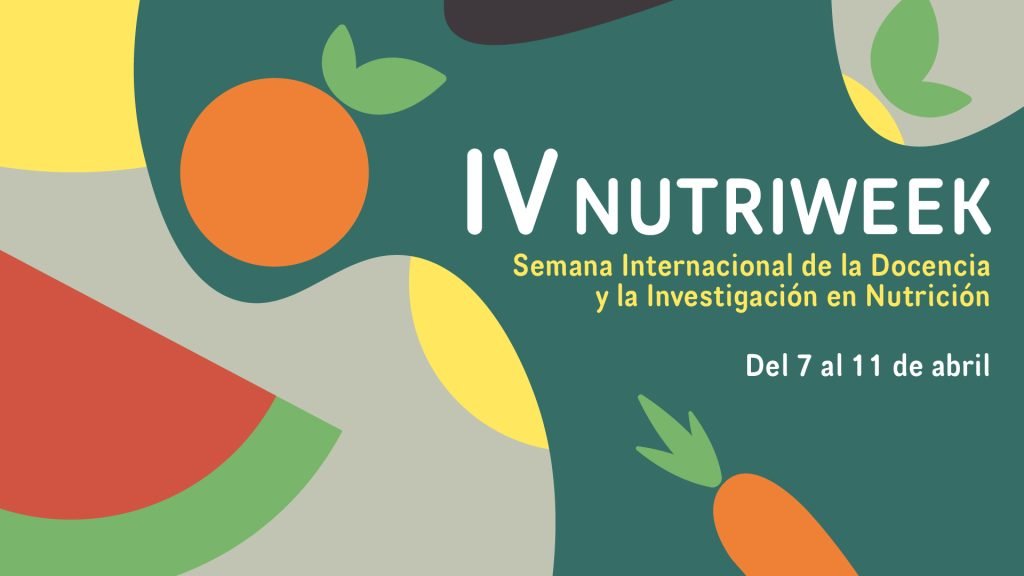
From April 7 to 11, 2025, the ADEMA University School will organize the fourth edition of International Nutrition Week in Palma de Mallorca, an event that will bring together experts in nutrition, food, and dietetics. For five days, professionals, researchers, and students will address current challenges in the sector with the goal of promoting healthy, sustainable, and evidence-based eating habits. The program will include lectures, roundtable discussions, and cooking workshops, as well as the presentation of scientific research and posters. Key topics will include challenges in collective and commercial catering, the implementation of healthy and sustainable school menus, children’s nutrition and its impact on public health, food safety in catering establishments, and the problem of food insecurity. Additionally, topics such as vegetarianism in the restaurant industry, childhood fatphobia, and the application of food safety systems in specific sectors such as the aeronautical industry will be explored. This edition will feature cooking workshops focused on the use of textures and on leftover and local cooking, providing key tools for the training of future dietitians and nutritionists. The sessions are aimed at students, teachers, and healthcare professionals looking to update their knowledge and share experiences with industry experts. The IV International Nutrition Week will make Palma a meeting point for nutrition and dietetics, offering a space for knowledge exchange in an academic and professional environment. With this event, the ADEMA University School reinforces its commitment to excellence in nutrition training and research. To view the program: www.eua.edu.es