
The Chamber of Commerce and Banco Santander recognize ADEMA with the “Business Legacy” award for its track record and capacity for innovation.
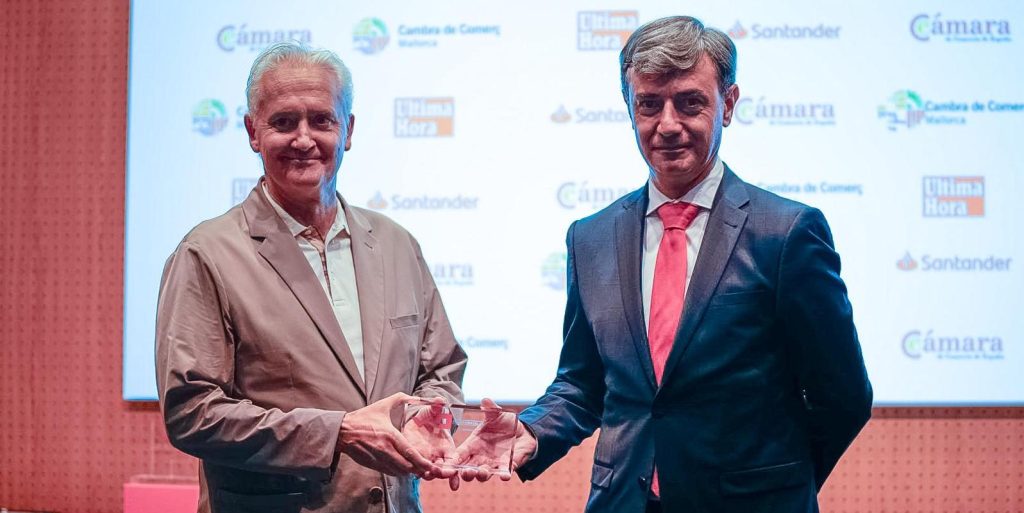
>> The new Special Mention, created this year to mark the 10th anniversary of the SME of the Year Award, recognizes ADEMA’s contribution to the economic and social development of the Balearic Islands. The Spanish Chamber of Commerce, the Mallorca Chamber of Commerce, and Banco Santander have honored ADEMA with the new “Business Legacy” Special Mention. This distinction was introduced this year to mark the 10th anniversary of the SME of the Year Award and aims to recognize companies that have distinguished themselves over the years through their track record, perseverance, capacity for innovation, and contribution to the economic and social development of the Balearic Islands. > ADEMA President Diego González accepted the award on behalf of the institution during the gala held in Mallorca. The award was accepted by ADEMA President Diego González during the 2026 Balearic Islands SME of the Year Awards gala, organized by the Spanish Chamber of Commerce, the Mallorca Chamber of Commerce, and Banco Santander, with the collaboration of *Última Hora*. The awarding of this new distinction highlights ADEMA’s track record and the evolution of a project that originated in Mallorca and has been closely linked for nearly 34 years to education, training, and the creation of new opportunities. Over the years, the institution has progressively expanded its activities, educational offerings, and facilities, while maintaining an unwavering commitment to innovation, educational quality, and strong ties to the Islands’ professional, business, and institutional sectors. Most recently, it has spearheaded the new Universitat de Mallorca (UMAC-ADEMA), which envisions a university model combining cutting-edge technology, accessibility, practical training, service-learning projects, applied research, knowledge transfer, corporate collaboration, and internationalization across its four campuses in Palma and Inca. Its academic offering is structured around new degree programs and strategic areas—including Health, Science and Technology, Engineering, Architecture, Design, Fine Arts, and Social Sciences—complemented by a growing range of postgraduate and doctoral programs. This follows the identification of new educational needs and their transformation into opportunities for the Balearic Islands, the generation and retention of talent, and the opening of Mallorca to the world. To mark the tenth anniversary of the SME of the Year Award, the organizers have introduced the “Business Legacy” Special Mention for the first time in this edition, designed to recognize a sustained business track record and its impact on the surrounding community. This accolade places particular value on perseverance, the capacity for adaptation and innovation, and contributions to the economic and social development of the Balearic Islands. The award holds special significance for ADEMA, which was previously recognized as the SME of the Year for the Balearic Islands in 2020. Six years later, this new distinction acknowledges the continuity and evolution of that trajectory, as well as the institution’s growth. ADEMA President Diego González expressed his gratitude to the Spanish Chamber of Commerce, the Mallorca Chamber of Commerce, and Banco Santander for the “Business Legacy” Special Mention, and congratulated the other award-winning companies and participants in this tenth edition of the Balearic Islands SME of the Year Awards. “Receiving the ‘Business Legacy’ Special Mention is particularly moving and significant because it recognizes not only what ADEMA represents today, but also the journey undertaken over more than thirty years. It is an acknowledgment that belongs, above all, to everyone who has been and remains part of this project—to those whose hard work, commitment, and adaptability have enabled ADEMA to grow and evolve without losing its essence,” noted Diego González. The president of ADEMA highlighted that “since our inception, we have sought to anticipate society’s needs and create new educational opportunities in the Balearic Islands. We were founded with the aim of offering programs that did not previously exist in the Islands, and over the years, we have expanded that commitment to include university education, research, innovation, internationalization, and knowledge transfer. We have always viewed education as a tool for creating opportunities, fostering talent, and contributing to the economic and social progress of our community.” In this regard, González also addressed the new phase the institution is entering with the creation of the Universitat de Mallorca (UMAC). “The Universitat de Mallorca represents the natural evolution of this entire journey. We aim to expand study opportunities in the Balearic Islands—particularly in strategic fields—help train the professionals our society needs, and create an environment capable of generating, attracting, and retaining talent. All of this while strengthening research, innovation, internationalization, and collaboration with businesses, institutions, and society.” “This recognition also invites us to look toward the future with a sense of responsibility. Our legacy lies in the people who have trained with us, in the professionals who today contribute to the development of our society, in the research projects, in the partnerships we have built, and in the opportunities we have helped create over the years. But a legacy is not merely what has been built; it is also the responsibility to continue creating new opportunities for the generations to come,” González concluded. > A track record spanning more than three decades ADEMA began its journey in 1993 as a business initiative in the healthcare sector, with the aim of bringing official qualifications to Mallorca—programs not previously offered in the islands—and training qualified professionals for sectors with growing demand. Its beginnings were rooted in vocational training for advanced degrees in dental prosthetics and oral hygiene; over the years, the institution progressively expanded its offerings into new areas, consolidating an educational model based on practical training, student support, and a close connection to the needs of the Balearic Islands’ productive and healthcare sectors. After more than two decades of growth, ADEMA made the leap into university-level education. In 2015, it formalized its affiliation with the University of the Balearic Islands and subsequently launched degree programs in Dentistry, Human Nutrition and Dietetics, and Fine Arts, while also expanding into postgraduate training and applied research and incorporating new teaching, clinical, and technological facilities. Nearly 34 years after its inception, this journey is now entering a new phase with the Universitat de Mallorca (UMAC-ADEMA), conceived
ADEMA celebrates the birth of the new University of Mallorca (UMAC-ADEMA)
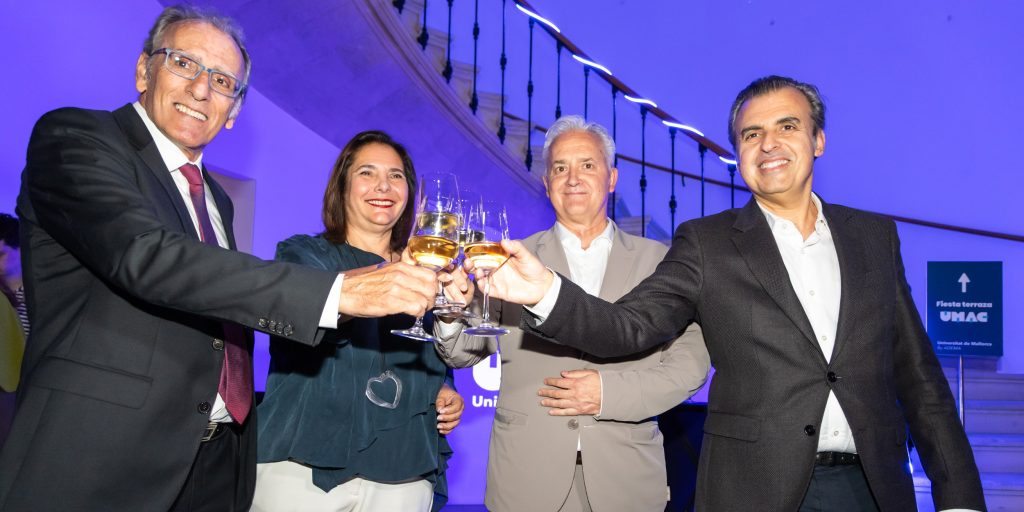
>> Law 2/2026, of April 27, of the University of Mallorca, has been published today in the Official Bulletin of the Balearic Islands, formalizing the recognition of the new university of the Balearic university system. >> Diego González, president of UMAC-ADEMA: “The new University of Mallorca is a collective commitment to talent, knowledge, research and the future of the Balearic Islands” >> The president of the University of Mallorca (UMAC-ADEMA) thanked all the public and private institutions, socio-economic entities, professional associations and collaborating companies, among other organizations, that have supported this project and contributed to making it possible. >> Diego González: “Today we celebrate an important step, but above all, we assume a responsibility. That is our commitment and also our way of repaying, with hard work and responsibility, the trust that so many people have placed in us.” >> ADEMA, with over 30 years of experience in higher education, is launching this new academic institution to offer society a new range of undergraduate, master’s, and doctoral degrees linked to strategic, high-demand sectors, most of which are not yet available in the Balearic Islands. It has a network of campuses in Mallorca, with locations in Inca and Palma. The University of Mallorca (UMAC-ADEMA) held an institutional meeting this evening to mark the creation of the new university institution, an important step for higher education in the Balearic Islands and for promoting academic, research and socio-economic diversification development in the Islands. Law 2/2026, of April 27, of the University of Mallorca, has been published today in the Official Bulletin of the Balearic Islands, formalizing the recognition of the new university of the Balearic university system. The meeting brought together institutional representatives, socio-economic entities, professional associations, collaborating companies, the academic community and the ADEMA team, among others, in a celebration conceived as a space for gratitude and shared recognition of all the people who have accompanied the development of the project. During the meeting, the University of Mallorca (UMAC-ADEMA) emphasized the collaborative nature of the creation of this new academic institution and expressed its gratitude to all those who, from various fields, contributed to making it possible. The celebration also served to acknowledge the trust, collaboration, and commitment that have guided UMAC’s development since its inception. The president of the University of Mallorca (UMAC-ADEMA), Diego González, emphasized that “the Balearic Parliament’s approval of the University of Mallorca represents a significant step for the Balearic Islands and a cause for profound gratitude. Today we want to say thank you. Thank you to all the people, institutions, organizations, companies, and the ADEMA team who believed in this project and contributed to making it possible. The University of Mallorca is a collective commitment to talent, knowledge, research, and the future of the Balearic Islands. This project doesn’t originate from just one institution, but from the shared commitment of those who understood the need to expand university opportunities in our Islands.” In this regard, González also emphasized that “the University of Mallorca was founded with a vocation for service, deeply rooted in Mallorca, and with a clear commitment to internationalization. We want it to be a university for Balearic society, connected to its real needs, capable of developing talent, preventing the brain drain of qualified young people, generating knowledge, and contributing to the socioeconomic and cultural development of the islands. That is our commitment and also our way of repaying, through hard work and responsibility, the trust that so many people have placed in us.” It is worth recalling that the University of Mallorca (UMAC-ADEMA) was created with the aim of expanding higher education opportunities in the Balearic Islands, strengthening the academic offerings in strategic sectors, promoting research, and bringing the university closer to society as a whole through a network of four campuses distributed across Mallorca (Inca and Palma). The project, driven by ADEMA, builds on over 30 years of experience in higher education, educational innovation, applied research, and collaboration with the economic and social fabric of the Islands. The new university institution is conceived as a response to some of the main needs of the territory: to offer new degrees with high academic and professional demand, to prevent the brain drain of Balearic talent, to attract national and international students and qualified profiles, and to contribute to a greater balance of the university system of the Balearic Islands. Furthermore, its activities will be structured around a network of campuses designed to bring higher education closer to society and connect different urban areas of the island. This structure will allow for the development of a more accessible university, connected to the social and economic fabric, and capable of revitalizing different areas of Mallorca through education, research, innovation, and knowledge transfer. The new academic offerings will be geared towards strategic sectors and areas currently in high demand by society and the job market. In the area of Health Sciences, the university plans to incorporate degrees such as Medicine, Biomedicine, Biomedical and Health Engineering, Speech Therapy, Human Nutrition and Dietetics, and Dentistry (the latter also offered in English), in addition to specialized master’s programs and a doctoral program in Health Sciences. Alongside this line, it will develop a second area focused on Architecture, Arts, Design, Social Sciences, Technology and Management, with degrees such as Architecture, Political Science and Public Administration, Sports Business Management (also in English), Design, Video Game Design, Data Engineering, Sociology, Sociology and Data Engineering and Fine Arts (also in English), as well as master’s and doctoral programs linked to art, design, architecture and the humanities. The University of Mallorca (UMAC-ADEMA) is also launching with a clear focus on research and international engagement. Its academic model will emphasize interdisciplinarity, the practical application of knowledge, collaboration with international universities and research centers, and the use of innovative methodologies and advanced technologies in teaching and research. The new university has a strong connection with the economic and social fabric of the Balearic Islands, relying on a broad network of collaboration with companies, institutions and entities from