
ADEMA graduates its first class of the Bachelor of Fine Arts
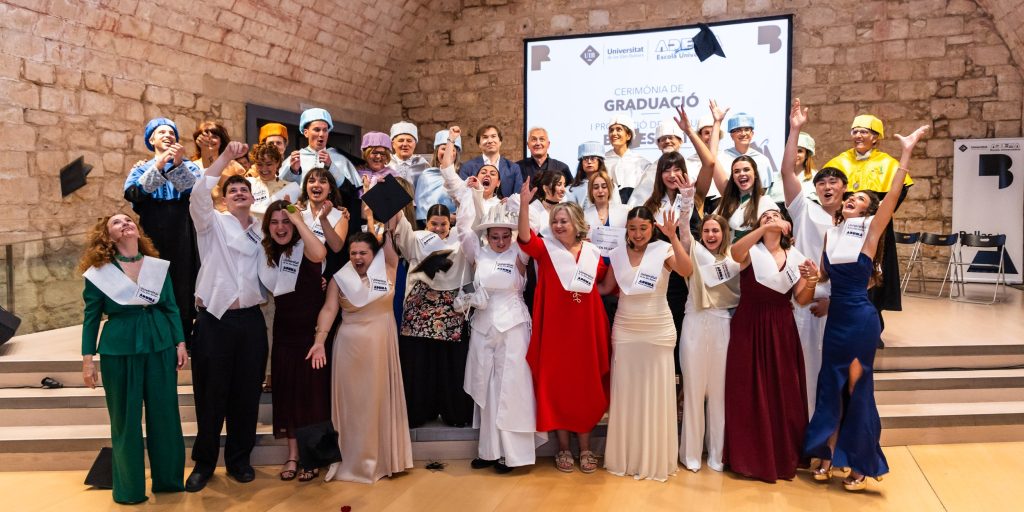
>> More than 250 people celebrate this historic milestone, the first Fine Arts graduation in the Balearic Islands >> The 20 students of ADEMA complete four years of artistic training based on creation, research, professionalization, internationalization and direct contact with cultural institutions View all photos in the gallery The first graduating class of Fine Arts students from ADEMA has already made history in the Balearic Islands. The 20 students who make up this pioneering generation graduated this afternoon at Es Baluard Museu d’Art Contemporani in Palma, in a ceremony that brought together more than 250 people, including academic and institutional authorities, representatives from the Fine Arts field, faculty, and families. During the ceremony, awards were also presented recognizing the academic excellence, artistic research, and cultural and social commitment of the new graduates in Fine Arts. The Palma City Council Award for best academic record and excellence in artistic production and research, presented by the Deputy Mayor of Palma City Council, Mercedes Celeste, was awarded to Rebeca Morey Pérez. Likewise, the Barceló Foundation awarded the Prize for artistic research and social reality to Paula Muntaner Pérez, and the Prize for cultural identity and contemporaneity to Margalida Serra Celià, both presented by the general director of the Barceló Foundation, José María Navarro. These awards highlighted the talent, effort, and hours of dedication of a graduating class that culminates its university stage with an outstanding artistic projection. The graduating class has spent four years pursuing an academic path linked to artistic creation, university teaching, research, and internationalization. Their work has been structured around exhibition projects, the production of artwork, and interaction with artists, teachers, curators, and cultural institutions, as well as exchange programs with national and international universities and art schools. All of this has fostered a professional development, critical thinking, and the cultivation of a unique artistic perspective. The event included speeches by the president of ADEMA, Diego González; the general director of Universities, Sebastián Massanet; the academic director of ADEMA-UIB, Dr. Joan de Pedro; the head of Degree Studies, Dr. Amparo Sard; and a representative of the graduating students, Rebeca Morey. The ceremony was held at Es Baluard Museu d’Art Contemporani, in the same space that hosted the opening of the first academic year of Fine Arts in the Balearic Islands, thus closing a foundational stage for the degree and for university artistic training in the islands. During his speech, ADEMA President Diego González highlighted the historic nature of this graduating class and thanked the students for their commitment to the project. He also noted that these students “have brought ADEMA’s classrooms, workshops, and creative spaces to life, contributing creativity, sensitivity, critical thinking, and enthusiasm.” González thanked the Administrations, collaborating entities and national and international universities that have supported the university degree from the beginning and highlighted the role of the teaching staff by pointing out that “teaching art does not only consist of transmitting technical knowledge, but also of accompanying creative processes, awakening perspectives, stimulating questions and helping each student to find their own voice.” On the other hand, the president of ADEMA encouraged the new graduates to face the future with creativity, courage and freedom, and defended the relevance of art in a society marked by rapid changes, uncertainties and cultural challenges. For his part, the Director General of Universities, Sebastián Massanet, took the opportunity to reaffirm the Government’s firm commitment to arts education and to elevating the status of disciplines such as art, design, music, and theater, traditionally relegated to a secondary role in academia. In this regard, he defended the need to reverse this perception and place Higher Artistic Studies in the position of excellence, prestige, and academic recognition they deserve. During his address, the academic director of UIB-ADEMA, Dr. Joan de Pedro, emphasized the historic nature of this first graduating class, which he described as pioneering in the construction of its own academic and artistic identity. He underscored the rigorous academic standards of the program, the support of the University of the Balearic Islands, and the international focus of the Bachelor of Fine Arts degree, which has allowed students to participate in exhibitions, academic events, and cultural experiences both within and outside of Spain. He also affirmed the essential role of art in contemporary society as a tool capable of interpreting, questioning, and transforming the world. For her part, the Head of Studies for the Bachelor of Fine Arts degree, Amparo Sard, emphasized the human and artistic dimension of this first graduating class, highlighting the profound evolution experienced by the students during four years of learning, growth, and shared experiences. In a particularly moving speech, Sard emphasized the graduates’ shift in perspective, their transformation as artists and as individuals, and the value of having been part of the beginning of an academic project that today confirms its purpose. She also expressed her gratitude for the students’ trust, effort, and energy, as well as the dedication of the ADEMA team, the faculty, and ADEMA’s president, Diego González, whose drive has been key to realizing and consolidating the future of Fine Arts at the institution. The student body was represented by a graduate from the first graduating class, who recalled the start of the degree program as a shared experience of growth among students, faculty, and the institution itself. The student thanked the faculty for their passion, dedication, and commitment, as well as their ability to transmit not only knowledge and experience, but also a critical, honest, and conscious approach to artistic creation. In her speech, the student representative emphasized that the key to this first graduating class’s experience at ADEMA has been the opportunity to grow beyond the classroom. Exhibitions, installations, events, trips, and real-world projects have allowed students to begin a professionalization process through direct experience, learning to create, organize, communicate, and defend artistic proposals in real-world contexts. The ceremony also included two performance art pieces: Birthland, by ADEMA artist and teacher Concha Vidal, accompanied by Anne Florio and Victoria Bush; and Art Now,
ADEMA celebrates the birth of the new University of Mallorca (UMAC-ADEMA)
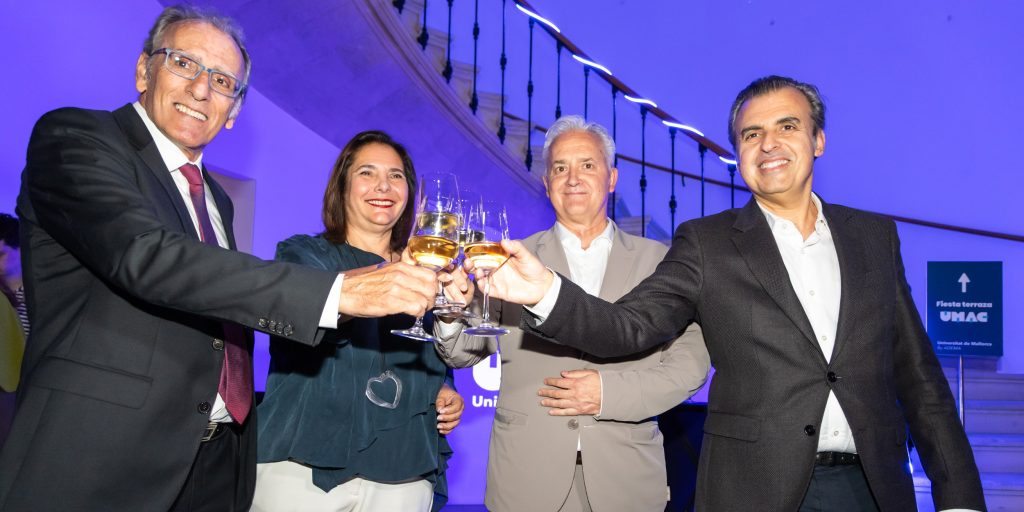
>> Law 2/2026, of April 27, of the University of Mallorca, has been published today in the Official Bulletin of the Balearic Islands, formalizing the recognition of the new university of the Balearic university system. >> Diego González, president of UMAC-ADEMA: “The new University of Mallorca is a collective commitment to talent, knowledge, research and the future of the Balearic Islands” >> The president of the University of Mallorca (UMAC-ADEMA) thanked all the public and private institutions, socio-economic entities, professional associations and collaborating companies, among other organizations, that have supported this project and contributed to making it possible. >> Diego González: “Today we celebrate an important step, but above all, we assume a responsibility. That is our commitment and also our way of repaying, with hard work and responsibility, the trust that so many people have placed in us.” >> ADEMA, with over 30 years of experience in higher education, is launching this new academic institution to offer society a new range of undergraduate, master’s, and doctoral degrees linked to strategic, high-demand sectors, most of which are not yet available in the Balearic Islands. It has a network of campuses in Mallorca, with locations in Inca and Palma. The University of Mallorca (UMAC-ADEMA) held an institutional meeting this evening to mark the creation of the new university institution, an important step for higher education in the Balearic Islands and for promoting academic, research and socio-economic diversification development in the Islands. Law 2/2026, of April 27, of the University of Mallorca, has been published today in the Official Bulletin of the Balearic Islands, formalizing the recognition of the new university of the Balearic university system. The meeting brought together institutional representatives, socio-economic entities, professional associations, collaborating companies, the academic community and the ADEMA team, among others, in a celebration conceived as a space for gratitude and shared recognition of all the people who have accompanied the development of the project. During the meeting, the University of Mallorca (UMAC-ADEMA) emphasized the collaborative nature of the creation of this new academic institution and expressed its gratitude to all those who, from various fields, contributed to making it possible. The celebration also served to acknowledge the trust, collaboration, and commitment that have guided UMAC’s development since its inception. The president of the University of Mallorca (UMAC-ADEMA), Diego González, emphasized that “the Balearic Parliament’s approval of the University of Mallorca represents a significant step for the Balearic Islands and a cause for profound gratitude. Today we want to say thank you. Thank you to all the people, institutions, organizations, companies, and the ADEMA team who believed in this project and contributed to making it possible. The University of Mallorca is a collective commitment to talent, knowledge, research, and the future of the Balearic Islands. This project doesn’t originate from just one institution, but from the shared commitment of those who understood the need to expand university opportunities in our Islands.” In this regard, González also emphasized that “the University of Mallorca was founded with a vocation for service, deeply rooted in Mallorca, and with a clear commitment to internationalization. We want it to be a university for Balearic society, connected to its real needs, capable of developing talent, preventing the brain drain of qualified young people, generating knowledge, and contributing to the socioeconomic and cultural development of the islands. That is our commitment and also our way of repaying, through hard work and responsibility, the trust that so many people have placed in us.” It is worth recalling that the University of Mallorca (UMAC-ADEMA) was created with the aim of expanding higher education opportunities in the Balearic Islands, strengthening the academic offerings in strategic sectors, promoting research, and bringing the university closer to society as a whole through a network of four campuses distributed across Mallorca (Inca and Palma). The project, driven by ADEMA, builds on over 30 years of experience in higher education, educational innovation, applied research, and collaboration with the economic and social fabric of the Islands. The new university institution is conceived as a response to some of the main needs of the territory: to offer new degrees with high academic and professional demand, to prevent the brain drain of Balearic talent, to attract national and international students and qualified profiles, and to contribute to a greater balance of the university system of the Balearic Islands. Furthermore, its activities will be structured around a network of campuses designed to bring higher education closer to society and connect different urban areas of the island. This structure will allow for the development of a more accessible university, connected to the social and economic fabric, and capable of revitalizing different areas of Mallorca through education, research, innovation, and knowledge transfer. The new academic offerings will be geared towards strategic sectors and areas currently in high demand by society and the job market. In the area of Health Sciences, the university plans to incorporate degrees such as Medicine, Biomedicine, Biomedical and Health Engineering, Speech Therapy, Human Nutrition and Dietetics, and Dentistry (the latter also offered in English), in addition to specialized master’s programs and a doctoral program in Health Sciences. Alongside this line, it will develop a second area focused on Architecture, Arts, Design, Social Sciences, Technology and Management, with degrees such as Architecture, Political Science and Public Administration, Sports Business Management (also in English), Design, Video Game Design, Data Engineering, Sociology, Sociology and Data Engineering and Fine Arts (also in English), as well as master’s and doctoral programs linked to art, design, architecture and the humanities. The University of Mallorca (UMAC-ADEMA) is also launching with a clear focus on research and international engagement. Its academic model will emphasize interdisciplinarity, the practical application of knowledge, collaboration with international universities and research centers, and the use of innovative methodologies and advanced technologies in teaching and research. The new university has a strong connection with the economic and social fabric of the Balearic Islands, relying on a broad network of collaboration with companies, institutions and entities from
The Parliament of the Balearic Islands gives the green light to the creation of the University of Mallorca (UMAC)

>> Its main objective is to offer new undergraduate, master’s and doctoral degrees in strategic sectors, in high demand and, for the most part, currently unavailable in our islands. >> The University of Mallorca has a network of campuses distributed throughout Mallorca (in Inca and Palma) to bring higher education closer to society. >> UMAC was also born with a strong research vocation and an international orientation, integrating innovative methodologies, academic collaboration with prestigious universities and training connected with current scientific and professional challenges. The Parliament of the Balearic Islands has today approved the Law creating the University of Mallorca, which is born with the objective of expanding the educational offer, adapting it to new professional demands and bringing higher education closer to the whole of the island through a network of campuses distributed in different points of Mallorca (Inca and Palma Son Rossinyol-Coll d’en Rabassa-Jaime III), while strengthening the capacity of the territory to generate knowledge, innovation and opportunities. The new university is part of an academic project aimed at adding capabilities to the existing system, incorporating new degrees in strategic areas and making it easier for more students to pursue their higher education in the Balearic Islands. In this context, the project is based on ADEMA’s solid track record, which boasts over 30 years of experience in higher education, research, and educational innovation in the Balearic Islands. This experience has allowed it to consolidate a firm academic foundation, establish a fully operational structure, and maintain close ties with the islands’ social and economic fabric through collaboration with more than 400 companies and its active presence in various socioeconomic institutions across the archipelago. New academic offerings focused on strategic sectors The University of Mallorca aims to prevent the brain drain of Balearic talent, attract national and international profiles and contribute to a greater balance of the Balearic university system, aligning its educational offering with the real needs of the economic and social environment. The new institution will deploy a broad, specialized and strategic academic offering, designed to respond to areas with high training and professional demand, and to expand opportunities for access to higher education in the Balearic Islands. In the field of Health Sciences, the initial offerings will include degrees in Biomedicine, Biomedical and Health Engineering, Medicine, Speech Therapy, Human Nutrition and Dietetics, and Dentistry (the latter also taught in English). Master’s degrees in Oral Surgery and Implantology, Oral Health Engineering, Clinical Nutrition, and Digital Dentistry (also taught in English) will also be offered, along with a doctoral program in Health Sciences. Alongside this area, a second academic track will be established, focusing on Architecture, Arts, Design, Social Sciences, Technology, and Management. Within this framework, undergraduate degrees will be offered in Architecture, Fine Arts, Political Science and Public Administration, Sports Business Management, Design, Video Game Design, Data Engineering, Sociology, Sociology and Data Engineering, and Sports Business Management. This offering will be complemented by master’s degrees in Architecture (professional qualification), Professional Development in Fine Arts, and Product Design, as well as a doctoral program in Art, Design, and Humanities. In addition, a Continuing Education program will be developed to meet the training needs of our Islands. An interdisciplinary, practical academic model connected to reality One of the central pillars of the University of Mallorca is its academic model, based on interdisciplinarity, the practical application of knowledge and direct connection with the professional and socio-economic environment. The training will combine theoretical teaching with project-based and service-based learning, integration of cutting-edge technologies and 3D simulation environments, allowing students to prepare for complex and constantly evolving professional contexts. This approach incorporates tools such as artificial intelligence, clinical simulation, virtual environments and haptic 3D technologies, as well as active methodologies that place the student at the center of the learning process. Furthermore, the project is committed to a cross-cutting approach that connects disciplines such as health, design, technology and business, generating synergies that respond to new production and knowledge models. Teaching will take place in a multilingual environment, in Catalan, Spanish and English, which reinforces the international projection of the students, and a team of first-rate teachers, researchers and active professionals at the regional, national and international levels. Boosting research and knowledge generation The University of Mallorca incorporates a clear research vocation, oriented both towards scientific production and the transfer of knowledge to society and the productive fabric. This line of research is based on an already consolidated research trajectory, with growth in scientific publications, development of patents and work in advanced areas such as health, nutrition or applied artificial intelligence. Furthermore, the project envisions close collaboration with international universities and research centers, which will allow the new center to be integrated into global academic networks and promote the mobility of students and researchers. A territorial model that brings the University closer to society The new academic institution boasts a network of campuses spread across Mallorca, with locations in Inca and Palma (Son Rossinyol, Coll d’en Rabassa, Jaime III), as well as an online campus. Its aim is to bring higher education closer to the community, strengthen the region’s infrastructure, and revitalize diverse urban areas. The project combines sustainability and efficiency by renovating existing spaces and incorporating specialized infrastructure for teaching, research, innovation, advanced clinical practice, and knowledge transfer in strategic areas such as health, architecture, the arts, design, technology, and social sciences. This model strengthens the connection between the university and the productive sectors of the territory, facilitating knowledge transfer, applied innovation, and student employability. Furthermore, the project is based on sustainability and efficiency criteria, focusing on the reuse of existing spaces and a balanced development of the territory. Connection with the economic and social fabric It was born with a strong connection to the economic and social fabric of the Balearic Islands, relying on a broad network of collaboration with companies, institutions and entities from different sectors. This ecosystem, developed over 30 years of academic activity, allows training to be geared towards the real needs of the environment, promotes the