
Dr. Pere Riutord takes office as the first rector of the University of Mallorca and places research and academic excellence among his priorities.
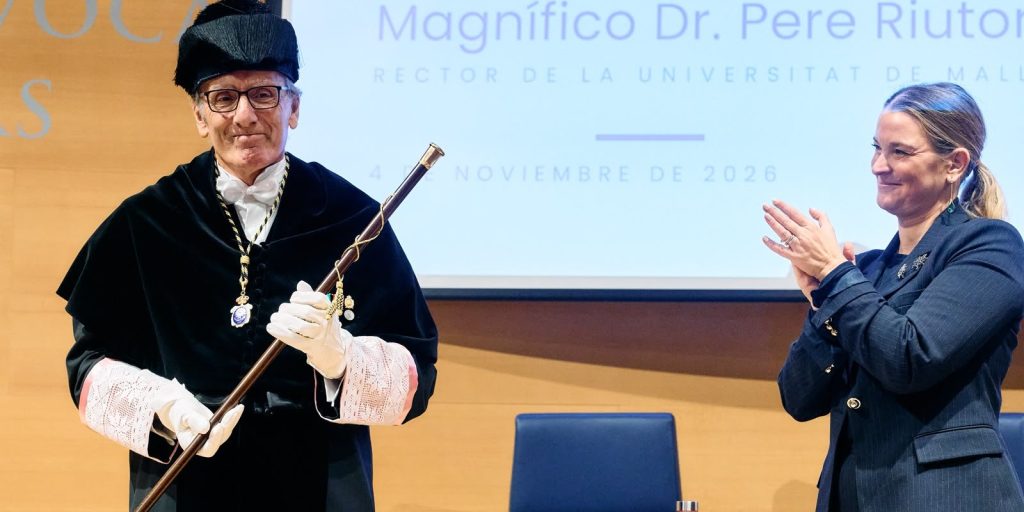
>> The president of the Government, Marga Prohens, participates in the investiture ceremony of the rector and his rector’s team, held at the Bar Association of the Balearic Islands >> The new rector advocates for a university committed to equal opportunity, access to higher education, and a scholarship system that will receive over 9 million euros in funding. See all images >> The president of the Governing Council, Diego González, stated: “Today we take a decisive step toward building a university created to offer new opportunities to our young people, foster research, and contribute to the progress of our society.” >> The President of the Government of the Balearic Islands, Marga Prohens: “Higher education is fundamental to the future of the Balearic Islands. We need universities capable of responding to the challenges of our region and training highly qualified professionals.” Dr. Pere Riutord Sbert took office this Wednesday as the first rector of the Universitat de Mallorca (UMAC-ADEMA) during an academic ceremony held at the headquarters of the Balearic Islands Bar Association in Palma, with the participation of the President of the Government of the Balearic Islands, Marga Prohens, and the President of the institution’s Governing Council, Diego González Carrasco. The inauguration marks a new step in the institutional development of the Universitat de Mallorca—an initiative promoted by ADEMA and recognized under Law 2/2026 of April 27, which establishes the legal framework for its academic and institutional development. In his inaugural address, delivered before academic and institutional authorities, representatives of civil society, members of the university community, and family members, Riutord identified university education, scientific research, innovation, and knowledge transfer as key pillars of his academic project, with the aim of contributing to the scientific, cultural, social, and economic development of the Balearic Islands. “I accept the honor of becoming the first rector of the University of Mallorca, with a commitment to help build an enduring university—one that serves our society and meets the expectations of future generations,” he stated. The rector highlighted the institution’s connection to the reality of the island, its dedication to expanding higher education opportunities, and its European and international outlook. “Our university aims to ensure that no young person’s educational opportunities are diminished by the place where they were born or reside,” he stated. In this vein, he defined the institution’s mission as being “local in its commitment, Balearic in its responsibility, Mediterranean in its identity, European in its outlook, and international in its relations.” For his part, the president of the Governing Council of the University of Mallorca, Diego González, welcomed the inauguration of Pere Riutord as the institution’s first rector, noting that it marks “a very important day for our university and for all of us who have worked for years to make this project a reality.” González has extended his congratulations to the new rector and his team, wishing them every success in this new phase. “Today, we take a decisive step toward building a university founded with the mission of offering new opportunities to our young people, fostering research, and contributing to the progress of our society,” he noted. Meanwhile, the President of the Government of the Balearic Islands, Marga Prohens, has joined in congratulating the new rector and his team, highlighting the importance of collaboration between institutions and society to strengthen the islands’ university system. “Higher education is fundamental to the future of the Balearic Islands. We need universities capable of responding to the challenges of our region, training highly qualified professionals, and forging stronger ties between the academic world, the business sector, and society. The University of Mallorca has the opportunity to contribute to these goals through rigor, quality, and a commitment to our community,” she emphasized. Research, innovation, and knowledge transfer Furthermore, Dr. Riutord has championed collaboration across disciplines and fields of knowledge, with projects that connect the health sciences, art, architecture, engineering, technology, and the social sciences. Furthermore, Dr. Riutord has championed collaboration across disciplines and fields of knowledge, with projects that connect the health sciences, art, architecture, engineering, technology, and the social sciences. Research featured prominently in his remarks. The rector emphasized the importance of combining teaching activities with the generation of knowledge and its transfer to society. “We do not want to limit ourselves to transmitting the knowledge of the past; we aspire to question it, expand upon it, and help generate the knowledge of the future,” he stated. Furthermore, he explained that the university aims to promote research with outcomes that reach hospitals, businesses, and other sectors of society—contributing to the strengthening of the productive fabric, the attraction of talent, and the creation of professional opportunities. Furthermore, it has addressed the role of artificial intelligence, robotics, simulation, virtual and augmented reality, haptic technology, digital fabrication, and big data analytics in the transformation of teaching, research, and professional practice. In this context, it has proposed further strengthening the integration of new technologies into classrooms, laboratories, and research projects, alongside training that enables an understanding of their foundations, possibilities, and limitations, as well as their ethical and social implications. The rector has also highlighted the importance of collaborating with the productive sector and various areas within the public and private sectors to foster practical training for students, in accordance with the relevant agreements and authorizations. Students, at the heart of the university project Riutord has placed students at the heart of the academic project at the Universitat de Mallorca and has proposed an educational approach geared toward the development of scientific, professional, and human capabilities. Regarding access to university studies, it was noted that Law 2/2026 mandates that at least 5% of an institution’s total annual revenue be allocated to scholarships and study grants. In this regard, it was stated that the budget earmarked for this purpose will exceed 9 million euros. “A university must be demanding—because knowledge requires effort—but it must also be accessible, as talent can be found anywhere and in any social circumstance,” it was emphasized. Furthermore, he has highlighted the challenges
The Chamber of Commerce and Banco Santander recognize ADEMA with the “Business Legacy” award for its track record and capacity for innovation.
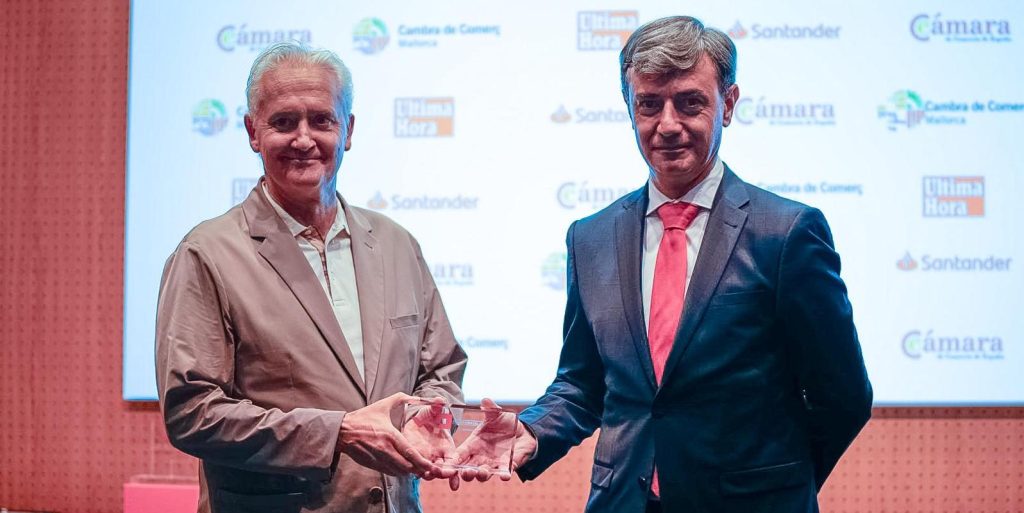
>> The new Special Mention, created this year to mark the 10th anniversary of the SME of the Year Award, recognizes ADEMA’s contribution to the economic and social development of the Balearic Islands. The Spanish Chamber of Commerce, the Mallorca Chamber of Commerce, and Banco Santander have honored ADEMA with the new “Business Legacy” Special Mention. This distinction was introduced this year to mark the 10th anniversary of the SME of the Year Award and aims to recognize companies that have distinguished themselves over the years through their track record, perseverance, capacity for innovation, and contribution to the economic and social development of the Balearic Islands. > ADEMA President Diego González accepted the award on behalf of the institution during the gala held in Mallorca. The award was accepted by ADEMA President Diego González during the 2026 Balearic Islands SME of the Year Awards gala, organized by the Spanish Chamber of Commerce, the Mallorca Chamber of Commerce, and Banco Santander, with the collaboration of *Última Hora*. The awarding of this new distinction highlights ADEMA’s track record and the evolution of a project that originated in Mallorca and has been closely linked for nearly 34 years to education, training, and the creation of new opportunities. Over the years, the institution has progressively expanded its activities, educational offerings, and facilities, while maintaining an unwavering commitment to innovation, educational quality, and strong ties to the Islands’ professional, business, and institutional sectors. Most recently, it has spearheaded the new Universitat de Mallorca (UMAC-ADEMA), which envisions a university model combining cutting-edge technology, accessibility, practical training, service-learning projects, applied research, knowledge transfer, corporate collaboration, and internationalization across its four campuses in Palma and Inca. Its academic offering is structured around new degree programs and strategic areas—including Health, Science and Technology, Engineering, Architecture, Design, Fine Arts, and Social Sciences—complemented by a growing range of postgraduate and doctoral programs. This follows the identification of new educational needs and their transformation into opportunities for the Balearic Islands, the generation and retention of talent, and the opening of Mallorca to the world. To mark the tenth anniversary of the SME of the Year Award, the organizers have introduced the “Business Legacy” Special Mention for the first time in this edition, designed to recognize a sustained business track record and its impact on the surrounding community. This accolade places particular value on perseverance, the capacity for adaptation and innovation, and contributions to the economic and social development of the Balearic Islands. The award holds special significance for ADEMA, which was previously recognized as the SME of the Year for the Balearic Islands in 2020. Six years later, this new distinction acknowledges the continuity and evolution of that trajectory, as well as the institution’s growth. ADEMA President Diego González expressed his gratitude to the Spanish Chamber of Commerce, the Mallorca Chamber of Commerce, and Banco Santander for the “Business Legacy” Special Mention, and congratulated the other award-winning companies and participants in this tenth edition of the Balearic Islands SME of the Year Awards. “Receiving the ‘Business Legacy’ Special Mention is particularly moving and significant because it recognizes not only what ADEMA represents today, but also the journey undertaken over more than thirty years. It is an acknowledgment that belongs, above all, to everyone who has been and remains part of this project—to those whose hard work, commitment, and adaptability have enabled ADEMA to grow and evolve without losing its essence,” noted Diego González. The president of ADEMA highlighted that “since our inception, we have sought to anticipate society’s needs and create new educational opportunities in the Balearic Islands. We were founded with the aim of offering programs that did not previously exist in the Islands, and over the years, we have expanded that commitment to include university education, research, innovation, internationalization, and knowledge transfer. We have always viewed education as a tool for creating opportunities, fostering talent, and contributing to the economic and social progress of our community.” In this regard, González also addressed the new phase the institution is entering with the creation of the Universitat de Mallorca (UMAC). “The Universitat de Mallorca represents the natural evolution of this entire journey. We aim to expand study opportunities in the Balearic Islands—particularly in strategic fields—help train the professionals our society needs, and create an environment capable of generating, attracting, and retaining talent. All of this while strengthening research, innovation, internationalization, and collaboration with businesses, institutions, and society.” “This recognition also invites us to look toward the future with a sense of responsibility. Our legacy lies in the people who have trained with us, in the professionals who today contribute to the development of our society, in the research projects, in the partnerships we have built, and in the opportunities we have helped create over the years. But a legacy is not merely what has been built; it is also the responsibility to continue creating new opportunities for the generations to come,” González concluded. > A track record spanning more than three decades ADEMA began its journey in 1993 as a business initiative in the healthcare sector, with the aim of bringing official qualifications to Mallorca—programs not previously offered in the islands—and training qualified professionals for sectors with growing demand. Its beginnings were rooted in vocational training for advanced degrees in dental prosthetics and oral hygiene; over the years, the institution progressively expanded its offerings into new areas, consolidating an educational model based on practical training, student support, and a close connection to the needs of the Balearic Islands’ productive and healthcare sectors. After more than two decades of growth, ADEMA made the leap into university-level education. In 2015, it formalized its affiliation with the University of the Balearic Islands and subsequently launched degree programs in Dentistry, Human Nutrition and Dietetics, and Fine Arts, while also expanding into postgraduate training and applied research and incorporating new teaching, clinical, and technological facilities. Nearly 34 years after its inception, this journey is now entering a new phase with the Universitat de Mallorca (UMAC-ADEMA), conceived
The University of Mallorca reinforces its commitment to internationalization at a meeting with the Consular Corps of the Balearic Islands.
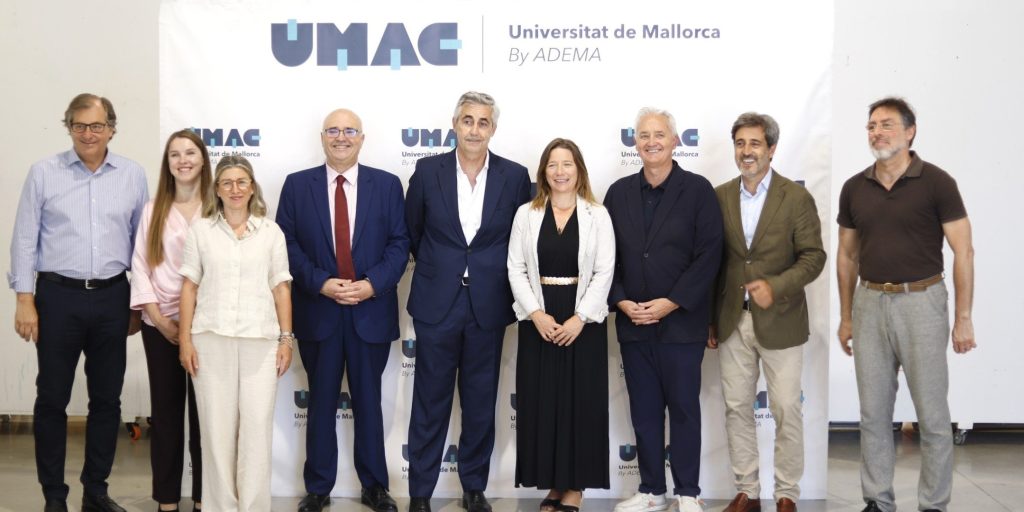
>> Consular representatives have visited the Palma-Son Rossinyol Campus to learn about the academic, research, and institutional project of the new university driven by ADEMA. >> Diego González appreciates the visit by consular representatives and champions internationalization as one of the strategic pillars of the new university project. >> Michel Magnier, Dean of the Consular Corps of the Balearic Islands, has welcomed the visit and expressed interest in establishing future avenues of collaboration with the University of Mallorca, particularly with the aim of introducing the new university project to international residents in the Balearic Islands and fostering their integration through educational, cultural, and institutional channels. This morning, the Universitat de Mallorca UMAC-ADEMA held an institutional meeting with members of the Consular Corps of the Balearic Islands at the Palma-Son Rossinyol Campus, with the aim of presenting the new university institution’s strategic directions and opening up new avenues for academic, cultural, scientific, and international collaboration. The meeting reflects the new university’s commitment to strengthening its international dimension and building bridges of cooperation with institutions, universities, cultural organizations, and economic stakeholders in other countries. In this regard, UMAC-ADEMA aims to foster the exchange of students, faculty, and researchers, promote joint projects, and contribute to the international profile of Mallorca and the Balearic Islands from a university perspective. The meeting was presided over by Diego González, President of the Governing Council of the Universitat de Mallorca, alongside Carles Baeza, Vice-Rector for Student Affairs and Internationalization. During the event, consular representatives learned firsthand about the UMAC-ADEMA project, its academic model, its campus network, and its teaching and clinical facilities, as well as its ambition to become a hub for attracting national and international talent. The visit was attended by consular representatives from France, Malta, Switzerland, Morocco, Estonia, Monaco, and Ukraine, led by the Dean of the Consular Corps of the Balearic Islands, Michel Magnier. Also in attendance were Zakaria Balga, Consul of the Kingdom of Morocco and member of the Consular Protection Commission; Pablo Collado Serra, President of the Economic Diplomacy Commission; Mirtha Erhart-Zimmerli, President of the Education and Training Commission; Guillermo Dezcallar, member of the Culture Commission; Laura Calvo, Consul of the Principality of Monaco; and consular representative Lina Kachor, representing Volodymyr Nosov, Honorary Consul of Ukraine. During the visit, members of the Consular Corps of the Balearic Islands toured the facilities at the Palma-Son Rossinyol Campus—a space equipped with laboratories, areas for 3D haptic virtual simulation, a university clinic, teaching bays, and various spaces dedicated to Health Sciences and Fine Arts. A highlight of the day was the presentation of the University Clinic, which features clinical facilities equipped with digital technology, including 3D systems, CBCT scanners, intraoral scanners, dental lasers, digital periodontal probes, 3D printers, and digital microscopes. Furthermore, the institution offers haptic and holographic virtual dental simulators that allow students to practice clinical procedures in immersive environments before treating real patients. This commitment to teaching innovation and applied technology is part of the UMAC-ADEMA academic model, which is based on practical training, applied research, digitalization, and a connection to the real needs of the healthcare, social, cultural, and economic environment of the Balearic Islands. Diego González, President of the Governing Council of the University of Mallorca, expressed his gratitude for the presence of the consular representatives and highlighted the importance of this inaugural institutional meeting. “It is an honor for the University of Mallorca to welcome members of the Consular Corps of the Balearic Islands today and to share with their representatives the academic, research, and institutional project we are building for Mallorca and the Balearic Islands as a whole. This visit offers an opportunity to open new avenues for dialogue, cooperation, and international collaboration within the university sphere,” González noted. Furthermore, the president has emphasized that internationalization is one of the new institution’s strategic pillars. In this regard, he noted that ADEMA maintains academic agreements and relationships with international institutions, as well as alliances with universities and leading centers in Europe, the Americas, and Asia, aimed at the exchange of students, faculty, and researchers, teaching cooperation, and the development of joint projects. “We want the University of Mallorca to be born connected to the local region yet open to the world. Our aim is to attract international talent, showcase the knowledge generated in the Balearic Islands, and build a university capable of creating academic, scientific, and cultural opportunities beyond our islands,” added the President of the Governing Council. González concluded by reiterating his gratitude to the Consular Corps of the Balearic Islands for their visit, their interest, and their openness to institutional dialogue, expressing his confidence that this meeting could serve as a starting point for future academic, cultural, scientific, and institutional collaborations with various countries. In this regard, the President of the Governing Council noted that ADEMA maintains relationships with numerous international institutions for research projects, academic exchanges, and teaching collaborations, alongside partnerships with universities and leading centers in countries such as the United Kingdom, the United States, Norway, Italy, Germany, Poland, France, China, Ecuador, Malta, Uzbekistan, and Romania. These include institutions such as the University of the Arts London, Columbia College Chicago, Princeton University, the University of Oxford, Yale University, the University of Oslo, Leeds Arts University, the Accademia di Brera, the Università degli Studi di Torino, the University of Gdańsk, and the FHNW Academy of Arts and Design in Basel, among others. “These international agreements and relationships enable us to move towards a university that is open, connected, and capable of creating real opportunities for our students and faculty. We want Mallorca to be an attractive university destination for international students, teachers, and researchers, and for our degree programs, research, and innovation capabilities to have a strong international profile,” added González. The Dean of the Consular Corps of the Balearic Islands, Michel Magnier, expressed his satisfaction and congratulated ADEMA on this excellent initiative following an official visit to the University of Mallorca, highlighting the Consular Corps’ interest in establishing avenues for collaboration with the new university