
The ADEMA Fine Arts exhibition, a Venice finalist for the 2026 ECC Awards for its artistic and curatorial research project.
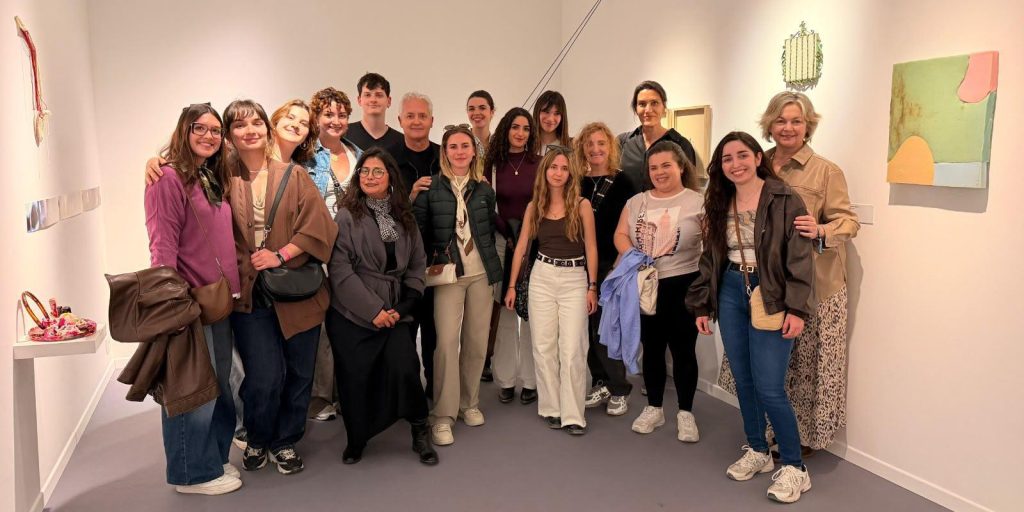
>> The exhibition, organized by the European Cultural Centre, runs from May to November 2026. >>> The exhibition, housed in the Palazzo Bembo, is part of *Personal Structures – Confluences*, one of the major exhibitions held in Venice alongside the Art Biennale. >>>> The jury is composed of Nargess Banks, writer and editorial director; Jesús Alberto Flores, cultural strategist and founder of Colector; Rahul Gudipudi, head of exhibitions and fellowships in New York; Euijung McGillis, curator at the National Gallery of Canada; and Anouska Phizacklea, director of the Museum of Australian Photography. The exhibition project by the ADEMA Fine Arts degree program, presented at Palazzo Bembo as part of the European Cultural Centre (ECC) official program in Venice, has been selected as one of the four finalists for the ECC Awards 2026 in the Research & Curatorial Project category. The proposal was part of *Personal Structures – Confluences*, an international contemporary art exhibition organized by the ECC alongside the Venice Art Biennale. The ECC Awards are the annual honors through which the institution recognizes the most outstanding projects from its art and architecture exhibitions. The category in which ADEMA has been selected—Research & Curatorial Project—is aimed at museums, universities, and curatorial or research institutions; it recognizes projects grounded in a research methodology, possessing a clear and reflective curatorial vision, and capable of establishing a meaningful dialogue with the exhibition’s theme. ADEMA shares the nomination with three other finalist projects from the United States: *Tanka Tales: Thread as Archive* by Mahwish Chishty, which focuses on memory, women’s work, and cultural heritage through embroidery; *Atlantis* by the Princeton Research Film Studio—directed by Erika A. Kiss—which explores the possibilities of cinema in the age of automation and artificial intelligence; and *Ester Hernández: An Ecological Memoir* by Jennifer Garcia Peacock, an investigation into the relationships between art, environmental activism, and Chicana cultural memory. Personal Structures is a biennial exhibition organized since 2011 by the European Cultural Centre Italy. Its eighth edition opened on May 9 and runs until November 22, 2026, across three iconic Venetian venues: Palazzo Bembo, Palazzo Mora, and the Marinaressa Gardens. The organizers explicitly present the exhibition as an initiative developed in parallel to the Venice Biennale. For this edition, the exhibition has brought together more than 150 artists, multidisciplinary creators, and artistic and academic institutions from 40 countries. The program has included installations, paintings, sculptures, audiovisual works, performances, and research projects addressing various issues facing contemporary society. Its staging coincided with the 61st International Art Exhibition of the Venice Biennale, titled *In Minor Keys*, which also took place from May 9 to November 22, 2026, at the Giardini, the Arsenale, and other venues across the Italian city. An international jury ADEMA’s project will be evaluated in September by an international jury composed of highly respected professionals in the fields of contemporary art, research, curatorial practice, and the direction of cultural institutions. The committee is composed of Nargess Banks, a writer and editorial director specializing in contemporary art, design, and visual culture; Jesús Alberto Flores, a cultural strategist and founder of Colector; and Rahul Gudipudi, founding director of the art initiative ke—na— and head of Exhibitions and Grants at the Center for Art, Research and Alliances in New York. Rounding out the jury are Euijung McGillis, Assistant Curator of Contemporary Art at the National Gallery of Canada—specializing in modern and contemporary Asian art and the Asian diaspora—and Anouska Phizacklea, Director of the Museum of Australian Photography. Experts will select a winning project in each of the six categories of the ECC Awards 2026: artistic interpretation of the theme “Confluences,” research and curatorial project, space and context, interdisciplinary project, emerging practice, and the special “Artist as Activist” recognition. The awards ceremony will take place on November 22, coinciding with the closing of Personal Structures – Confluences. ADEMA’s selection as one of the four finalists for the Research & Curatorial Project places its students’ work on a prominent international stage and recognizes an educational model that links contemporary creative practice with academic research, social engagement, curatorial practice, and international cooperation. A collective and committed artistic inquiry The ADEMA exhibition has presented the results of an artistic research process that conceives creation as a critical, collective practice engaged with the present. More than just an isolated display of works, the project positions art as a tool for knowledge, cultural mediation, and social transformation. The proposals developed by the students engage with some of the key contemporary social, political, and environmental realities. The students have conducted research that extends beyond the university setting, connecting with real-world territories, communities, institutions, and professional contexts. The works gathered at the Palazzo Bembo originated from personal standpoints and experiences that simultaneously open up to a collective dimension. Experimentation with contemporary languages, material research, and reflection on creative processes reveal a conception of artistic practice linked to social responsibility and the capacity to foster new relationships among people, the territory, and the environment. The project has been built upon listening, dialogue, and the shared production of knowledge. This methodology reflects the training the students received during the four years of their Fine Arts degree, throughout which they participated in collaborative experiences in both local and international contexts. Among them are projects carried out in socially and environmentally vulnerable areas—such as Wasini Island in Kenya—and exchanges with international artists, curators, universities, and cultural institutions. These experiences are integrated into an educational model that links artistic practice with research, cooperation, and critical analysis of reality. Selection as a finalist therefore recognizes not only the exhibition’s formal outcome but also the academic, research, and curatorial process underpinning it. The project advocates that university-level artistic training should equip students with the tools to engage responsibly with society and participate in the cultural debates of their time. International reach of the Bachelor’s Degree in Fine Arts Participation in Personal Structures – Confluences aligns with the academic model of ADEMA University School—the first university institution to launch a Bachelor’s degree program in Fine Arts in