
>> The exhibition will open on March 31 at the A+ Gallery, in collaboration with the Academy of Fine Arts in Gdansk.
>>
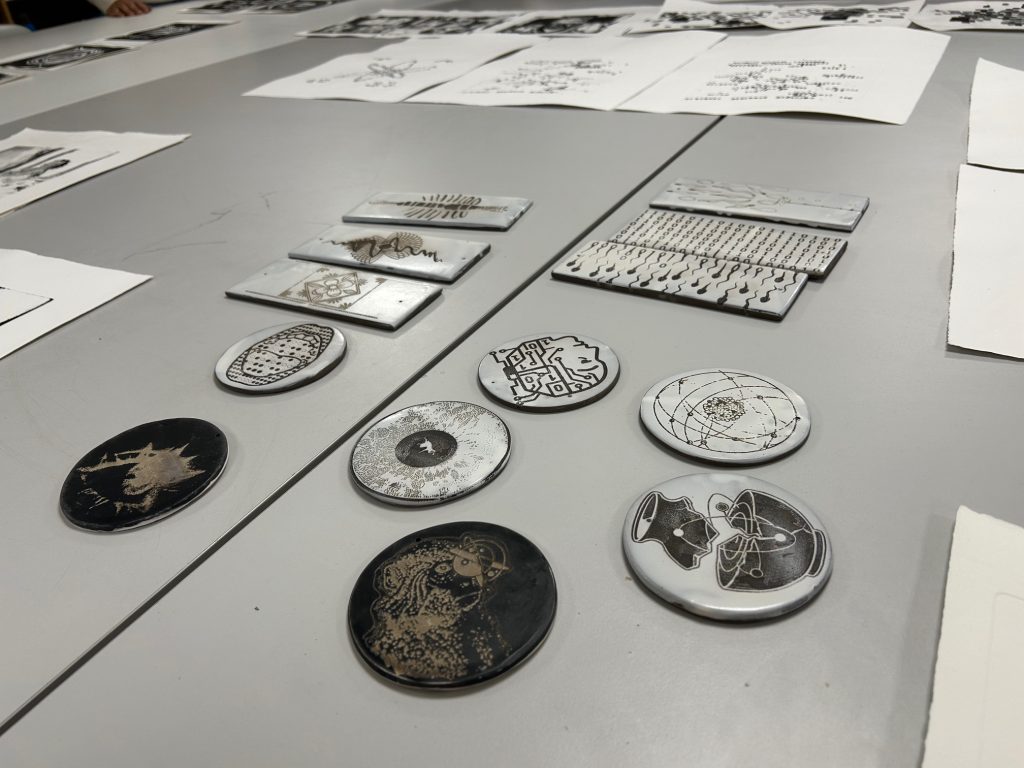
The pieces are a combination of monotypes in graphic work and laser ablation on glazed ceramic pieces, redefining the concept of contemporary footprint.
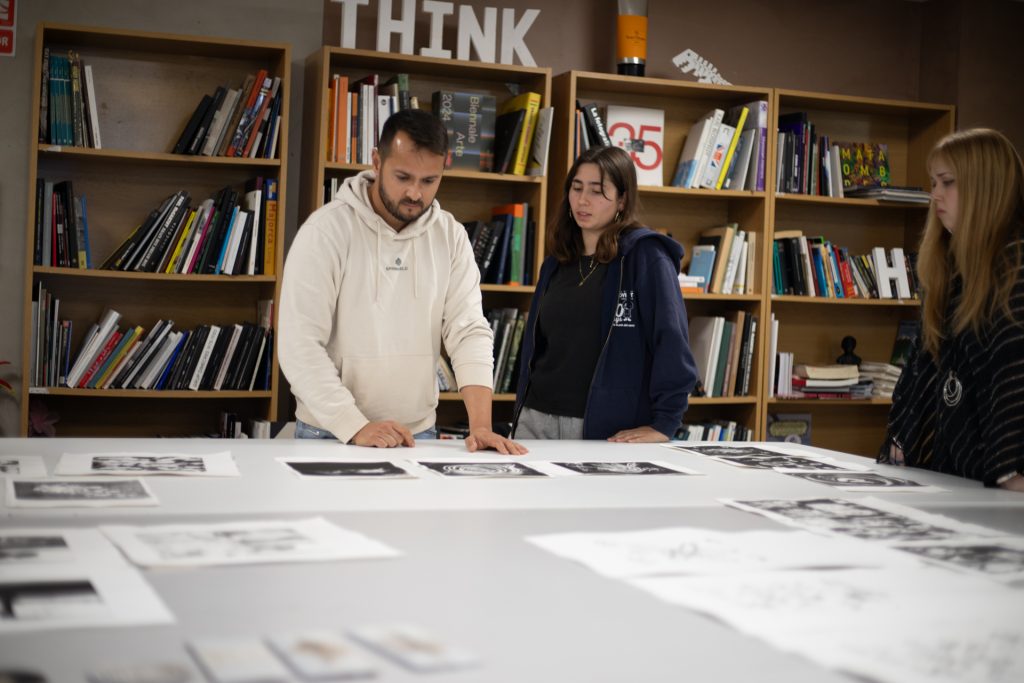
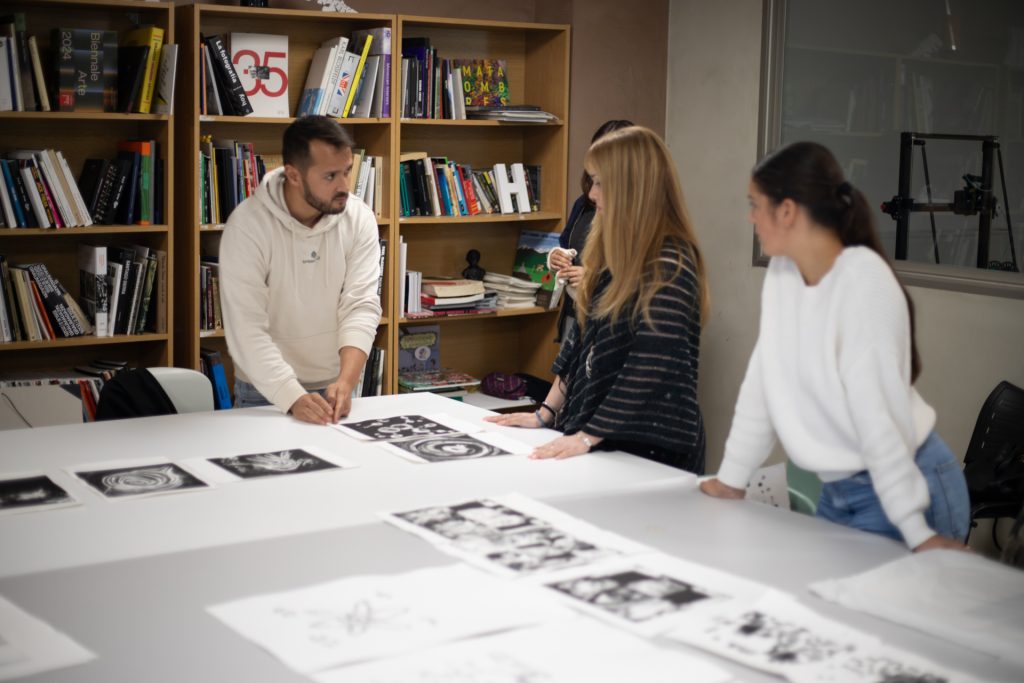
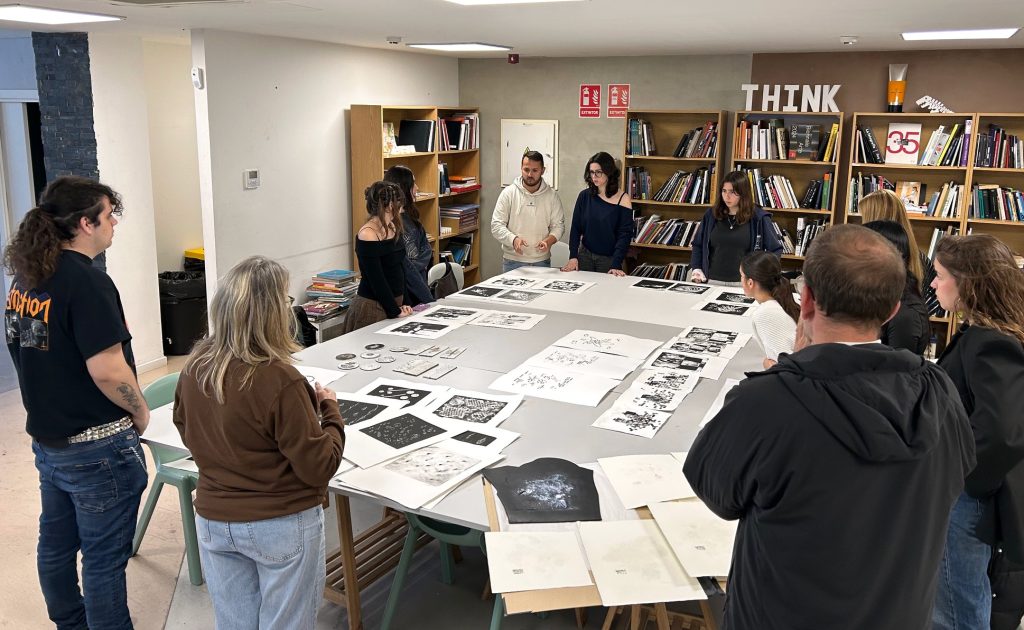
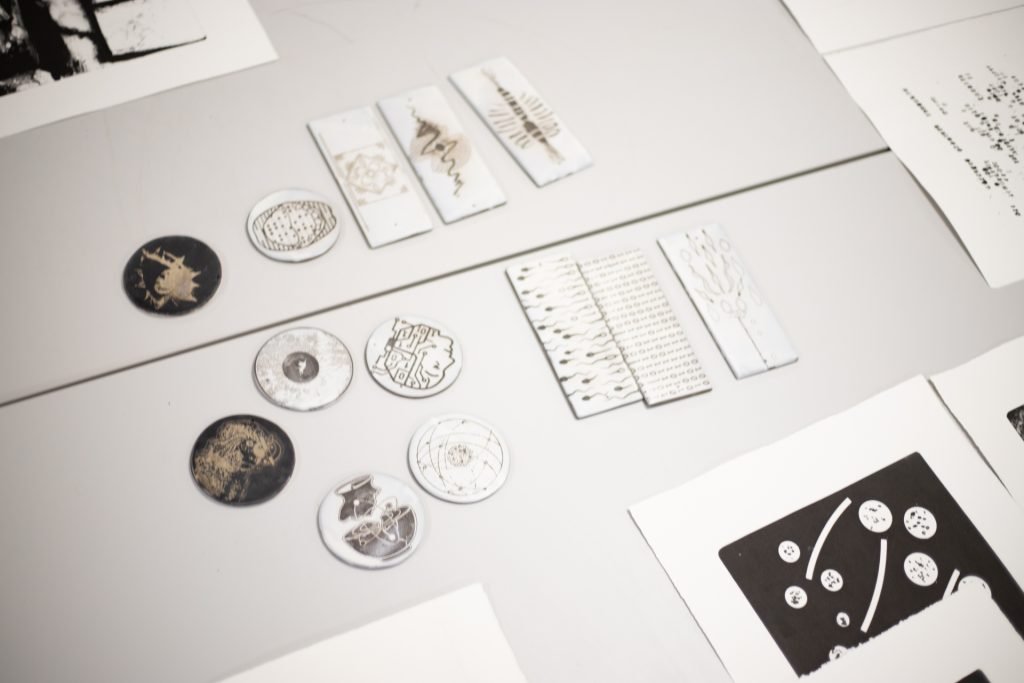
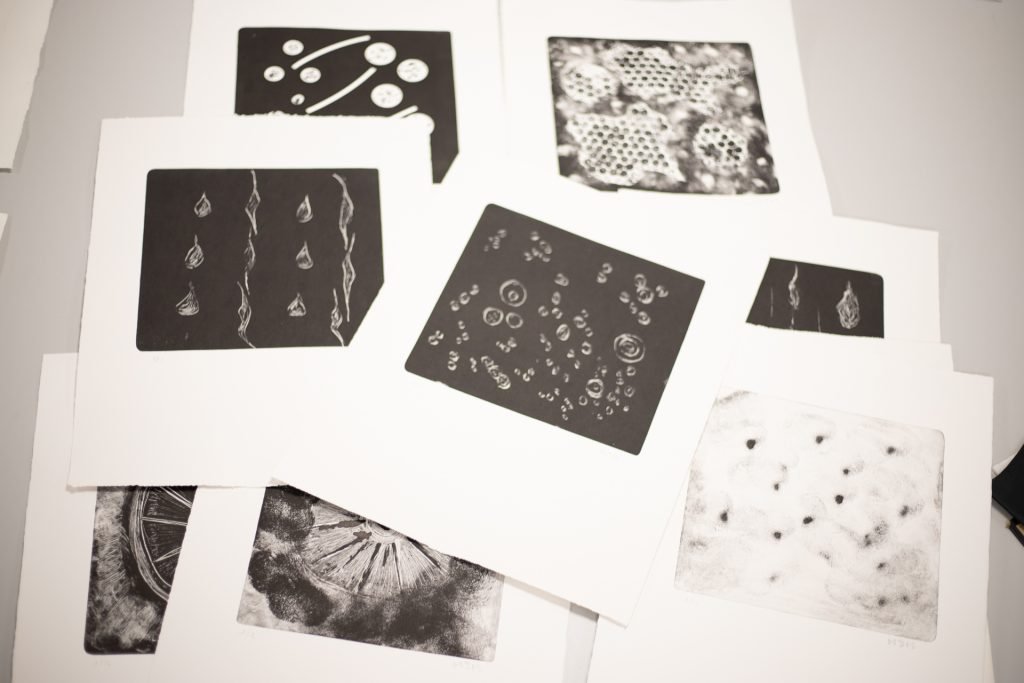
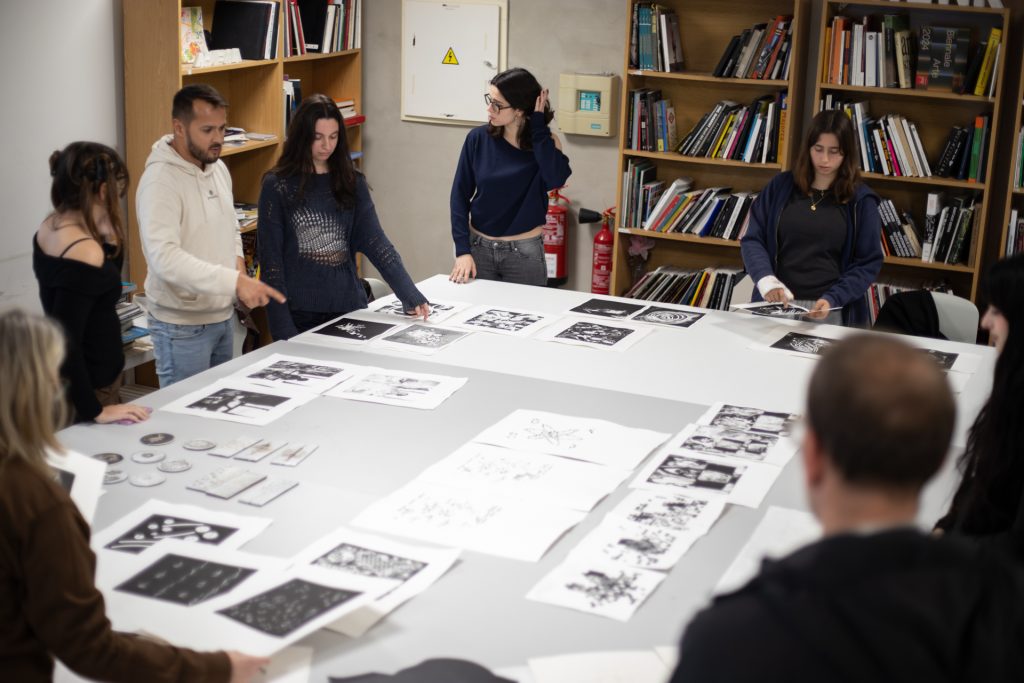
Students from the Fine Arts Degree program at ADEMA will inaugurate the group exhibition “The Bit and the Atom: Translations between Light and Matter” in Gdansk, Poland. This research project explores the relationship between technology, image, and matter. The exhibition will open to the public on March 31st at the A+ Gallery, in collaboration with the Academy of Fine Arts in Gdansk.
Xisco Duarte, a researcher in technologies applied to ceramics and printmaking on the ADEMA teaching team, explained that the exhibition “is not limited to displaying works, but functions as a laboratory where digital language and materiality are brought into tension.” In this sense, he argued that “the bit and the atom are not just concepts, but two ways of understanding contemporary reality that intersect, translate, and, at times, come into conflict here.”
The project starts from these two fundamental elements, the bit as the smallest unit of information and the atom as the basis of matter, to build an artistic discourse on the invisible systems that support contemporary thought.
From a technical standpoint, the works combine monotypes of graphic art with laser interventions on glazed ceramic pieces. The laser acts as a translation agent, converting the mathematical precision of the software into a physical imprint, in a process where the digital acquires material density.
Duarte also pointed out that “one of the key aspects of the project is how the perfection of digital design is altered when it comes into contact with physical processes such as the pressure of stamping or the action of fire,” which introduces a dimension of chance that “humanizes the technology and places it in the realm of the unpredictable.”
Along these lines, researcher and professor Dan Norton explained that the proposal “allows students to understand that technology does not replace traditional artistic practice, but rather expands its possibilities.” He stated that “the real interest lies in that intermediate space where a digital file ultimately becomes a surface that can be broken, deformed, or chemically reacted.”
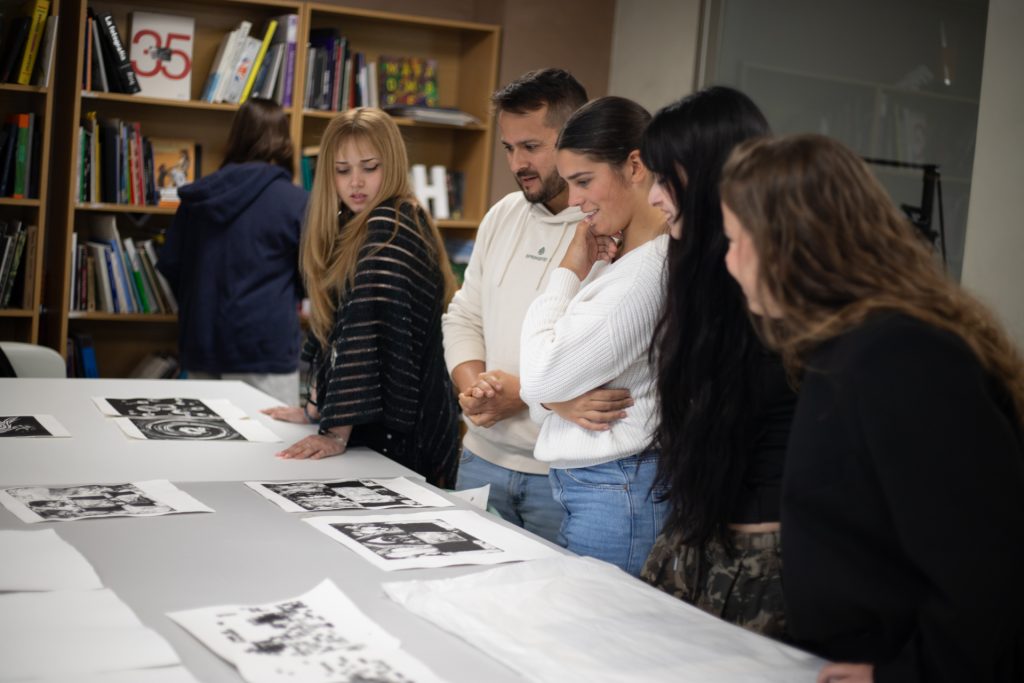
On the other hand, both Duarte and Norton emphasized the conceptual dimension of the project, noting that “these works invite us to reflect on the invisible materials that structure our daily lives, from the data we consume to the physical processes that sustain them.” In their opinion, “the exhibition offers a contemplative perspective on an increasingly accelerated and dematerialized reality.”
The initiative thus challenges the traditional hierarchies between technological innovation and artisanal knowledge, placing both languages on the same level of research and production. The result is a series of pieces that redefine the notion of the contemporary trace as a hybrid record of digital calculation and material transformation.
This project is part of an international academic cooperation strategy that strengthens student mobility and professional development. Participation in the A+ Gallery involves not only the creation of artwork, but also its management, transport, and exhibition within an international context. “These kinds of experiences are fundamental because they place students in real-world settings of artistic production and circulation,” says Mónica Galván, coordinator of the Fine Arts Degree program, who adds that “contact with other institutions and cultural contexts is key to understanding art as a global language.”