
>> During their stay, they have shared with the students how the armed conflict shapes their lives and creative work, and have held working sessions at La Célula, Christian Awe’s art space in Palma.
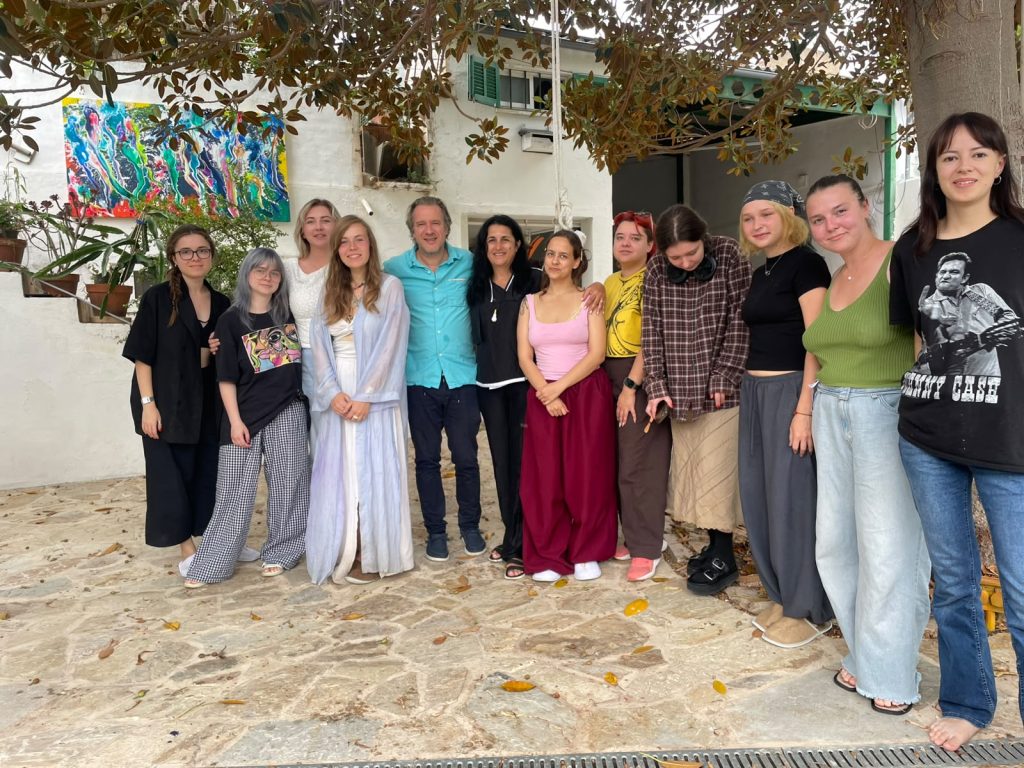
>> Eight students and three faculty members from Lviv Polytechnic National University in Ukraine have participated in an artist residency in Mallorca, having won the Public Choice Award at the ADEMA University Art Biennial.
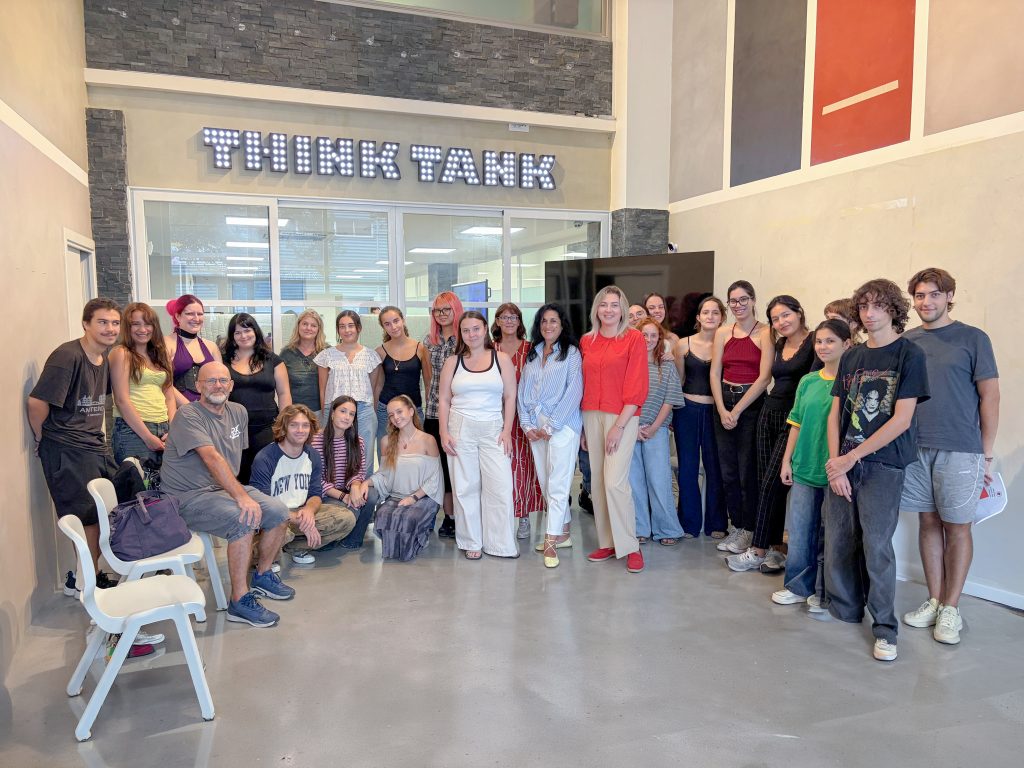
What began as an artistic gathering of universities from around the world during ADEMA’s 2024 University Art Biennial – Art Week has evolved into a new experience of creation, community, and exchange in Mallorca.
Eight students and three faculty members from Lviv Polytechnic National University in Ukraine have participated in an artist residency linked to ADEMA and the creative circle of German artist Christian Awe, following the Audience Award they won during the Biennial.
As explained by the Fine Arts coordinators at ADEMA—Dr. Dan Norton and Dr. Mónica Galván—”the residency marks a new phase in a collaboration that began during that international gathering and confirms one of the Biennial’s primary objectives: forging connections capable of evolving into future academic, artistic, and professional experiences.” However, the residency has also provided insight into a far more complex reality: how an artistic identity is created, studied, and constructed in a country at war.
Over the course of several days, the Ukrainian delegation has shared spaces for work, conversation, and creative activity with students and faculty from ADEMA’s Fine Arts degree program, in addition to participating in various sessions within the creative environment of artist Christian Awe in Palma.
One of the highlights of the visit was an exhibition and discussion with second- and fourth-year Fine Arts students from ADEMA. During the session, the Ukrainian students and professors explained what it is like to pursue an artistic and academic career in a context shaped by armed conflict.
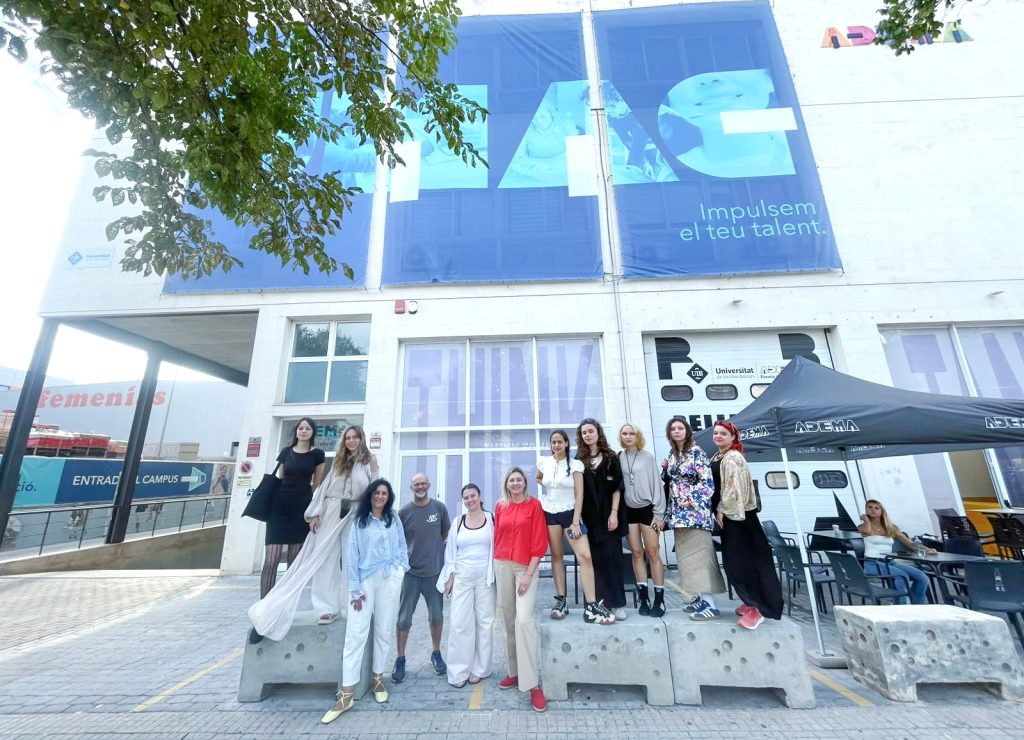
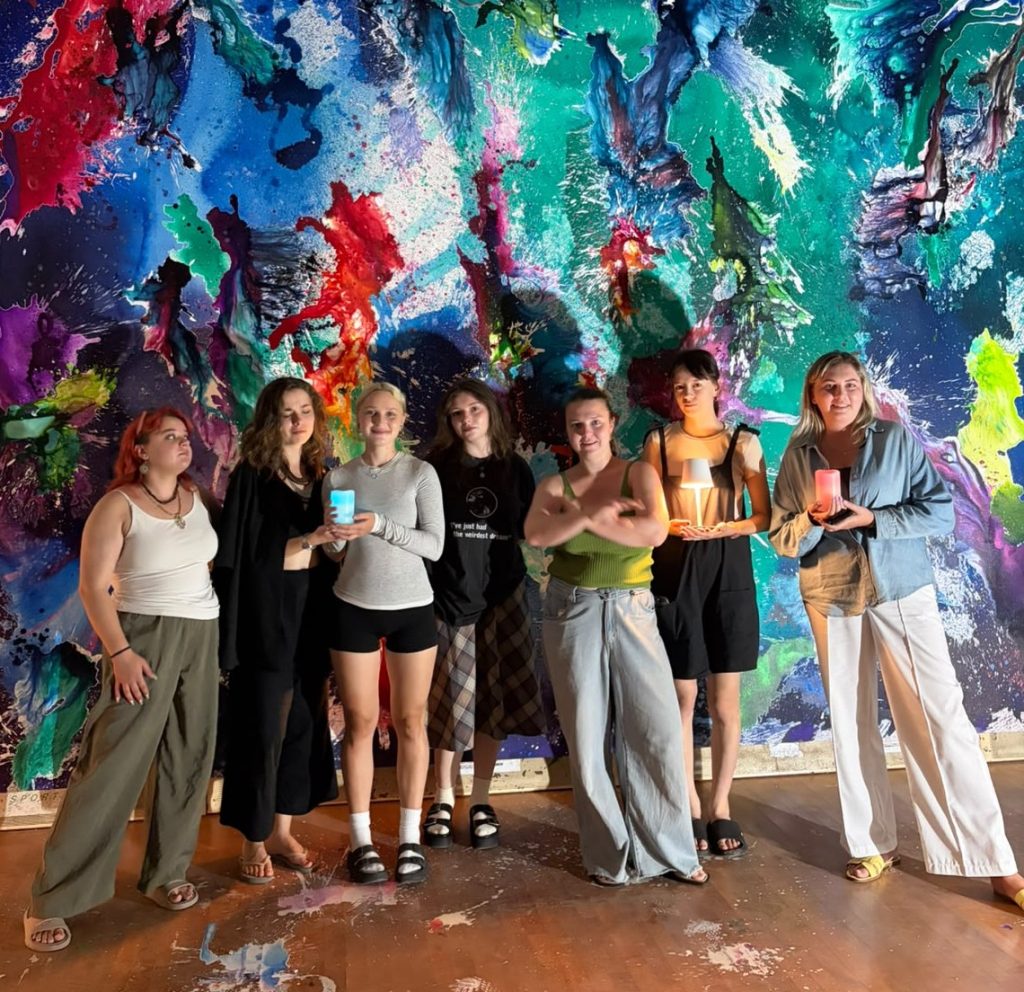
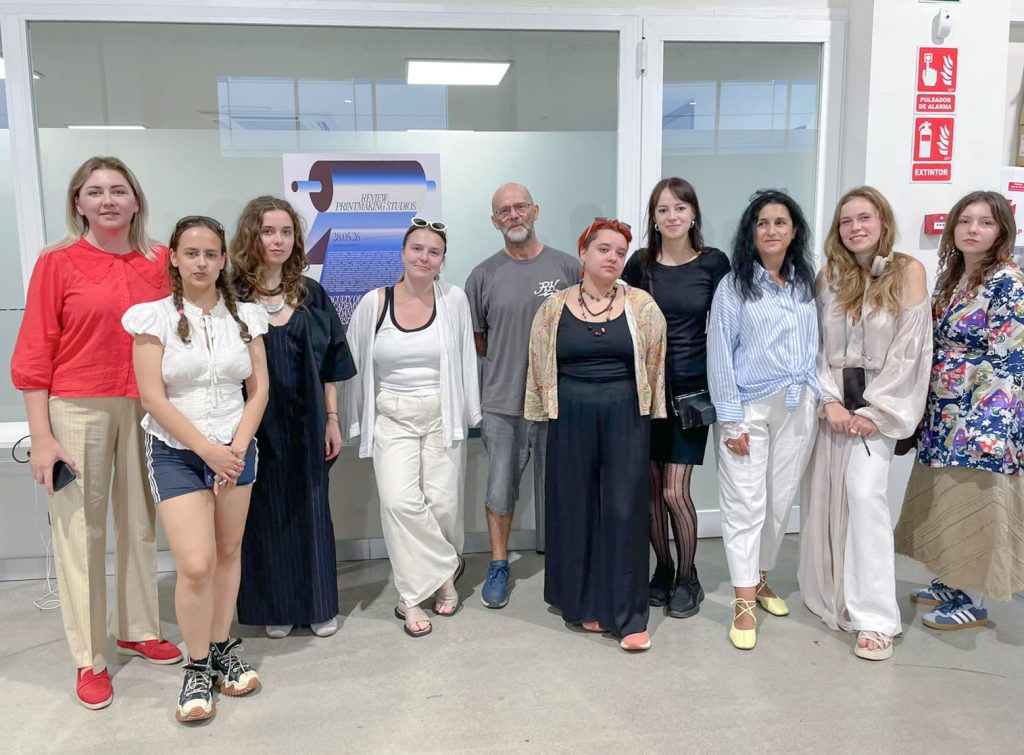
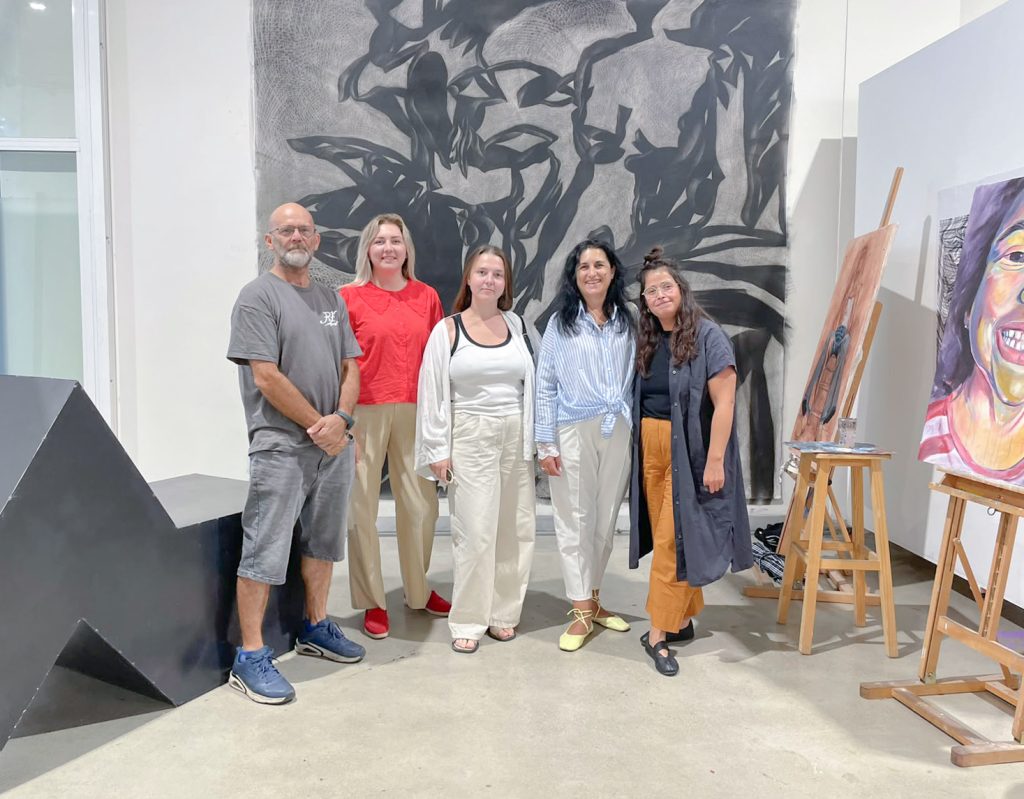
Dr. Dan Norton noted that the session addressed various perspectives on how the war shapes daily life, studies, and artistic practice. “They spoke about the stress, uncertainty, and difficulties of everyday life, as well as how those circumstances ultimately influence creative processes,” he explained.
War may appear directly in the works, but also in a much more silent manner. Memory, territory, identity, absence, displacement, and the changes experienced in daily life become part of the themes and concerns of a generation that developed its artistic training under exceptional circumstances.
However, one of the messages to emerge from the gathering was precisely that contemporary Ukrainian art cannot be reduced solely to the war.
Students and faculty continue to develop highly diverse research, projects, and lines of inquiry—also relating to contemporary culture, identity, new artistic languages, and experimentation. Conflict is an inevitable part of their context, yet it is not the sole narrative through which they construct their work.
For ADEMA students, the conversation offered a chance to gain firsthand insight into a reality they usually encounter only through images reaching them from Ukraine via various audiovisual channels. On this occasion, it was the young artists themselves and their teachers who gave voice to what it means to continue their studies, create work, and envision a professional future amidst uncertainty.
From the ADEMA classrooms to La Célula
Ukrainian students and faculty have also participated in several work sessions at La Célula, Christian Awe’s creative space and artist residency in Palma. The relationship with the German artist is part of the connections fostered around the University Art Biennial, which was conceived precisely as a meeting point for the university, contemporary creative practice, and the professional sphere.
Collaboration between the two spaces has enabled participants to combine academic activity with experience in a professional artistic environment, and to engage with other methodologies, discourses, and approaches to creation.
Mallorca thus becomes more than just the setting for a residency; over the past few days, it has served as a space for production, exchange, and dialogue among artists and students from vastly different cultural backgrounds.
For the eight Ukrainian students and three teachers, the residency has also offered the opportunity to temporarily pursue their artistic practice far from the conditions currently shaping their daily lives.
Changing cities, workspaces, and academic environments introduces new points of reference and allows one to view one’s own work from a different perspective. Distance does not erase the reality being experienced in Ukraine, but it offers a different context from which to observe and engage with it.
In the case of the Lviv delegation, that experience also makes it possible to explain how the conflict shapes their lives and their creative work, without turning the war into the only possible narrative surrounding the art they produce.